

Martin Basher
Big Flowers For A Wild City by Isabella Smith
In this new series, Isabella Smith meets the artists behind the sculptures dotted around our city
In our small centre city, hedged in by harbour and hill, there are few places that feel as open-aired and expansive as the forecourt between the Wellington Waterfront and the Museum of New Zealand Te Papa Tongarewa, where the sweep of grey tiling and the gridded facade of the surrounding buildings create sharp-edged geometry that slices shapes out of the sky.
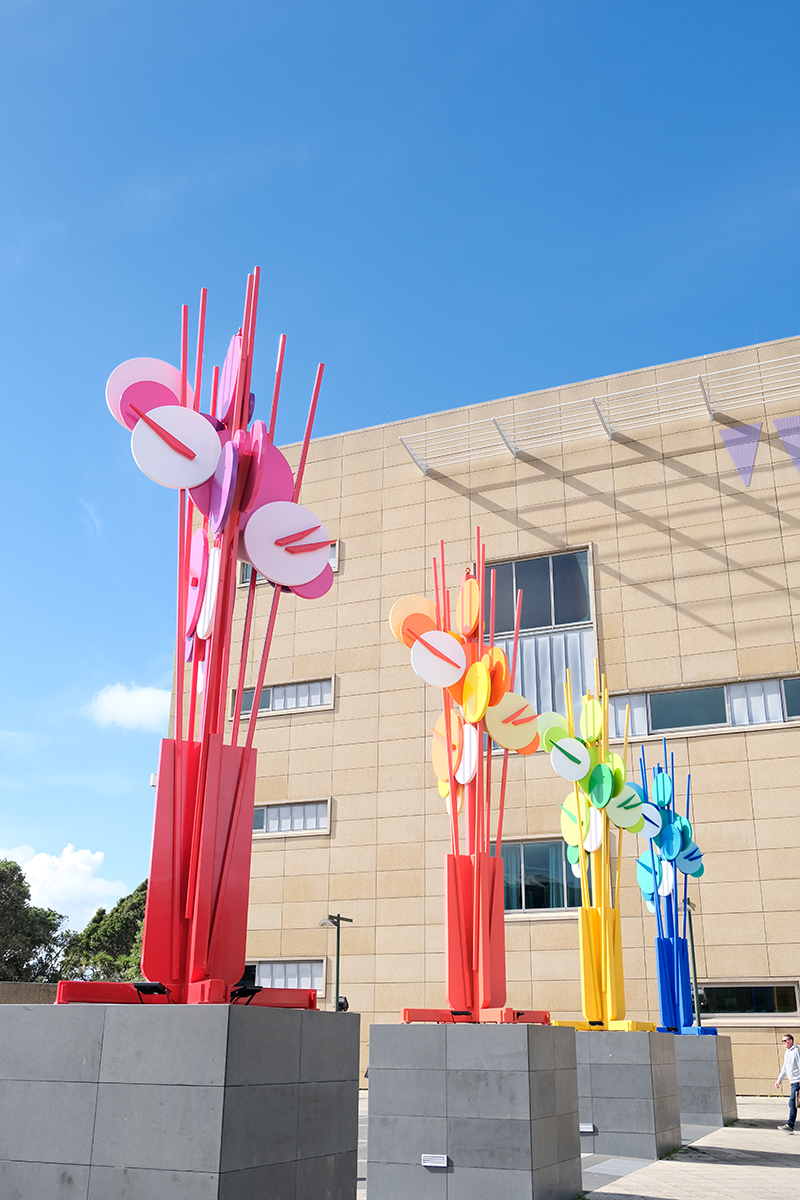
The proportions of the plaza are what make this part of Wellington a challenging spot for public sculpture. It needs to stand out against the muted tones and not feel swamped by the space. Martin Basher’s sculpture Big Flowers for a Wild City does just that.
The four seven-metre floral arrangements constructed of steel and wood erupt out of the four plinths in a burst of colour. “The low-relief sculptures with their high gloss, pearlescent and day-glow pigments... rise up against the thrumming city back-drop”, Basher says. Having returned to his hometown after 25 years of living and working as an artist in New York, he tells me, “I wanted to make some work to convey a little of the joy and optimism I’ve been feeling near daily about living here.” The colourful bouquets are ultimately “lasting tokens of affection... Their generosity, embodied in their vibrancy and their exuberance, should be seen as a tribute to both the city of Wellington and to the power of art itself.”
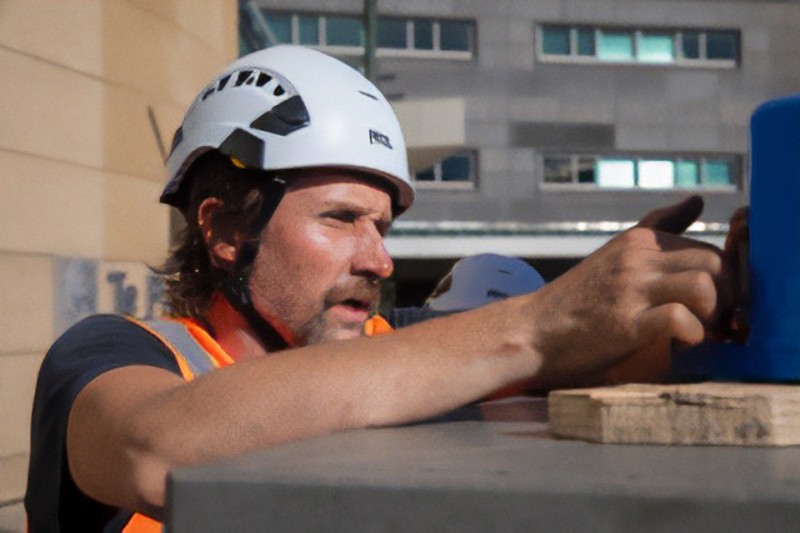
Martin Basher has exhibited widely and internationally. Born and raised in Te Whanganui-a-Tara, he graduated from New York’s Columbia University MFA programme and remained there with his family until returning to Wellington a few years ago. Though primarily a painter, he has made a number of public sculptures, including a major commission for the Public Art Fund, New York’s leading presenter of public art.
The Collin Post 4 Plinths Award series has been around for 20 years. The Wellington Sculpture Trust recognised the possibilities for both the city and artists represented by the four bollards that sat on the Te Papa forecourt. Modelled on the four plinths in Trafalgar Square in London, each work remains on-site for two years: a revolving door showcase situated in the heart of Pōneke. The award gives a literal platform for emerging artists to create site-specific works that deal with the complexities of scale and engineering, with maximum engagement from the public.
Chair of the Wellingon Sculpture Trust Jane Black says, “What makes this biennial award so special and the largest in Australasia is it is not acquisitive – after the two years of installation, the artist retains ownership of the work, and many have gone on to find new homes.”
Big Flowers for a Wild City is the 10th sculpture to occupy the forecourt. With a constant vision to grow the award and make it internationally significant, this month the Collin Post Family doubled the award from $50,000 to $100,000. The Sculpture Trust says it is a response to both the reputation of the award and the increased costs for artists to achieve a work across the four plinths in the monumental environment.
The partnership with the Post family celebrates and commemorates the late Collin Post and his love of the arts, in particular sculpture. Black says, “Collin was a stalwart of the trust for many years.”
Basher’s studio is nearby the plaza. “I love getting to see the work in all weathers and as the light in each day changes”, he says. “It’s been fantastic to see them working for the public too. I love that kids get to see them when they visit Te Papa, and it was super nice that my own kids were able to show them to their friends a couple of weeks ago. It’s a particularly nice feeling as my work becomes the city’s work. It’s the best part of public art, when a project merges into the fabric of a city.”
View more articles from:
« Issue 266, April 21, 2026