
Reviews - Regional News | Connecting Wellington

Movies

If Beale Street Could Talk | Regional News

If Beale Street Could Talk

(M)

117 Mins

(4 ½ out of 5)

Reviewed by: Annabella Gamboni

Director Barry Jenkins’ Oscar-winning film Moonlight was one of the best films of 2016. Based on the James Baldwin novel of the same name, his follow-up If Beale Street Could Talk is softer and less art house, but is no less insightful on love, community, family, and racial hatred.

19-year-old Tish (KiKi Layne) and 21-year-old sculptor Fonny (Stephan James) are hopelessly in love. Dreaming of a modest life together, their biggest problem is that they can’t secure a New York City apartment from racist landlords – until Fonny is arrested for a crime he didn’t commit. A rape victim was coerced into picking him out of a line-up, so he’s chucked in the slammer with little hope of release. At the same time, Tish discovers she is pregnant.

The movie opens with a quote from Baldwin, explaining the origins of the novel’s title. Beale Street is a historically significant street in Memphis, and according to the author, is the symbolic birthplace of all Black Americans. Thanks to Jenkins’ gorgeous use of colour, slow motion sequences, and Nicholas Britell’s swelling score, the idea of legacy is evoked again and again. At times, If Beale Street Could Talk is more like a visual poem than a movie. But I’m not complaining; it’s beautiful.

And besides, there’s plenty of compelling action to drive the narrative. In a superbly shot scene starring Brian Tyree Henry as Fonny’s old friend Daniel, Henry delivers a stomach-roiling, eerie monologue on the horrors of incarceration. A climactic scene where Tish informs Fonny’s horrible “holy roller” mother (Aunjanue Ellis) that she’s expecting provoked gasps from the audience. And Regina King (Tish’s mother) more than earns her Best Supporting Actress Oscar in a sequence where she talks to Fonny’s alleged victim, begging her to recount her testimony.

If Beale Street Could Talk is a brilliantly gentle, bittersweet movie that handles big ideas of humanity and prejudice with grace. It might have received fewer accolades than Moonlight, but it’s a worthy addition to Jenkins’ oeuvre.

On the Basis of Sex | Regional News

On the Basis of Sex

(M)

120 Mins

(4 out of 5)

Reviewed by: Annabella Gamboni

Ruth Bader Ginsburg is one of the most famous civil servants in the world. She sits on the US Supreme Court at the age of 85, and is best-known for her work demolishing legislation that discriminates on gender. Her story was always going to be incredible, but in the hands of director Mimi Leder, it becomes even more compelling. On the Basis of Sex at first seems straightforward, even glossy, but excels when it delves into the trickier stuff.

The biopic follows Ruth (Felicity Jones) from her time at Harvard Law School as one of its first-ever female students through to the case that changed everything for her – and America’s women. Along the way, we nestle into her spectacularly functional, progressive marriage with Marty (Armie Hammer), and see first-hand the kind of discrimination that Ruth and her kin were up against.

Despite its long runtime, On the Basis of Sex held me in its thrall. Sure, it was funny when the young Ruth humiliates the sexist, condescending Dean of Harvard Law (Sam Waterston), but the film is its most cutting and fresh when it skewers so-called ‘allies’ of the feminist movement. After graduating, top student Ruth can’t get a job anywhere in New York. One interview seems promising; the interviewing partner seems sympathetic to her plight – but he can’t hire her! What would the wives say? Smarmy ACLU lawyer Mel Wulf (Justin Theroux) is for equal treatment for all people under the law, apparently. But he refuses to treat Ruth as his intellectual equal, and after one particular dressing-down even the audience doubts she can win.

These thematic through-lines work so well because they stem from complex social and cultural issues that women and non-binary people are still wading through today. It effectively conveys to the viewer that while ‘the Notorious RBG’ did a lot of important work for gender equality, we’ve still got a way to go. On the Basis of Sex is inspiring, but it never loses sight of the fact that social change is a lot of hard work.

Green Book | Regional News

Green Book

(M)

130 Mins

(3 ½ out of 5)

Reviewed by: Annabella Gamboni

Green Book is heart-warming, straightforward, and optimistic. It’s basically everything that real-life racism isn’t.

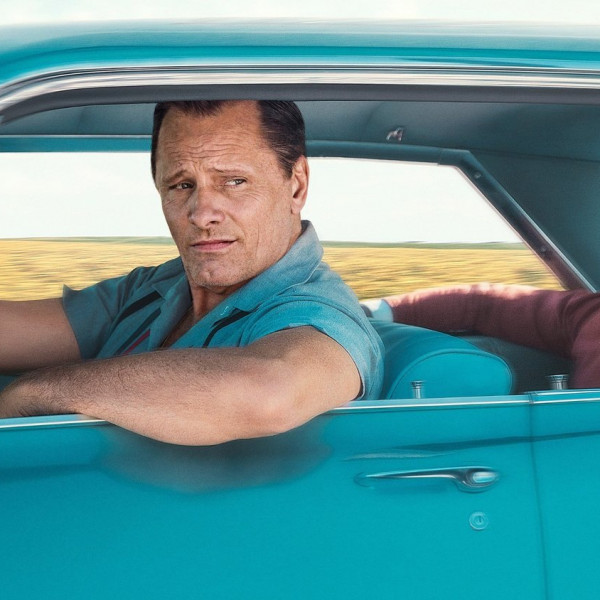
The Golden Globe-winning film is essentially a buddy comedy, based on real events. The classically trained jazz pianist Dr Don Shirley (Ali) is embarking on a tour of the South in the Jim Crow era. As a Black man, he knows the trip could be perilous, and so he hires Italian-American Tony ‘Tony Lip’ Vallelonga (Mortensen) to be both his driver and bodyguard. While ‘the Doc’ is highly educated and a bit uptight, Tony Lip is a boarish chatterbox who eats whole pizzas folded over like a sandwich. Over the course of their eight-week sojourn, the two very different men learn to like each other.

Directed by Peter Farelly (There’s Something About Mary, Dumb and Dumber), Green Book is best when it’s funny. Ali and Mortensen play off each other wonderfully when stretching the outer limits off their characters – the scene where Lip convinces the grease-averse Doc to try fried chicken for the first time, for example. Mortensen is also to be applauded for his incredible commitment to the role (he must have packed on 20kg in his belly alone), and for breathing a rich inner life into Lip.

However, the film’s view of racism is pretty rosy; it’s posited as a past tense problem rather than something that continues to oppress millions of Black Americans. The Green Book that the title refers to is a publication detailing which motels, shops, and roadside diners would welcome ‘coloreds’, and which it would be best to avoid. It’s a relic of an overtly racist past – it almost seems ridiculous now, alongside smoking inside and segregated restaurants. Green Book points to those things as evidence that we’ve changed.

But have we? Thanks to the current President, the pain felt in America’s minority communities in 2019 is hot and angry and urgent. This kind of filmmaking, in these times, feels insultingly reductive. Green Book wants to make you laugh, cry, and forget about America’s racism problem for a couple hours. And that’s okay. But I think it’s high time for the more difficult conversations.

A Star is Born | Regional News

A Star is Born

(M)

136 Mins

(4 ½ out of 5)

Reviewed by: Annabella Gamboni

I love that Bradley Cooper chose A Star is Born for his first outing as a director. The Hollywood warhorse first appeared in theatres in 1937, and has since been remade four times. In this defiantly fresh 21st-century take, Cooper sings a love song to the movies without compromising on his methodical artistic integrity.

You know the story. Jackson Maine (Cooper) is a country-rock superstar overly reliant on booze and pills. One night, he drags those cowboy boots and twinkling blue eyes to a cabaret, where he meets waitress and singer-songwriter Ally (Stefani Germanotta, aka Lady Gaga). Jack convinces her to join him on tour, and as quickly as the pair fall madly in love, Ally’s star begins to rise.

The first half of A Star is Born is seamless. The moment Ally takes the mic with Jack for Shallow is perfect – despite, or even because of, the fact that we’ve seen that scene a thousand times before. It works principally because of the beautiful chemistry between Cooper and Lady Gaga, which aches not only with sexual tension, but with kindness and care. Both leads are astounding, but it’s Lady Gaga that takes you by surprise. Her performance, unlike her famous musical persona, is completely without artifice. Her Ally (very different to Judy Garland’s or Barbara Streisand’s) is no naïve ingenue, but a modern woman with both street smarts and a heart given to dreaming.

It’s only in the second act that the plot hits a few flat notes. The attention to detail given to musical sequences is less often applied to dialogue, so that some developments feel rushed. You could attribute this to the world of showbusiness these characters inhabit, but it is just as often the dated source material poking through. The final and most devastating development doesn’t quite hit as hard as it deserves to, mostly because the preceding scene had me questioning its verisimilitude.

Despite its faults, A Star is Born is Hollywood done right. It’s nothing short of a modern classic.