
Reviews - Regional News | Connecting Wellington

Reviews

EatClub | Regional News

EatClub

Founded by Marco Pierre White and Pan Koutlakis

Reviewed by: Madelaine Empson

The cost of living is diabolical right now, and that means less bums on seats everywhere. The EatClub app offers a solution. Patrons can get up to 50 percent off their food bill, and restaurants, bars, and cafés can fill otherwise empty tables. Hospitality venues choose when to go live, so if they’re already staffed but the place is quiet, they can hop on the app, send out an offer, and see who bites. Enter Maddi, a practiced biter.

So, how does it work from a diner’s perspective?

The setup is straightforward but does require a few minutes and an NFC-enabled smartphone that can make contactless payments. Once you download the app, you link in your credit or debit card (with higher discounts available if it’s a Mastercard) and the app generates you a special digital card that you add to your Apple or Google Wallet. This part was a bit finnicky, due in large part to Google’s online security protocols, but I’ve used EatClub Pay without a hitch since.

When you’re ready to eat, you open the app and look for offers near you. It might be new to Wellington but there’s already a huge range of restaurants available. I’ve been to five so far, three of which I hadn’t dined at before. I’ll go back to all of them – EatClub deal or no.

Once you find an offer (typically ranging from 30 to 50 percent off the bill), you accept it, enter your details (time of arrival and how many people), and just rock up. There’s no booking and you don’t need to say your name or mention the app. Ask for a table, make your order, tap to pay the bill with your EatClub card, and that’s it. Stupidly easy for such amazing savings.

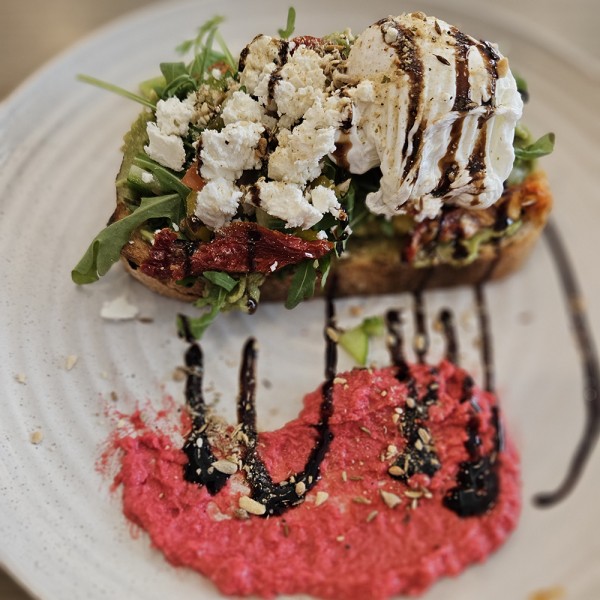
I can verify the reported statistic that EatClub users dine out 70 percent more frequently. Through the app, I’ve had a killer steak at The Welsh Dragon Bar, the butteriest Danish at Black Lion Bakery & Café, the most succulent fried chicken at Winner Winner, flavour-bomb Mexican blackened fish tacos at Superfina (with a jalapeño salsa to die for), and the insanely artful avocado toast pictured here at TRA Coffee and Eatery. I’ve saved an average of 43 percent and couldn’t recommend it more.

If you love dining out but need to guard your pennies, join the (Eat)Club!
Flight of the Conchords | Regional News

Flight of the Conchords

Michael Fowler Centre, 10th Nov 2026

Reviewed by: Madelaine Empson

“One of New Zealand’s most successful bands has potential.”

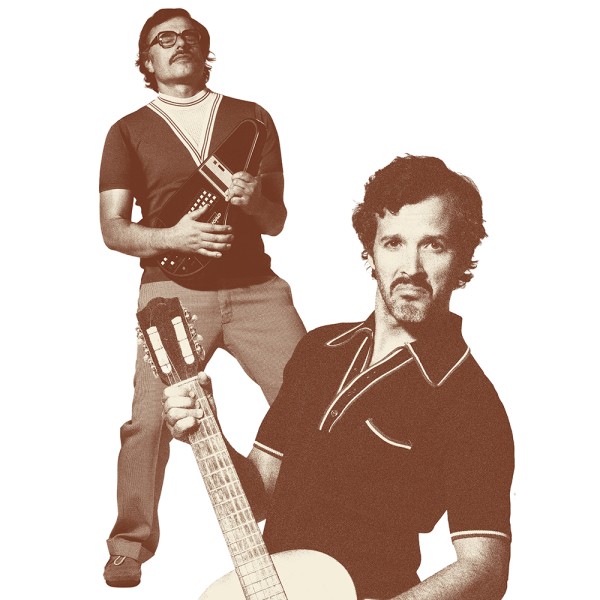
So Bret McKenzie implored reviewers to write after Flight of the Conchords made another hilarious mistake at their first gig in eight years – minus a few warmup shows at Meow Nui back in April.

“I’ve got an idea, Bret,” Jemaine Clement quipped around the halfway mark. “We should do some warmup gigs in a smaller venue before we do this one.” His next idea was that they should “rehearse more than once every eight years.”

Every moment like this just added more mango to an already mother-ucking delicious fruit salad. Sprinkled with dry Kiwi comedy cornflakes and stirred with self-deprecation, Flight of the Conchords’ hallmark deadpan humour was in full force from the first fzzzfz of the opening number The Distant Future. This ‘recently written’ song about the year 2000 had been updated to include references to AI and how rude we are about its art. Afterwards, Bret told us our applause was “probably a bit generous for what we just did.” “Yeah,” Jemaine informed us, “that wasn’t a good start.”

Clearly, we begged to differ.

I didn’t mean to get straight down to business time – before Flight of the Conchords took the stage to rapturous reception, we were surprised and delighted by Wellington’s iconic saxophonist tree. Woody played three songs with aplomb and the occasional hip wiggle before shuffling off the stage. How much more Wellington can you get?

Quite a bit more Wellington, actually. Not only did Woody come back onstage for The Most Beautiful Girl in the Room and a red-lit, raunchy rendition of Business Time, but another local icon stepped in for Hiphopopotamus vs. Rhymenoceros: King Home Boy. A certifiable Beatboxosaurus! Another surprise – this one unplanned – was the crowd-wide Happy Birthday singalong for Sadie, an audience member who kicked off a tea-towel distribution chain. “If it’s your birthday take a tea towel, if it’s not pass it on,” Bret said, and we happily complied.

Highlights were too numerous to mention, so sticking to my top five seven, I enjoyed the other ‘recently written’ track Frodo, Don’t Wear the Ring, which the band hopes to hear in the first Lord of the Rings movie; Jemaine’s assertion that “We’re vincible” in Hurt Feelings; Bret’s warning not to touch the banana in Iain and Deanna, where they tried something new – “one of us standing up”; multi-instrumentalist Nigel Collins’ ukelele moment; Jemaine’s bellowed line “There’s microplastics in my semen”; the appearance of the 1985 Casio SK-1 in Inner City Pressure; Brarbra Streisand; and every second of my new favourite song, Seagull.

I might be in the business of words, but no matter how many unhinged specifics I give you, I don’t think I can come close to conveying how much fun, how wonderful, the Flight of the Conchords concert was. More than once, I caught tears of laughter streaming down cheeks that ached from smiling. I’ll remember it always as one of the best live shows I’ve ever had the privilege of seeing.     

La Bola Negra [The Black Ball] | Regional News

La Bola Negra [The Black Ball]

(M16)

155 minutes

(5 out of 5)

Reviewed by: Isabella Smith

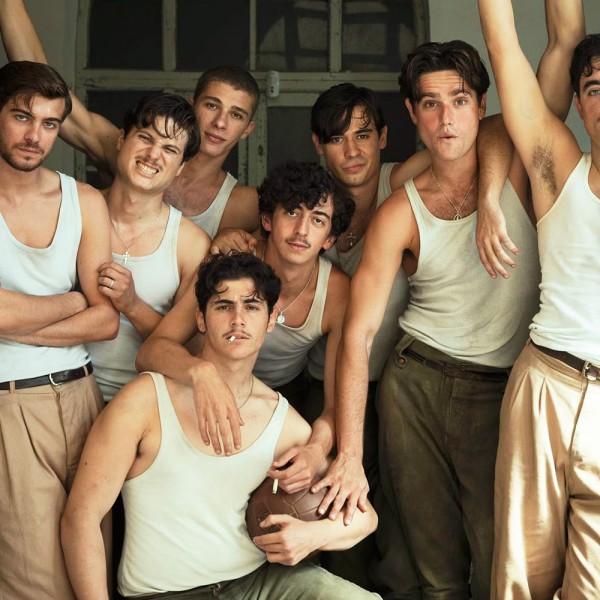
With a spectacle so operatic and layered, it’s difficult to know where to start with La bola negra [The Black Ball], directed by Javier Calvo and Javier Ambrossi. This maximalist cinematic feast intertwines three storylines across three eras in Spain – pre-Francoist 1932 through to the Civil War and into the 2010s – depicting the shifting, painful environments in which queer love manifests itself. Based on an unfinished play written by Spanish poet and playwright Federico García Lorca, who was murdered by Nationalist forces before he could ever finish it, the film is a poetic treatise on the endurance of queer desire in the face of intolerance and decisive, ideological violence.

Each scene was composed like a renaissance painting, reminiscent of the opulence of Stanley Kubrick’s Barry Lyndon. Yet the Odyssean scale of the film and its emotional grip could be compared to the likes of The Great Gatsby. Where it stands entirely on its own is the sophistication of the structure, braiding together the storylines so deftly I was left winded when the penny dropped.

Love and war have been positioned side by side in stories for thousands of years, but the outright starkness between eros and despair, hope and desolation in La bola negra modified the atmosphere of the cinema. I thought the entire cast was fabulous, but my standouts were Guitarricadelafuente’s bittersweet portrayal of Sebastián – made all the more spectacular knowing it was his first acting performance outside of music videos – and the ever-magnetic Penélope Cruz as Nené Romero, whose electric cabaret act before a wolfish crowd of troupes offers a small glimpse into a more tolerant and free society.

Spain is in tatters; entire towns are collateral in a war that piles boys up on the back of trucks and dumps them at makeshift hospitals. The film is testimony to the total disintegration of a country, and what that means for people who must accept they will never get a shot at love, that that is for the next generation.

And yet, there is the turn of the century, both light-years and only two generations away; neither perfect nor complete, but more fertile soil. While there were moments where something beautifully implicit was later overstated as though the directors didn’t trust that the audience would ‘get it’, it’s hard to fault La bola negra. Its colour, grandeur, and tenderness put wings on my heart.

Something He Did | Regional News

Something He Did

Written by: SK Lynch

Ultimo Press

Reviewed by: Madelaine Empson

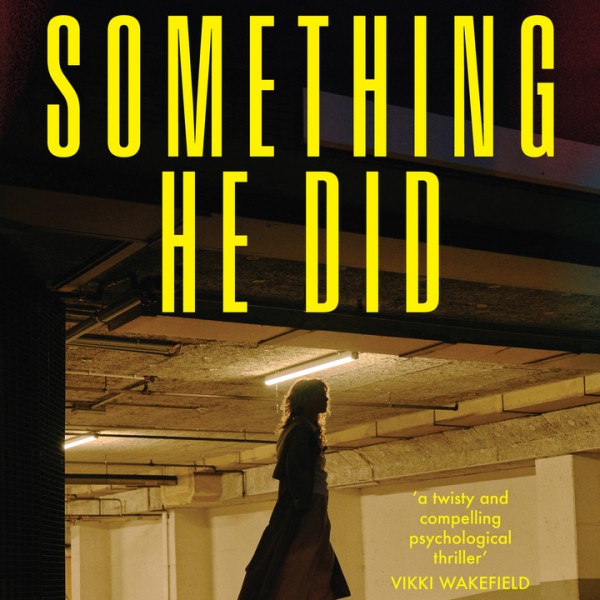
As the editor of a newspaper, I deal in words. Hundreds of thousands of them, day in, day out. I was a kid who devoured books weekly but grew into an adult who struggled to read outside of work and would be lucky to get through one a year. That all changed in April 2026 when out of the blue, bang! I finished a book in a day. Since then, I’ve read 12, but never from first page to last in one day again… until Something He Did by SK Lynch.

Detective Sergeant Claudio Russo, head of the Melbourne Police Missing Persons Unit, is investigating the disappearance of a teenage girl. Amber, a recovering drug addict, is taking her ex to court for shared custody of their daughter while her mum battles cancer. Once an All Black and still a legend in Aotearoa, Jake is struggling to reclaim his fame across the ditch in Australia. His daughter Brooke is in the tumultuous throes of adolescence and hates everyone and everything.

Every character has demons to face, but it all comes to a head when a car accident irrevocably alters the course of each of their lives.

Lynch switches perspective chapter to chapter, crossing timelines to explore all the pasts that led to the present. While a chapter may be set on day 287 for one character, it may also flashback to their childhood, or to a formative event that shaped their future. All the while, there is You, the kidnapper, a monster whose identity is withheld. Lynch throws up possible candidates all the time by transplanting clues from the You chapters to the others. You hear that You’s father was abusive; you read about another character’s father yelling. You think you know; you don’t. The deeper theme at play here is that the cycle continues. What is done to you, you do unto others. What you suffer, so must everyone else.

No spoilers, but Something He Did has the plot twist of the 2020s, and hindsight is, as they say, 20-20. I. Could. Not. Put. It. Down. But I did nearly drop it in shock. Is there anything better than that kind of thrill?

Death By Misadventure | Regional News

Death By Misadventure

Written by: Jane Bitomsky

Lake Union Publishing

Reviewed by: Kerry Lee

Death By Misadventure scratches my biggest itch – both as an avid murder-mystery reader and as a reviewer for Regional News. 

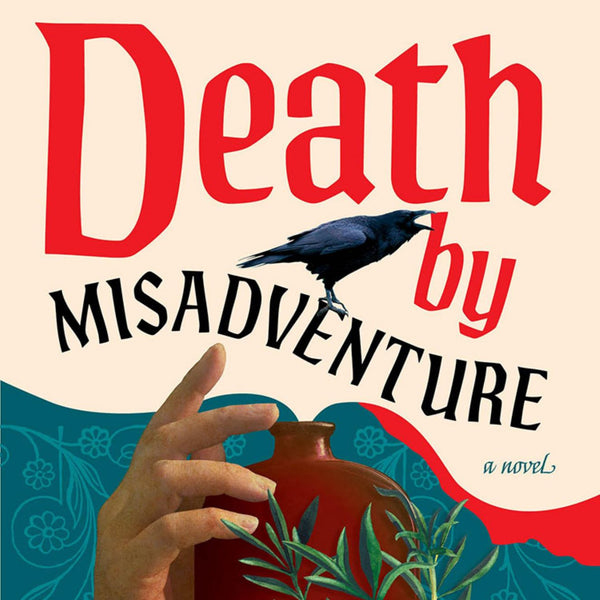
Set in the late 16th century in the cosy village of Bramley, England, the story focuses on coroner John Derrick as he struggles to solve the case of a man found naked in a stream, who, ahem… is missing a certain body part. As Derrick searches for answers, he soon discovers that not everything is as it seems.

Alongside Derrick's story is Rebecca Laurence’s, a young maid who shares the limelight with the coroner. I appreciated the dual perspective, which not only fleshes out the story, but gives readers a glimpse into what life was like in Surrey in 1585. Author Jane Bitomsky does a great job of showing us that people growing up then were not that far removed from the way we are now. 

Both protagonists are well rounded, with believable lives of their own. I especially enjoyed my time with Rebecca and the insight Bitomsky offered into a character who would have gone largely unnoticed in 16th-century England. While undoubtedly bleak for women back then, Bitomsky captures the period she is writing in incredibly well. Her use of the language of the time, and the incorporation of the often-condescending attitude towards women, helped secure me in the world. While some writers might have shied away from reflecting such misogyny, I think including it was the right move – it is certainly and sadly an accurate reflection of the attitude at the time.

While I won’t spoil the story for you here, I will say that Death by Misadventure is a fast-paced action thriller that had me on the edge of my seat, as did the shifting perspectives. If you are looking for a great story to close out 2026, and love murder mysteries, then look no further.

Accomplice | Regional News

Accomplice

Written by: Rupert Holmes

Directed by: Neil Brewer

Gryphon Theatre, 28th Oct 2026

Reviewed by: Zac Fitzgibbon

Strap into your seat and prepare for a wild ride. This is not your ordinary comedy thriller. Beginning in a cottage in Dartmoor, the air is filled with the hint of adultery and murder. What unfurls is a mystery that even the greatest sleuth would struggle to solve. Leaving you perplexed at almost every moment, you are going to need a warm footbath of Epsom salts to help process this one.

As quoted in Accomplice, ‘Stan Slavsky’ once said, “a single prop can ground an entire show”. Each of Megan Laybourn’s props has a significance and believability that, without spoiling the plot, grounds us deeply in the unfolding narrative.

Jack Thompson’s set is, like the show, full of surprises and feels very homely; fitting considering this is to be the house of the incredibly content married couple Derek and Janet Taylor. There is absolutely no tension between them (or anyone else) at all… Not one bit!

“Expect the unexpected, and you won’t be disappointed” is an apt description provided by the president of Wellington Repertory Theatre, Kevin Hastings. This show relies on many twists and turns to engage the audience, and all four actors do such a fantastic job of suspending reality to allow for these to happen.

It is difficult to compliment the cast members individually without spoiling character truths or important moments, but Jonathan Ensor, Catherine Pryce, Kevin Hastings, and Phoebe Day are fantastic at playing terrible actors. All their performances are incredibly believable in a very meta way. It’s not often that the person responsible for ‘public announcements’ is credited in the programme, let alone mentioned in a review; however, I feel that Gary Hollier deserves a particular commendation for their work.

Filled to the brim with surprises, Accomplice makes it hard to distinguish what’s real and what’s not. This suspenseful slow burn is sure to be all the rage in Wellington, just as it is in Crawley. Ensure you book tickets to the final show of Wellington Repertory Theatre’s centenary season as soon as possible, or else your fate may be left to poison, knives, hairdryers, or other such devices.

Midge Ure – Catalogue: The Hits Tour | Regional News

Midge Ure – Catalogue: The Hits Tour

Meow Nui, 23rd Oct 2026

Reviewed by: Graeme King

Midge Ure is primarily known as a new wave and synth-pop artist, formerly of the bands Ultravox and Visage. As well as being a successful singer-songwriter and record and video producer, he is also an accomplished guitarist, temporarily joining hard-rock band Thin Lizzy in the late 1970s. This concert had been delayed a year due to Ure’s health issues, and the full-house audience were certainly more than ready to party!

Support act Cole Stacey, whose strong vocals and energetic mandolin-playing folk songs were the perfect warmup, is also a member of Ure’s touring band. His version of Mary Hopkin’s Those Were The Days from 1968 was a highlight, with many of the audience in full voice showing their generation.

30 minutes later, Ure together with Stacey (keyboards, bass, backing vocals), Russell Field (Ure’s long-time drummer) and Joseph O’Keefe (keyboards, violin) arrived on stage to rapturous applause.

The first song Dear God set the tone for the night. Again We Love blended into Call of the Wild, after which Ure said, “I have to apologise, we’re a wee bit late – about a year!” On Passing Strangers, the audience were encouraged to clap along. The huge solo hit If I Was followed and had the crowd singing the choruses. Ure commented on the venue’s unique design: “We’ve never played in half a yacht before!”

After the gorgeous Tom Rush ballad No Regrets, Ure said (with a hint of sarcasm), “Isn’t it classic that something I didn’t write gets the best applause!” The heavy guitar-laden Led Zeppelin-esque Monster segued effortlessly into crowd-favourite Vienna, featuring a stunning violin solo by O’Keefe.

Reap the Wild Wind again had the crowd in full voice as did Fade To Grey, with Ure switching from guitar to keyboard. For Dancing with Tears in My Eyes, the band quietened down for the crowd to sing the choruses on our own! This was a band clearly enjoying themselves, and Ure happily engaged with the adoring audience.

The first encore, the instrumental Yellow Pearl, led beautifully into the final song Hymn. Then it was over, the crowd leaving tired but sated.

After God | Regional News

After God

Written by: Stuart McKenzie

Directed by: Miranda Harcourt and Stuart McKenzie

Circa Theatre, 20th Oct 2026

Reviewed by: Tanya Piejus

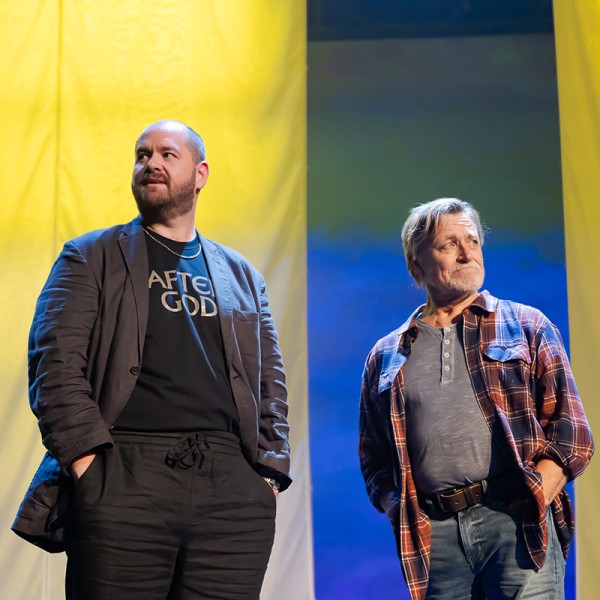
From the team that brought us Transmission and Transmission: Beta comes After God, a new verbatim play described by its writer Stuart McKenzie as a “mash-up of philosophical dialogue, medieval morality play, divine comedy, and absurdist drama in the spirit of Waiting for Godot”. For an audience, it’s a high-energy theatrical machine gun of ideas marshalled by a disciplined and beautiful production design and imaginative direction.

With a hungry mind and burning questions, McKenzie (mostly Andrew Paterson) hits the road, travelling from Wellington to Kathmandu, London, and New York. Along the way, he encounters a vivid cast of real-life characters: theologians, Tibetan rinpoches, philosophers, cosmologists, taxi drivers, hotel receptionists, a famous singing nun, and his own mother. Each has their own radically different way of making sense of human existence. As he travels, he is in constant conversation with theologian Mark C. Taylor (Michael Hurst), the author of the play’s subtitle, ‘Hope is an act of defiance’.

Assisting the two leads who expertly anchor the narrative are Kali Kopae, Roy Clark, and Tara Canton, who all do stellar work as the many other voices along the path of the two men’s journey towards understanding. The moment when the whole cast joins in song is divine.

Mark McEntyre’s elegant set design consists of two black platforms with steps either end and a gap in between so actors can move freely around the space. Five hanging strips of muslin, hand-pulled by the actors, provide a dynamic backdrop for Chris Bleackley’s visuals of helpful text and evocative photographs of hands. Natasha James’ lighting design, which makes excellent use of side light and colour, adds mystery and meaning to the play’s sense of place. Alongside Chris Ward’s atmospheric sound design, William Philipson’s original music complements with depth and rhythm.

Filled with existential questions and answers that leave much to ponder, this is ultimately a satisfying and superbly realised story of friendship between two men searching for God in a confounding world.

Elegance | Regional News

Elegance

Presented by: New Zealand Symphony Orchestra

Conducted by: Tianyi Lu

Michael Fowler Centre, 16th Oct 2026

Reviewed by: Tamsin Evans

It’s hard to choose a favourite from three courses of sublime music. Often, it’s the entrée for me but the second course was my pick from this feast.

The entrée, Elfrida Andrée’s Andante Recitative for strings, was wonderful. A romantic violin solo, hesitant and broken over sustained lower strings, melody passing between cello and violins, a thick almost chewy sound, rising from the deep to finish on sustained violin. Delicious.

The second course was Mozart’s Piano Concerto No. 27. Pianist Isata Kanneh-Mason played with the perfect level of dominance in her right hand, her left almost unnoticeable at times but always guiding our ears towards the melody. She played with astonishing fluidity and an admirable confidence in the face of the complexity and challenge of a well-known Mozart concerto.

The last movement, Allegro, perfectly combined Mozart’s originality with Kanneh-Mason’s incredible talent. In lesser hands, Mozart’s harmonic variations might sound repetitive, but multiplied many times over by the factor of Kanneh-Mason’s talent, this was infinite variety and inventiveness condensed into a few too-short minutes. Kanneh-Mason made Mozart her own creation, surely one of the hardest things in the world. A divinely played version of I Say a Little Prayer was her equally impressive, wow-factor encore.

As far as the NZSO’s institutional memory and archives can tell, the orchestra has never performed Serenade No. 1 in D Major by Brahms. Six movements show off his versatility and creativity in what is considered his first published orchestral work. Conductor Tianyi Lu’s interpretation, coupled with the orchestra enjoying the challenge of something less familiar, established a lovely light-heartedness throughout this piece. From the opening few bars, it was clear something joyful was coming, followed by something martial, romantic, playful, and confident. The finishing Rondo felt like a cantering horse was slowing to a fast trot, skittering slightly and coming to a happy standstill.

NAZA | Regional News

NAZA

(M16)

77 minutes

(5 out of 5)

Reviewed by: Isabella Smith

NAZA is an Israeli military acronym for nezek agavi, a Hebrew term for ‘collateral damage’ that creates an unsettling moral detachment from the realities of mass civilian deaths in Gaza.

This chilling investigative documentary from Israeli filmmakers Yuval Abraham and Rachel Szor takes place under the cover of night on Tel Aviv rooftops where Abraham carries out clandestine conversations with 24 Israeli Defence Force soldiers and intelligence officers. Produced by The Guardian, the whistleblowers provide testimonies about the military operations in Gaza that have killed over 73,000 people, describing in detail the artificial intelligence tools and complex automated surveillance systems used by the IDF to target homes and buildings and knowingly calculate the number of NAZA that would die as a consequence.

The interviews plunge viewers into 77 minutes of darkness, with the silhouetted profiles of the interviewees set against the lit-up cityscape. This stripping of the senses centres the voices, which have been altered to protect identities. Every now and then a loud plane flies overhead or sirens go off alerting the city of a nearby strike. The documentary is interlaced with footage peering through the windows of apartment buildings where people live out their daily lives, sitting on the couch watching TV or standing in the kitchen cooking dinner. It shows an enormous skyrise building being constructed at pace – a stark contrast to the descriptions of the strategic flattening of entire suburbs and towns just 60 kilometres further down the coast.

Some interviewees draw rudimentary pictures of weapons-screen interfaces and describe the inaccuracies of the AI tools used. Another describes the surveillance of a child’s phone to gather intel on when her suspected father will be home and therefore when to strike. The documentary is impactful in its specificity. It doesn’t attempt to draw a bigger picture, and it reflects the unsettling ways the IDF personnel viewed themselves within the much larger and highly granular war apparatus. One of them describes his role as merely “technical”, another says, “if I didn’t do it, someone else would’ve”.

Never have I experienced such a weighted silence as the credits rolled. The must-see film received the Special Jury Prize at this year’s Venice Film Festival. After its screen run, it will be available for free on The Guardian website in late November.

Big Orb Improv | Regional News

Big Orb Improv

Presented by: Pig Alien Productions

BATS Theatre, 9th Oct 2026

Reviewed by: Numi Stössner

In Big Orb Improv, Caitlin Penhey, Criss Grueber, Ciarán Searle, Trubie-Dylan Smith, and Brendon Bennetts make up stories from audience suggestions, with just one hour to show the titular Big Orb the breadth of human experience. The show is fully booked and a few guests can only attend via standby tickets. A promising start!

The strategy is straightforward: the actors ask questions and use our answers as inspiration for their improv. Questions include the viewers’ biggest childhood dreams and fears, the recollection of a scary event, or the place where one feels most peaceful. The variety of answers leads to a hilarious mix of storylines: a serene surfing trip transforms into a woman (Penhey) getting stuck in her wetsuit while her would-be saviour (Bennetts) is eaten by a whale; meanwhile, a boy (Bennetts) trying to strike a deal with the devil (Searle) to bring back his deceased cat Misty ends up calling Baby Spice of the Spice Girls for guidance.

The more absurd the story gets, the better. It is amazing to witness the group’s ability to transform audience responses into comedic scenes, their success driven by the way they mine us for additional details to draw on. Especially satisfying is the way they bring each plot together at the end, never missing the perfect moment to drop an almost-forgotten reference from earlier on. Throughout, the Big Orb signals its pleasure or displeasure by changing colour. For example and much to our amusement, it glows green when asked whether underage drinking is acceptable.

A highlight is the seamless integration of the pianist Finn McKinlay and the lighting and sound technician Campbell Wright, who shape the plot in many unexpected ways. For instance, McKinlay may randomly change the music, forcing the actors to adapt accordingly, while Wright’s voice resounds as that of an incorporeal entity.

I would be interested to see what would happen if audiences were called upon later in each scene, especially to have a hand in the storyline’s twists and turns. But ultimately, these players from Christchurch’s Court Jesters interpret and integrate our responses in a way I’ve never seen before, resulting in a hilarious show. Go to Big Orb Improv to have a good laugh with friends and see great improvisors doing what they do best.

Revelation Valley | Regional News

Revelation Valley

Written by: Lisa Maule

Kaharore Valley Press

Reviewed by: Margaret Austin

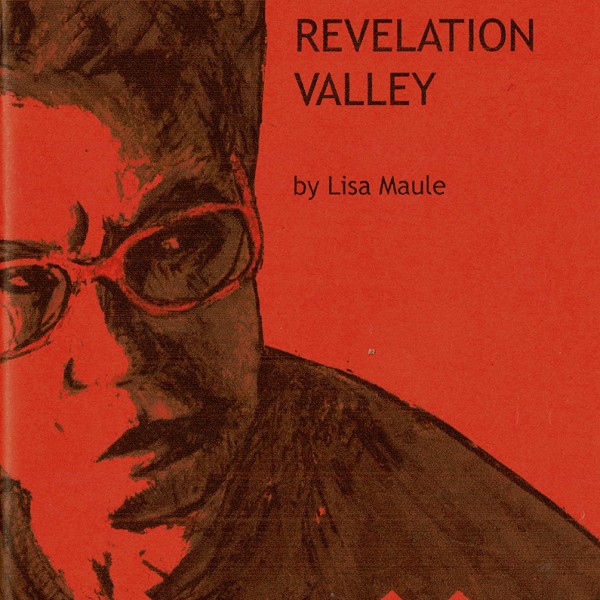
“Can you be underground / When you start writing poetry in your 50s?” asks Lisa Maule, author of Revelation Valley, a collection of poems published to coincide with her performance piece of the same name. This small but impressive book shows that you can!

Maule’s preoccupation with racial matters becomes evident in Dear Future Karori, which begins “In the past this suburb Karori smelt like convolvulus and / micro-racism”. I delighted in similar touches of humour lending lightness to serious subjects. I even enjoyed her overuse of a certain expletive when describing life, and her disgruntled reaction when, as a school pupil, she had Katherine Mansfield shoved down her throat!

I loved The pull of the bull in which Maule humorously describes a bull as a male cow. Hooray! Punning comes into its own: “This doctrine has moved in by stealth / These were Popes humping Westminster”. (A papal decree was known as a papal bull). The poem’s impact is enhanced by such a brutal analogy.

I also loved Inspired by Aoraki, subtitled an ancestor poem, where Maule laments her actual or metaphorical grandmothers thus: “My grandmothers are English and Scottish mountains / They have been mined for coal and ore” and continues in a similar vein describing the exploitation of natural resources occurring everywhere.

Karori is recalled again in Places of conflicted feelings. Maule remembers her family home in images some readers will recognise: “custom made wooden joinery / a fancy Formica bench. A cupboard for trays, a double sink”. These pieces of nostalgia are followed by a series of clever two-liners juxtaposing then and now. I am admiring Maule’s linguistic ability coupled with a lively imagination.

What sets these poems apart is that they signal the likeability of the writer. Maule is not resentful, aggrieved, or angry – emotions that steer writing in a particular direction. Instead, she brings a lightness, a tolerance, humour, and above all, an optimism to her work. This is best signalled in a line from her last poem Jagged and rolling. “Go to the dangerous dark joyous place. Art absorbs / tension.” Her work is an example of just that!

Calle Málaga | Regional News

Calle Málaga

(M)

116 minutes

(4 out of 5)

Reviewed by: Isabella Smith

I’ve recently (accidentally) gone back-to-back with movies ranging from relentlessly bleak and cerebral to horrifically violent and morbid. Watching Calle Málaga, directed by Maryam Touzani, was a tonic for the soul.

Warm and uplifting, it takes place in Tangiers, following the cheeky, defiant, and resourceful widow María Ángeles-Muñoz (Carmen Maura) after her estranged daughter arrives at short notice to alert her that she is selling the apartment María has lived in for over 30 years, giving her the option to come back with her to Madrid or be shipped off to a nearby retirement facility.

Not wanting to leave the streets and community she knows and loves and the cemetery full of friends and family behind, María secretly moves back into her home while the sale is pending. She finds it emptied of all the things she’s collected over a lifetime, all of it sold to an antiques dealer. As she engages enterprising ways to buy back her belongings, her life takes on new colours.

While the script is deft and humorous, there are potent layers of silence too. The best friend and nun Josefa (María Alfonsa Rosso) is a favourite character. She meets María’s hilarious tales with telling facial expressions, while María’s silences in response to her daughter’s betrayal highlight the futility of words and the strength and dignity of remaining quiet.

A thematic undercurrent of fading empire adds its own accent to the film but never quite rears its head. The apartment, bought for a song, is furnished in old-world fashion, and María fondly recalls her days working in the Teatro Cervantes during the golden age of the Spanish protectorate. Her daughter exclaims that she is the last one of her friends to remain in Morocco, the rest having followed their children and grandchildren back to Spain. Yet it is María’s love of Tangiers that defines her, and the rich colours and textures of the ancient city – with its narrow, labyrinthine streets filled with sounds and smells and people – make it a character in its own right.

Other silences in the film were a source of frustration. Threads didn’t get pulled and questions went unanswered that had the potential to adjust the light cast on each character, especially regarding the daughter, who felt quite 2D. When the credits rolled, I felt slightly shortchanged. But then again, those gaps and silences leave space for the imagination.

Black Gold | Regional News

Black Gold

Written by: Mark Pirie

Earl of Seacliff Art Workshop

Reviewed by: Margaret Austin

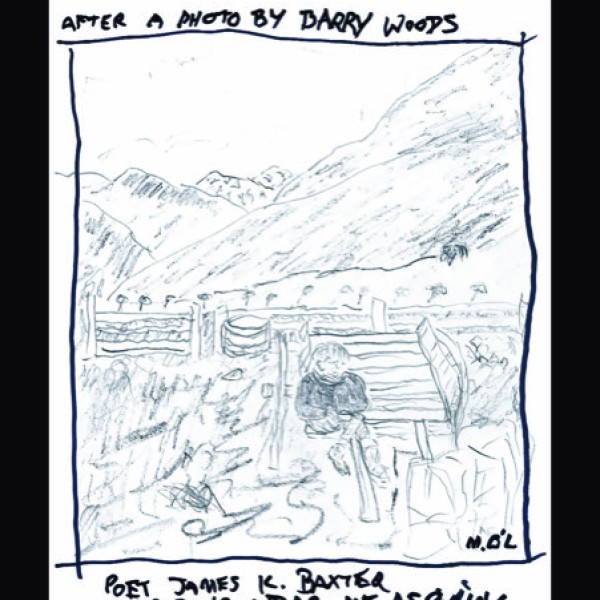
Black Gold is an evocative title and one that captures the theme and content of this collection. With James K. Baxter as its inspiration, the poems metaphorically dig into the soil of Aotearoa and celebrate the treasures therein. Here are names and places we recognise with nostalgia and praise, poetically framed by writer Mark Pirie.

In the first eponymously titled section, we learn that the author keeps a notebook, just as Clive James did, in which he stores literary tips and gems. “Poets mine for gold,” he says, “of similes, metaphors, symbols, onomatopoeia, rhetoric, metonymy…” Great vocabulary for budding poets.

Closer to home is a homage to poet, publisher, and Paekākāriki railway bookseller Michael O’Leary. In Labouring, Pirie likens O’Leary to poet Hart Crane, who dropped out of school to become a labourer: “Like Crane / you moved between the twin worlds of the academy / and the earthiness of the street.” Such double-sided life experience is recommended: second tip for budding poets!

In the section titled Tangi is a heartfelt tribute to poet Hone Tuwhare and his poetry collection Small Holes in the Silence. In On Reading Small Holes in the Silence, Pirie describes his admiration for Tuwhare thus: “Hone you were a Giant Kauri, / Still are. How would my / small roots be around you?” Memories and tributes to family members also feature.

And what about the section titled Black Sheep? I hadn’t heard of Edward Tregear, a British immigrant, who, the poet tells us “then lived for months with the Māori / never sighting the Pākehā / you left behind.” He wrote several books, plus a dictionary of Māori-Polynesian words and founded the Polynesian Society. “Only imaginative people really live,” Tregear is quoted as saying, and he was surely one of them.

The real black sheep are a bunch of boy racers in a poem of the same name whom Pirie remembers with fondness from his student days. This is a racy account!

James K. Baxter died at just 46. The 46 Pirie poems of Black Gold honour one of our greatest literary figures.

Green Sea: Lost in the New Zealand Bush | Regional News

Green Sea: Lost in the New Zealand Bush

Written by: John Summers

Te Herenga Waka University Press

Reviewed by: Kerry Lee

I still remember when an EC120 helicopter flown by New Zealand businessman Michael Erceg went down in the bush over Raglan in 2005 and was not found for over two weeks. The trees masked the copter so well that searchers at the time said, “It was almost impossible to spot.”

The terrible story elicited morbid fascination amongst the nation. Like everyone else, I wondered how an entire helicopter could simply disappear.

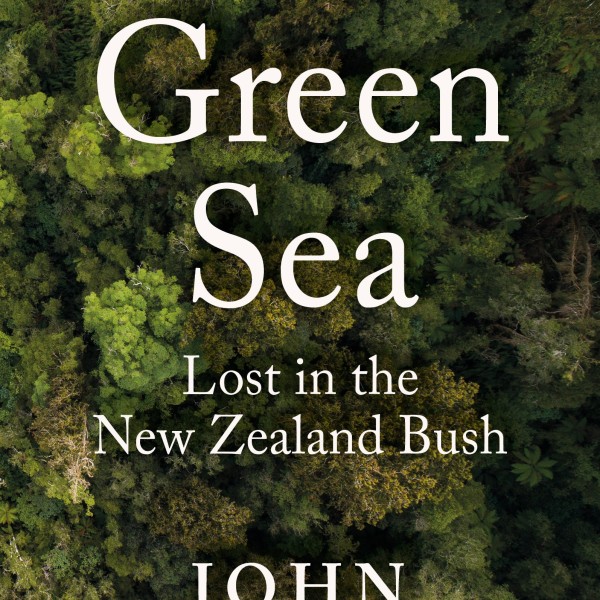
Green Sea: Lost in the New Zealand Bush, the latest book from award-winning author John Summers, takes us on a non-fictional ride into the psychological journey and shows us just how easy it is to get lost in the ‘New Zealand outback’.

Included are interviews from survivors who have been lost, and anecdotes from years past about people who underestimated the bush and paid for it – sometimes with their lives. Through Summers’ writing, we see just how small humans really are in the scheme of things, what being lost actually means, and the savagery of nature in our own backyard.

All at once, the book conveys the beauty of Aotearoa while vividly showcasing how dangerous it can be to the uninitiated. Summers' writing literally took me into the heart of the country, and I was glued until the very end.

The only real downside is that if, like me, you are a life-serving couch potato, Green Sea may not inspire you to set forth into the great unknown – indeed, you might be tempted to lock the doors instead and never venture out! However, don’t let that stop you! If you want something to read that’s insightful and well written, and you are an outdoorsy type who is interested in search and rescue and fascinated by how people get lost – and then found again – then Green Sea is something to look into. Especially as we move into Christmas and the New Year.

The Monk’s Chair | Regional News

The Monk’s Chair

Written by: Margaret Jeune

The Night Press

Reviewed by: Margaret Austin

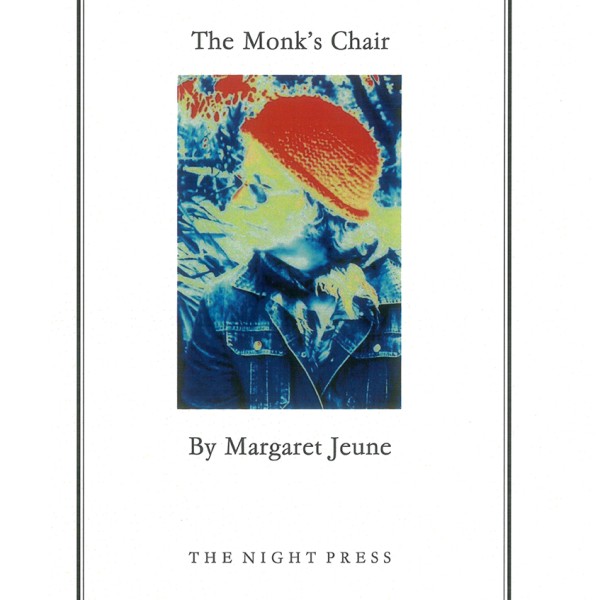
Margaret Jeune and I have several things in common: we’re both poets, we share the same first name, were born within a decade of each other, and from the first poem in her small but highly readable collection The Monk’s Chair, I felt an affinity involving landmarks and relics from the past that kept me happily reading to the end.

For much younger readers, appeal lies in the title page with enticements such as Glue, Free Speech, Open Mic Poets, and TV News.

I was particularly touched by An Encounter, which describes a meeting with a homeless man on the streets of Wellington surviving on next to nothing and depending on the kindness of strangers. After offering food and conversation, “I am the one who was blessed by the encounter”, remarks the poet.

An interesting question is posed in Free Speech, a mantra I have long been suspicious of, and Cataclysmic carries a justifiable warning about the world’s possible fate. Open Mic Poets also struck a chord. “The poets reveal their personalities / By how they hold the floor” is a sage observation. Take note, open micers!

Mother Nature is just one example of how this writer takes a serious subject and by couching it in accessible language increases its impact. We don’t need the esoteric to explain, illustrate, and warn, especially when it comes to matters of literally world-shaking import. Our poet makes no bones about the all-too-possible fate we and our planet may suffer.

The final poem, appropriately, is Legacies. “When we die, what will our legacies be?” Never think this question is banal – oh, you younger readers! Jeune considers it as we all must and concludes as we all must: the eternal question remains just that.

It’s a fitting note with which to conclude a wistful, thought-provoking collection.

Four Last Songs | Regional News

Four Last Songs

Presented by: New Zealand Symphony Orchestra

Michael Fowler Centre, 2nd Oct 2026

Reviewed by: Tamsin Evans

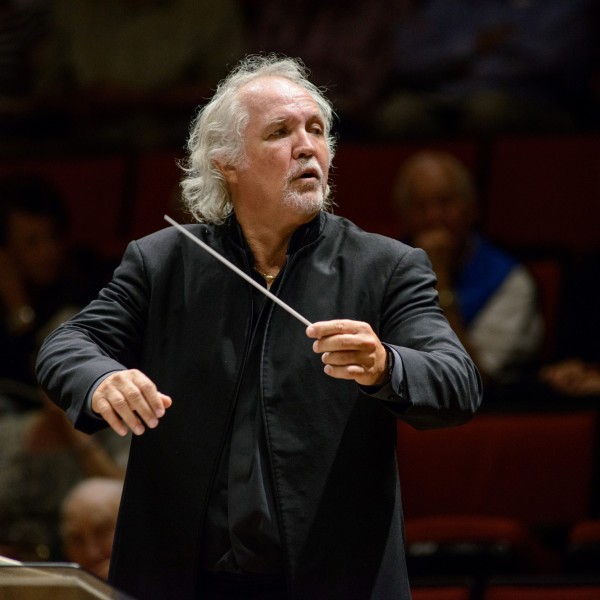
Sir Donald Runnicles described the first piece in the programme, Der Rosenkavalier Suite by Richard Strauss, as “the Reader’s Digest version” of this four-hour opera. It certainly is a condensed narrative, capturing the core of the opera in five sections. Runnicles brought out the best in the orchestra, producing a beautiful big tone from the horns, wonderfully melded woodwind, and superbly expressive strings. Light and texture seemed to come through sparkling clashes of sound and delicately smooth, shining passages of melody, but then speed and energy brought us all racing downhill, breathless, at the end of the final waltz.

By contrast, Four Last Songs, also by Strauss, is an ode to mortality, acceptance of death after a long life well lived alongside one’s companion. Soprano Madeleine Pierard is so well suited to these songs. Her voice ebbed and flowed with power, intensity, sadness, and control. From poise and elegance in the first song Frühling (Spring), she perfectly conveyed the contemplation of death in September, and the slow sense of time and life passing in Beim Schlafengehen (When Going to Sleep) and Im Abendrot (At Dusk).

Runnicles mused on what would accompany Four Last Songs on the programme and told us Symphony No. 3 by Brahms was chosen because of their shared power and beauty; quiet and peaceful endings over a bittersweet shadow.

The second and third movements, Andante and Poco allegretto, captured this clearly. The relaxed and assured sound of woodwind in the Andante was a gentle folk dance hiding a sense of disquiet, carefully nurtured by Runnicles and excellently resolved by the musicians and the music at the end. The third movement, opened by a wonderful melody in the cellos, moved through tonal and major-minor shifts to lead into the fourth movement which delivered a sparkling peak, with suitably crisp sound from violins and cellos, before settling and reaching its tranquil end.

But Why, Dad? | Regional News

But Why, Dad?

Created by: Tom Knowles and Jeff Parsnips 

Running at Circa Theatre till 10th Oct 2026

Reviewed by: Dani Yourukova

“Why do birds sit on power lines, but if I touched a power line I would be electrocuted?”

The show has not technically started yet, but Tom Knowles and Jeff Parsnips did say that they wanted us to ask questions. So, the young audience member who wants to know about power lines is just following instructions. Gamely, both of the titular dads stop the pre-show in its tracks to give him their full and immediate attention. Jeff works through an explanation about how electricity needs to be grounded before it can complete a circuit. Tom suggests it’s something to do with what bird feet are made of. 

“... Do you think birds’ feet are made out of rubber, Tom?” Jeff asks. 

“Probably.” Tom answers, with the kind of dead-pan earnestness that will be familiar to dad-havers everywhere.

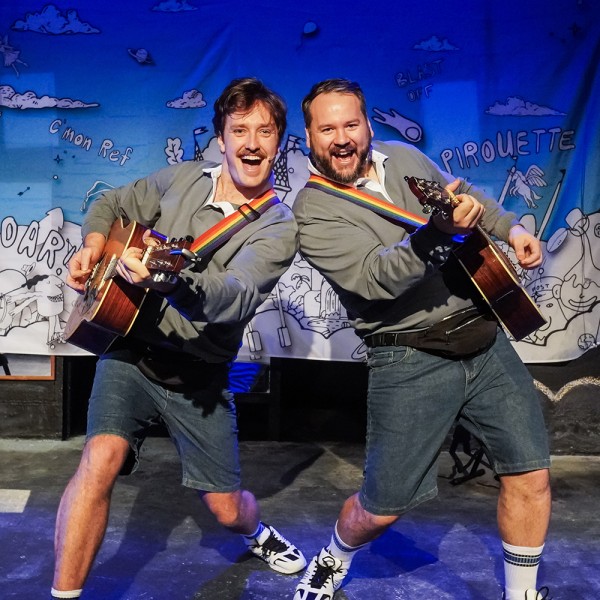
It’s this combination of Tom and Jeff’s genuine engagement with kids’ curiosity, and a riotous side of Kiwi dad humour, that makes But Why, Dad? so very charming. Even more impressively, they mostly deliver the show through the medium of musical comedy. 

The story is loosely centred around a son asking his dad a series of difficult questions, which become prompts for comic songs. Together, Tom and Jeff tackle topics like overwhelming emotions, the power of asking ‘why’, and lesser-known words you could put in an alphabet song (B is for Barracuda!). It’s sweet, goofy, and heartfelt, with tonnes of laughs, loads of opportunities for the kids to join in, and plenty of humour for the parents too. 

The show does have a villain: an AI robot who offers to answer the child’s questions when dad starts to struggle. It speaks from its clinically smooth screen in a clinically smooth American accent, in stark contrast with dad’s stumbling Kiwi bloke mannerisms and mismatched socks. This topical conflict comes down to a delightfully silly resolution, which celebrates the many joys of ‘asking dad’ when you have a question.

Orchids and Camellias | Regional News

Orchids and Camellias

Written by: Sophie Rogers

Flying Books Publishing

Reviewed by: Jo Lucre

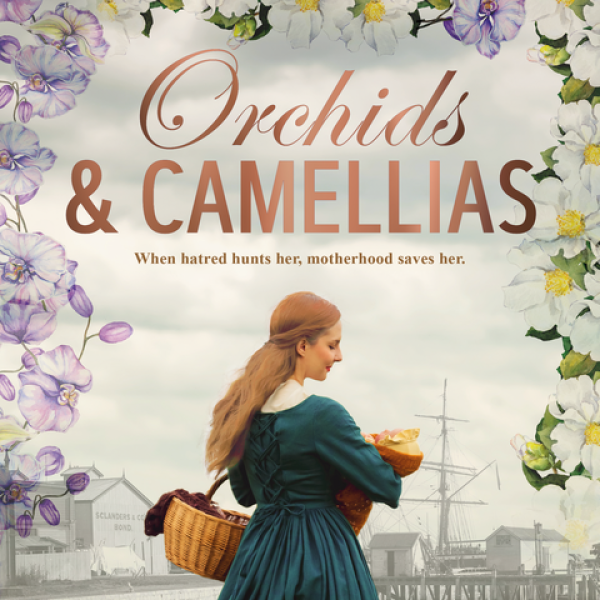
In Orchids and Camellias, Ginny Yang is newly widowed and forever looking over her shoulder, held prisoner by a past that assailed both her and her late Chinese husband Deming.

On the run from her father and his cretin-like cronies, Ginny has no choice but to fight a fight she never asked for. Set in Nelson in 1869 and beyond, her sole motivation is to care for her son Liang. Ginny searches far and wide for allies in a world that sees no place for her or her mixed-heritage child.

Forced into a fleeting and transient existence, she moves through Nelson, Wellington, Christchurch, Dunedin, Queenstown, and Arrowtown, navigating each unforgiving and equally unkind landscape set on destroying her soul, removing her voice, and oppressing her child.

Author Sophie Rogers starkly captures the grit and muck that discrimination brings. Fuelled by despair, Liang the child, then young man, is heartbreakingly aware his face is unwanted and unwelcome. Through his very existence alone, he knows there is no escape from the harrowing discrimination thrust upon him and his father years before.

Orchids and Camellias is a vivid historical telling of one woman’s strive for acceptance, played out amidst the backdrop of a time where women were fighting for their voices to be heard and unrest over prohibition was stirring. Ginny’s love and dogged determination to care for her child in the face of much adversity and emotional turmoil is both humbling and wrenching.

In Orchids and Camellias, Rogers conveys a racism so deeply embedded at the time that it is encouraging to follow Ginny and Liang’s search for a place of peace and safety. The novel certainly held my attention to the very end. I was expecting a different ending though; the one I had imagined played out tidily in my head, but it was a great, captivating read all the same.

Social Climbers | Regional News

Social Climbers

Written by: Roger Hall

Directed by: Trudy Dalziel

Gryphon Theatre, 23rd Sep 2026

Reviewed by: Tanya Piejus

Roger Hall’s 1995 comedy is given a gentle facelift in Stagecraft Theatre’s revival. The six disparate personalities and electricity-free DOC hut are the same, but new references to Wi-Fi, charter schools, and former Minister of Education Hekia Parata update the script for a modern audience. It’s a good choice on director Trudy Dalziel’s part as this comedy about a group of female teachers forced to spend a long weekend together with minimal comforts is an evergreen one, displaying Hall’s gift for understanding people with all their virtues and flaws.

Simon Boyes’ authentic set – complete with solid bunks, running water, and a corrugated steel wall visible beyond the door – is an excellent canvas on which the highly adept cast paint their characters. They work smoothly together as a group and are convincing as long-time colleagues, while clearly understanding and relishing the comedy as well as the quieter moments. The opening night pace felt a little slow, but I’m sure it will pick up as the cast settle into the groove of performance and dig even deeper into the bonds between these appealing characters.

Gillian Boyes’ vain and ill-prepared Maxine is a standout with her loud, Fendalton-accented posturing, while engendering sympathy when her closely held secret finally emerges. Liz Gibson is also deeply engaging as put-upon mum and bookworm Emily, which is particularly impressive when it’s the most emotionally demanding role and this is Gibson’s first time on stage in 30 years.

Brian Byas’ sound design nicely bridges the scene changes with soundscapes of birds and relentless rain. Jamie Byas’ accompanying lighting design is particularly effective in the nighttime scene when the deep blue and possum stomping on the roof will bring shivers to anyone who’s attempted sleep in a tramping hut. Cailtin Laurie and Dalziel have done an excellent job with the many tramping-related props.

Revealing the complexities of relationships with humour and warmth, Social Climbers is an enjoyably entertaining way to spend a couple of hours this spring.