

Reviews - Regional News | Connecting Wellington

Reviews

Grassroots | Regional News

Grassroots

Written by: Raureti Ormond

The Hannah, 18th Sep 2026

Reviewed by: Oliver Mander

Many New Zealanders, and Māori in particular, have a spiritual connection with ‘place’. Raureti Ormond’s foundation is Tihoi (near Taupō). For this reviewer, it is the mighty Waimakariri and the rugged mountaintops of inland Canterbury.

Ka kitea e au taku wairua i ngā maunga me tētahi awa wai mātao e rere ana i taku taha: I find my spirit in the mountains with a river of cold rushing water at my side.

Given that Grassroots is billed as a “hilarious and heartfelt odyssey through New Zealand’s rugby culture”, that may seem like an odd place to start. But as Ormond explores finding personal identity within inherited legacy, it is his connection to both whenua and whānau that is the most powerful feature of this must-see show. We all find our ‘greatness’, even if it is different to what has gone before.

Ormond observes that in rugby, to go forward, we are forced to pass the ball backwards. The analogy describes how we learn from both history and our personal background. New Zealand’s rugby history becomes the mere vehicle by which Ormond explores our country’s social and attitudinal evolution towards race, homosexuality, and gender stereotypes.

Grassroots is not really a comedy. Great comedic dialogue and devices help move the story, but the core audience emotions are based on reflection, nostalgia, and relationships. Ormond’s renditions of classic Kiwi tunes within the performance augment the emotion. Comedy allows delivery in an engaging form and helps to manage emotional transitions, but the use of humour feels a touch overdone at times. This wasn’t helped by an over-enthusiastic audience, many of whom clearly knew Ormond. In this context, it wasn’t easy for Ormond to encourage reflection, even when his performance warranted it.

The show’s production values are strong. A simple set (Scott Maxim) supported by multimedia (Maxim, Ormond) facilitates scene and wardrobe changes that keep the story moving.

Grassroots is a uniquely Kiwi experience that had this reviewer in tears. See it whenever and wherever you can.


Mum, I’m Alien Pregnant | Regional News

Mum, I’m Alien Pregnant

(R16)

95 minutes

(4 out of 5)

Reviewed by: Isabella Smith

The debut feature film of director duo THUNDERLIPS (Sean Wallace and Jordan Mark Windsor) follows the immaculate conceiver Mary (Hannah Lynch), a millennial rotter living with her overbearing mum Cynthia (Yvette Parsons) in a housing complex. Mary becomes alien pregnant when her nervous and gawky neighbour Boo (Arlo Green), endowed with an extraterrestrial appendage, accidentally fires a cosmic load on her pants after a brief encounter in the shared laundry.

What follows is a stomach-flipping, blood-draining, visceral whirlwind through the hospital system as Mary attempts to put a stop to the turbo-paced growth of the alien parasite. This clever sci-fi body-horror comedy is more than just the exaggerated and violent rearranging of Mary’s body and life as she is rent asunder from the inside out. Beneath the galactic spunk, litres of Powerade-blue vomit, projectile breast milk, and mucus-drenched sheets, it dissects the humiliations that come with the reproductive process and the sudden loss of agency over one’s body when family, religion, doctors, police, and politicians get involved.

The film is riddled with Kiwi deadpan comedy, but the ‘yeah nah’ and ‘she’ll be right’ pleasantries of the doctors, nurses, and police become insidious when paired with their do-nothing attitude. Comments like ‘you asked for it’ and ‘maybe it’s fate’ derail agency, while the lengths Mary takes to abort the alien shines a gruesome light on the dangerous situations people find themselves in when confronted with an unwanted pregnancy and a system built by men who deny their right to choose.

The characterisation and acting are spectacular on all fronts, capturing classic Kiwi types and their role in upholding systemic and societal issues over plenty of cups of tea. A special mention to Jackie van Beek who plays Ann, Boo’s uptight and starchy mum hellbent on protecting her son and keeping the mess off the carpet.

Mum, I’m Alien Pregnant is a must-see, bold, and batty exploration of autonomy and consent. Blending gore, humour, and depth in healthy measures, it highlights the outsized expectations placed on women (and their partners) when they accidentally find themselves up the duff and out on a limb.

A Welly Full of Laughs | Regional News

A Welly Full of Laughs

Presented by: Mon Platon Productions

The Hannah, 13th Sep 2026

Reviewed by: Numi Stössner

After a sold-out January showcase, A Welly Full of Laughs is back at The Hannah for another round of Wellington’s “best comics delivering their best sets”.

According to the queue that is already forming when I approach the theatre on this spring evening, everyone seems to be ready for a good night, and so am I.

The host of tonight’s show is Jerome Chandrahasen, who immediately warms up the crowd by starting a heated discussion on the tension between Upper Hutt and, in his words, the “proper” Hutt, Lower Hutt. What a perfect way to get us going. Over the course of the evening, he introduces and invites 10 of Wellington’s top comedians to deliver compilations of their best bits on a stage as colourful as their performances. Designed by Austin Harrison, who constructed it with Nina Hogg (the pair behind Mon Platon Productions), the bright backdrop consists of dozens of buckets hanging from the ceiling to the floor – a set befitting such varied sets!

Topics range from lesbian awakenings at the Catholic church (Clarissa Chandrahasen), to the uniquely Kiwi “aggressively passive” character of men (Mike Fowler), and the questionable reasons for buying café merch (Hoani Hotene). My favorite set by far is Jak Darling’s, who proudly takes us beyond comedy alone into “thinking territory”. They proceed to dramatically perform a tragic poem of a daddy long-legs trapped in their shower, a story that is as relatable as it is hilarious. The evening ends with a comically bizarre dance performance by JoJo Bellini, in which she invites the crowd to throw ping pong balls at one of the targets fixed on her barely clothed body, all whilst singing Hit Me with Your Best Shot.

While no comedian can be for everyone, A Welly Full of Laughs was a great way to explore what Wellington’s comedy scene has to offer. I laughed, I cringed, and I guarantee that every viewer will have walked out with a different personal favourite, just like I did. An entertaining collection of carefully curated, clever comedy.

Uncle Vanya | Regional News

Uncle Vanya

Written by: Anton Chekhov

Directed by: Andrew Foster

Circa Theatre, 12th Sep 2026

Reviewed by: Tanya Piejus

Circa has brought to new life another theatrical classic for its 50th anniversary. Anton Chekhov’s masterwork of the human condition is this time seen through Andrew Foster’s sensitively creative lens, relocated to a rambling Kiwi farm, and delivered through the languorous dysfunction of contemporary cultural malaise.

The original cast of eight is reduced with aspects of two roles merged into other characters or replaced with soliloquies to the audience. Both are clever decisions and tighten the narrative, while giving talented musician Kali Kopae the opportunity to display her guitar-playing and singing skills as Helena.

As Vanya, Tawhi Thomas is superb: deeply fallible but ultimately empathetic despite his self-described failure at life and tendency to whine about everything and everyone. The other five cast members are equally strong, and all are entirely convincing as a group of people who have known, loved, and irritated each other for years. Cross-casting Sonya as Sonny is a brilliant decision and Andrew Paterson brings fresh longing to the character’s unrequited love for Michael (an excellent Jonny Potts). His final speech to Vanya with his arms wrapped lovingly around Thomas’ leg is devastating. Peter Hambleton’s Alex is wonderfully arrogant and the sort of character you love to hate.

Foster’s set is a long, narrow area between traverse seating rostra with a dark, hazy space beyond it through which the characters move off into the world outside the house. His scene changes are just as watchable as the scenes themselves, as the cast move bits of furniture and props in subdued light while occasionally interacting with each other in character. The final transition in which the stoic Maria (Carmel McGlone) stands alone while others move around her, one gently handing her a scarf, is sublime.

Marcus McShane’s lighting design is lush and warm. A huge disc suspended above the void at the end of the acting area is most often a vibrantly glowing sun, a visual delight that anchors the space. Chris Ward’s sound design complements the lighting beautifully with subtle soundscapes, spot-on effects, and well-chosen music. 

Classic Chekhov for the modern age. Don’t miss it.

Flutter | Regional News

Flutter

Created by: Anna Bailey, Bridget Saunders, Stephanie Cairns, Jen McArthur

Directed by: Bridget Saunders

BATS Theatre, 11th Sep 2026

Reviewed by: Madelaine Empson

As I take my seat at Flutter, a tiny, curious chick hops over to me and… dunk! Takes a sip out of the water glass at my feet! I’m charmed before this kids’ puppet show has even begun.

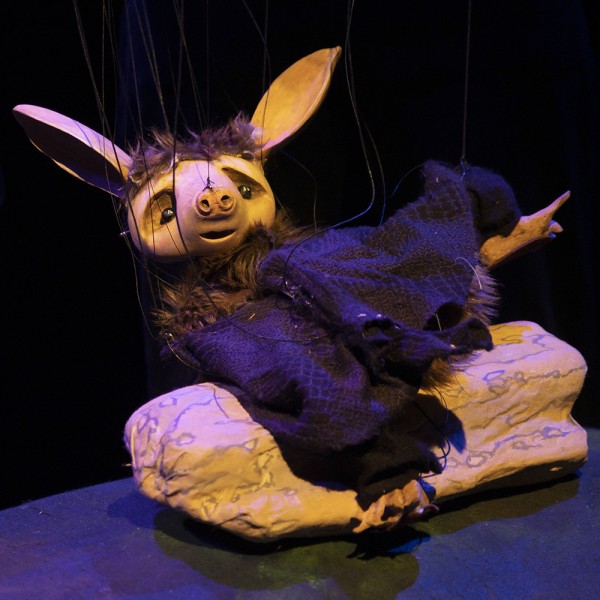
Pepe the bat is enamoured with regal Moon (composer and onstage musician Stephanie Cairns, who plays accordion, keys, and a toy piano with a delay effect for maximum whimsy). But sometimes Moon is cheeky and hides from Pepe, who is afraid of the dark and what scary creatures might lurk in it. Thankfully, Titi the glowworm falls from the stars and has a light-up butt! The two become fast friends, but a hungry stoat with glowing red eyes is circling...

With help from Erica Duthie (puppet painter/surfaces), TAHI 2026 creative resident Anna Bailey has crafted intricate puppets that crackle with a surreal eccentricity. Titi in particular puts me in mind of a Tim Burton creation. Her characters are magnetic and so fascinating to watch that you forget she is, quite literally, pulling the strings. They glide along Struan Ashby and Roger Sanders’ set, which comprises bright green hills to climb, silken waterfalls to slide down, and little nooks for bedtime. It all makes for magical viewing, especially when Moon floats past a tapestry of stars (electrician and light construction by Joseph Bailey) in her ethereal costume (Sarah Bell).

No doubt kids will walk away wanting to know more about New Zealand wildlife, just like I did. I was inspired to do some research into the nasty stoat and learned that it reportedly mesmerises its prey with a weasel war dance! After the show, Anna chatted with lots of the littlies who wanted to meet the puppets and I heard her telling them all about the introduced predator to many ‘ooh’s and ‘aah’s. It was lovely seeing their curiosity so stimulated, their comfort in large part thanks to the safe environment Anna created – especially by giving cues at the start as to how they could opt out of interaction if they wanted.

Flutter does a marvellous job of sparking the imagination of tamariki… and, safe to say, grownups too!  

Big Low Dream | Regional News

Big Low Dream

Presented by: Footnote New Zealand Dance

Choreographed by Jessie McCall

The Hannah, 10th Sep 2026

Reviewed by: Tanya Piejus

Footnote New Zealand Dance always delight and surprise with their boundary-pushing productions and Big Low Dream is another fine example of that ethos. Described as “an unorthodox homage to Dreams by The Cranberries”, this work is an imaginative reinterpretation of the sentiments expressed in that song’s lyrics. In addition, the pulsing soundtrack by 2025 Wellington Theatre Awards Sound Designer of the Year Thomas Lambert is cleverly constructed wholly from the instrumental and vocal layers of the song.

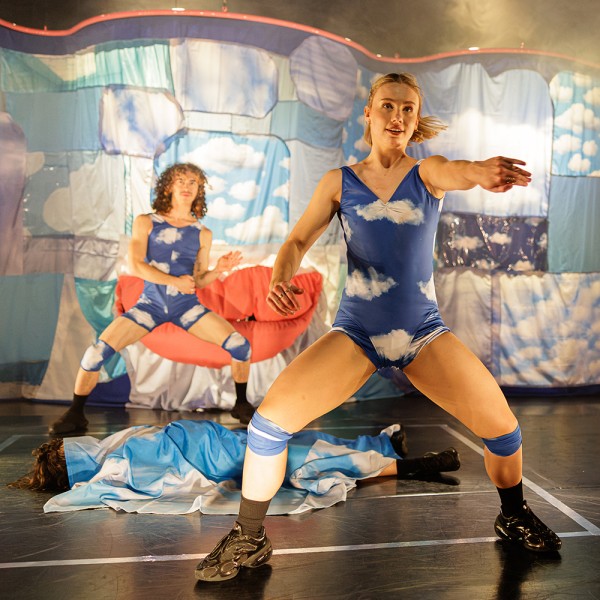
Four young dancers (Airu Matsuda, Sasha Matsumoto, Caleb Heke, and Millie Maden) open with an appropriately 90s set of spunky dance moves to the introductory bars of the song, but these are abruptly cut short by a blackout (lighting design by Tony Black). Then, we are launched into a dream world of moving clouds, drifting smoke, floating gold helium balloons in the shape of letters, and a giant, pink mouth that frequently spits out the performers into new movements and tableaux. The gorgeously patchworked backdrop by Anne de Geus holds this plump-lipped orifice, which the dancers operate to excellent effect.

The four dancers work seamlessly together and apart in a series of short segments, while the handful of floating gold letters spell out reconstituted words: DEATH, DREAM, TEAM, MATE, ART, and so on. These are a creative cue to the vibe and intention of many of the segments and sometimes become part of the choreography as they gently dance above the performers or form part of their tableaux.

The hard-working dancers manage all the other simple, recycled props too. Perspex triangles start as teeth inside the sinisterly gaping mouth, are taped together to become a crown, and are used as daggers. A square of the same stretchy material the dancers’ outfits are made from is a superhero’s cape, a portable backdrop, and finally a shroud.

Like dreams themselves, this new dance work is ever-changing, surreal, and sometimes hilarious. So, slip on your virtual pyjamas and drift into the land of the Sandman with Footnote Dance.

Dinner’s Getting Cold | Regional News

Dinner’s Getting Cold

Written by: Mamaeroa Munn

BATS Theatre, 9th Sep 2026

Reviewed by: Tanya Piejus

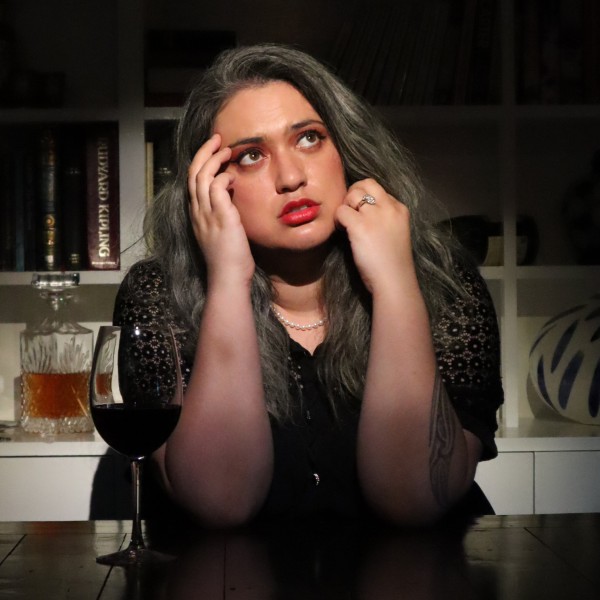
A solo psychological thriller with lashings of dark humour, Dinner’s Getting Cold concerns a woman somewhere in the past played by the production’s writer Mamaeroa (Mo) Munn (Ngāi Tahu, Ngāpuhi) waiting for her husband to come home for dinner.

She starts off confidently telling us about the whirlwind beginnings of their relationship where John swept her off her feet after their eyes met across a smoke-filled office. Romantic dates, gooey compliments, and lavish gifts preceded a quick marriage, house buying, and domestic bliss. This all seems like an unreachable dream come true for “a Maōri girl” who’s always been a klutz and told she’s a disappointment. As the evening wears on, wine is swilled and we learn the twisted truth about the nature of their relationship and why John still hasn’t come home.

Munn is a gifted comedian and able to skilfully draw out the emotional depths of the situation her character is swamped in, both in her writing and her performance. Decades of trauma and abuse are unravelled in seemingly throwaway lines and the sudden realisation of the enormity of what has happened to John occurs through a simple and otherwise innocuous question. Her final image is a uniquely delicious moment of comedy horror.

The semi-realistic setting (production by Quentin Potts (Ngāti Kahungunu), Aroha Faletolu (Ngā Puhi), and Ralph Hilaga) is a retro fanatic’s delight of mid-20th century gorgeousness. Furniture and appliances suggest 50s, pop music suggests 60s, and cultural references suggest 70s. The nebulousness of the exact time we’re in feels deliberate, revealing how trapped within this world our protagonist is and that this story could belong to any woman.

Tough themes often hit hardest when their truth is revealed through cleverly pitched comedy and that’s clearly the case with Dinner’s Getting Cold. Without the laughs, this hour of storytelling could be emotionally torturous for its audience. The healthy dash of mystery also propels it forward to its seemingly inevitable ending.

Blackpill | Regional News

Blackpill

Written by: Rachel McLean

Directed by: Rachel McLean

BATS Theatre, 9th Sep 2026

Reviewed by: Tanya Piejus

Part of the TAHI Festival of Solo Performance, Blackpill is a confronting verbatim play taken from the online forums of the manosphere where incels preach their violent and dogmatic ideology, express profound hatred for women, and share their pervasive loneliness. 

Anyone who has watched Adolescence or Louis Theroux’s Inside the Manosphere on Netflix will have some idea of what to expect. However, Rachel McLean’s play goes to a deeper level of toxic masculinity – and emasculinity – by taking her text straight from the pernicious anonymity of the internet. What results is a brutal exposé of a sub-culture that is extraordinarily warped in its view of life.

Zachary Klein is a devastatingly effective performer. Starting with simulated masturbation, he brilliantly embodies the diverse facets of the incel world from the clichéd basement-dweller to the looksmaxxing poser to the severely depressed, socially isolated loner contemplating suicide as the only solution to his entirely joyless existence. It is this last persona that hits hardest, along with the realisation that these men hate each other, and themselves, as much as – or maybe more – than they hate women.

Rachel McLean’s direction is as accomplished as her scriptwriting, making the visual presentation of a solo performance constantly interesting. And I’m always excited when I see Rebekah de Roo’s name on the crew list. Her production and AV design more than meet my high expectations. A multi-panelled, monochrome screen behind Klein becomes a canvas for a complex and ever-changing, equally monochrome kaleidoscope of imagery, helpful definitions of the language of inceldom, distorted videos of Klein, and hate-filled rants from the chatrooms. Lucas Neal’s lighting design is also superb with highly effective use of practical lamps and subtle colour tones to complement and highlight the action. Ben Kelly’s liminal sound design rounds out the production’s netherworld between reality and the limbo of cyberspace.

Like its glossy Netflix cousins, Blackpill is blisteringly truthful, painfully revealing, and will leave you wondering where and why it all went so horribly wrong.

Flight Club | Regional News

Flight Club

Written by: Zody Takurua

Directed by: Ahi Karunaharan

BATS Theatre, 9th Sep 2026

Reviewed by: Zac Fitzgibbon

How do you hold what you are given when someone passes away? Is being needed the same as being loved? How does loneliness impact our actions? These are some of the many questions that Flight Club, written and performed by Zody Takurua (Ngā Rauru, Te Kāhui Rere), poses. Directed by Ahi Karunaharan, the piece follows someone growing up in a fractured family, entering foster care, and making sense of what they carry as a result. Utilising the pūrākau of kuaka, the bar-tailed godwit, child of Tāne and great storyteller, the narrative is interwoven with an equally remarkable tale.

Heartbreaking, real, and relatable, this solo show could touch the innermost part of everyone’s wairua. Through design (mentored by Grace O’Brien) and Takurua’s performance and words, the idea of how difficult it is to hold what people leave behind particularly moves me. Flight Club challenges you to feel, connect, and consider so much in such a short time.

The motif of the heartbeat (sound design by Mannuel Caballero) pulsating through the space enriches the performance. It feels like the stone in the kuaka’s throat urging him to return to Aotearoa, but also a signal for yet another moving conversation. Lighting (Alexander Dickson) is dramatic and at times playful; the way it interacts with Takurua’s body creates a perfect partnership. I enjoy the inherent queerness of Flight Club, the beauty of it creeping into the softest of moments. I would love this to be explored more.

Takurua soars with outstretched wings. With tact and dexterity, they switch from thoughtful, tear-jerking remarks to proclamations of bountiful humour. Their movements flow like a manu gliding in the sky. Vulnerable points of human connection are poignant, particularly during audience interaction.

Touching parts of grief I didn’t even consider, I feel Flight Club helping to heal my wounds. Even if you see it multiple times (and I implore you to do so), you will collect new fragments of brilliant wisdom. Part of the TAHI New Zealand Festival of Solo Performance x BATS Theatre Residency for LGBTQIA+ artists, this show is filled with nothing but aroha and ātaahua. Arohanui Zody Takurua.

Mel Parsons: Castle Hill Album Tour | Regional News

Mel Parsons: Castle Hill Album Tour

The Opera House, 5th Sep 2026

Reviewed by: Graeme King

Mel Parsons is an award-winning indie folk and alt country singer, songwriter, and guitarist based in Lyttleton. She is touring her seventh album Castle Hill, currently number one on the Official Top 20 Aotearoa Albums Chart.

This show, which included the whole new album and many older favourites, was a revelation. The interaction between Mel and the band and the audience was natural and encouraged. The vibe was fun! The superb band – drummer Jed Parsons, guitarist Josh Logan (also the album producer), and Aaron Stewart on double and electric bass – all provided impeccable backing vocals.

The first set of all 10 songs from Castle Hill opened with the hauntingly beautiful Grain by Grain. After the second song Not Enough, Mel said she was experiencing sound issues, but the sound balance was superb for the audience. After Caravan, she mentioned she had been trying desperately not to bring up the fact that the new LP went to number one, and that she had been absolutely insufferable!

Prior to Be Here Now, she described how she was trying to be more present with her children in these days of cell phone overuse. The tone became sombre with Don’t Leave the Light On, a heavy song about psychological domestic abuse. The upbeat Post High Slide, featuring full harmonies, finished the set.

Set two started with Alberta Sun from her 2015 Drylands album. The stunning 5432 featured haunting melodies. Then came Circling the City with its beautiful a cappella ending. A three-song semi-acoustic bracket followed, including Aaron’s gorgeous double bass on Down So Long, and the bluegrass vibe of True Story featuring a brief double bass solo!

After Jed’s solid drumming on Little Sadness, with its catchy chorus, Mel gave a huge shout out to the sound man, backstage crew, and everyone involved with the tour. Driving Man featured Josh’s very tasteful Mark Knopfler-esque guitar licks, followed by the upbeat and rocking Just ‘Cause You Don’t Want Me. The first encore was the mellow Don’t Wait, then sadly it was time for the last song Far Away, which sounded like an Irish reel, complete with loud audience clapping! A fun ending to the night’s sublime entertainment.

Rhythm & Dance | Regional News

Rhythm & Dance

Presented by: New Zealand Symphony Orchestra

Conducted by: Gemma New

Michael Fowler Centre, 4th Sep 2026

Reviewed by: Tamsin Evans

There couldn’t be a more apt programme title than Rhythm & Dance. It told me what to expect and describes what I took home.

20th-century American music is one of my favourite genres and The Chairman Dances by John Adams is a great example of why. An ‘outtake’ from Adams’ opera Nixon in China depicting Chairman Mao dancing a foxtrot with his mistress could only have been written by an American during the 1980s while President Reagan was building a close relationship with the Soviet Union. Musically and politically clever, this was something majestic but also skewed, brought to life impeccably by Gemma New and the orchestra.

The first movement of Aaron Copland’s Clarinet Concerto is not easy to listen to. The mood is low, accentuated by shifting tonality and tightly woven clarinet and strings. That mood broke with the cadenza linking the two movements. Patrick Barry’s virtuoso clarinet playing was very clean, with a crisp, clear sound launching a jazzy liveliness, demanding energy and dexterity from the musicians. The eight bass players got to really strut their stuff with a great stomp.

Antrópolis by Gabriela Ortiz is a tantalising glimpse of Mexico City’s vitality and spirit. The surprising star? Timpani. In several brilliant, amazing solos, section principal Laurence Reese took centre stage like (but also quite unlike) the dancer who steals the floor and dazzles the crowd standing in the club.

New is celebrated for her attention to detail and texture, meticulous rhythmic control, and collaborative relationship with the orchestra. Leonard Bernstein’s Symphonic Dances from West Side Story demonstrated the extraordinary partnership between New and the NZSO. Together they brought us intense, hopeful teenage romance, energetic and vital dance in mambo and cha-cha, Cool young men circling, shouting, and posturing before the Rumble, and the tragic but powerful and emotional Finale. No words, outstanding musicians, great leadership. Unspeakably good.

Lucky Creatures | Regional News

Lucky Creatures

Written by: Joseph Trinidad

Te Herenga Waka University Press

Reviewed by: Tineke Buser

As the title suggests, Joseph Trinidad’s debut essay collection Lucky Creatures has proven to be an incredibly fortuitous read, nestling itself tenderly within my bookshelf and heart. Unfeigned and authentic, Trinidad’s writing provides a real rarity: familial intimacy. Adopting the reader as an honorary member of his pamilya, he dishes up a sensory medley. Prose-like in style, minutiae breathe life into the seemingly mundane. The age spots on Mami’s hands, Eleng’s salt-and-pepper hair, Papa’s foil pouch of prunes intertwine into a visceral image of family.

Immigrating from the Philippines at a young age whilst coming to terms with his gay identity, the author materialises his hardship with heartbreaking sincerity. “A graveyard almost convincingly dressed as a postcard”, his family bade goodbye to all the places they knew, “leaving everyone, the living and the dead”.

As a queer individual with an immigrant family, the nuances within Trinidad’s experience mirrored those of my own, verbalising struggles I have yet to put into words. To me, the most poignant aspect of this text is the portrayal of parental foreignness.

Moving during childhood is difficult, but a child’s identity is still unfinished. Their language is still forming, sense of belonging still taking shape. They can learn new words, new customs, new ways of calling somewhere “home”.

For the migrant parent, there is no such luxury. They are the ones who leave everything behind – their language, their culture, their community, the familiar contours of a life they once knew – so that their child can inherit a world larger than the one they were born into.

Growing up, I never considered what my parents had lost. That, much like the Trinidad family, identity had shifted from a physical location to the abstract. This type of isolation carries an inescapable weight, bearing “the same skin, the same voice, the same vices”, yet somehow feeling perpetually displaced.

There is a peculiar sadness in realising that your whānau is foreign. Not foreign to you, necessarily, but to the place they have been asked to call home. Perhaps that is the greatest fortune of Trinidad’s collection. It does not simply tell a story about immigration, queerness, or family; it gives language to the spaces between them.

The Missing | Regional News

The Missing

Written by: Fleur McDonald

HarperCollins

Reviewed by: Denver Grenell

Fleur McDonald’s latest rural crime story The Missing invites the reader to tread the dusty streets of Kalgoorlie and its desert surroundings in Western Australia.

During Missing Persons Week, teenager Max disappears after a late-night party. Local detectives Angie Sullivan and Jack Higgins (from McDonald’s previous Kalgoorlie book The Prospect) are assigned the case, but come under pressure from Max’s parents and Lily, a tenacious radio show host who has been digging into the town’s growing list of unsolved missing persons cases.

The book tackles two timelines: the investigation into Max’s whereabouts and Max’s story leading up to his disappearance. The latter plot offers insight into Max and his desire to escape Kalgoorlie and his domineering father. It is interesting as it allows us to see Kalgoorlie from the perspective of the town’s youth, some of whom, like Max, yearn for something beyond the town’s borders.

Unfortunately, the main storyline, which takes up most of the book, is hindered by stock characters who are difficult to distinguish from one another. Angie and Lily have such similar backstories (both came to Kalgoorlie after broken relationships) that they seem identical, with only their job descriptions separating them. Jack also has a similar backstory, and while this points to the town’s transitory nature as a place where people come to escape their problems or forget the past, the sameness doesn’t do the lead characters any favours. McDonald, who pivoted from rural romance to rural crime in recent years, writes with a strong sense of place, particularly of outback Australia and the people who inhabit it, but this applies largely to the peripheral characters rather than the core cast.

McDonald's writing brings to mind Stephen King’s maxim that “the road to hell is paved with adverbs”, which I agree with. Coupled with a denouement that strains plausibility, The Missing missed the mark for me. But McDonald has sold over a million books and has another due out next month, so I am clearly in the minority here.

Brain Storm | Regional News

Brain Storm

Created by: Bryony Matthews

BATS Theatre, 2nd Sep 2026

Reviewed by: Stanford Reynolds

A live music experience that takes us through the story of musician Bryony Matthews’ traumatic head injury and years of recovery, Brain Storm is an immediately striking show. Against a sparsely decorated stage backed by mesmerising visuals (visual art by Nicholas Ahu, Storm music video by Harry Knight and Maria Webb, Recovery music visualiser by Spencer Hall), performers Matthews and Joshua Holmes create an unexpectedly rich and immersive world.

Matthews’ story unfolds through original songs interspersed with narration. In the narrated sections, the stage falls into darkness as Ahu’s visuals bring the story to life. The imagery is hypnotic and evocative, moving between recognisable places in Christchurch and dreamlike recreations. During the songs, the projection shifts into something more like a concert visualiser, with engrossing, otherworldly images that sweep us up in the music.

The sound design (soundscape by Holmes, sound engineering by Marcus Winstanley) is excellent. Every element is distinct and beautifully balanced. The two guitars, Matthews’ vocals, and the supporting tracks all have room to breathe. Reverb gives the music an affecting spaciousness, while driving drums and melodies provide momentum. The result is haunting, ethereal, and dreamlike, with Matthews delivering a clear and moving vocal performance throughout.

But it is Matthews’ story that gives Brain Storm its emotional weight. There is real vulnerability in what she shares, but also an unmistakable sense of gratitude. She speaks from a place of feeling fortunate, and this makes the experience feel less like a performance of hardship and more like an invitation to understand.

At its heart, Brain Storm asks us not to judge others too quickly, as we rarely know what someone else is carrying. It also offers a gentle challenge to our instinct to push harder when things become difficult. Sometimes, Matthews suggests, the answer is to “do less”, to accept rather than force.

It’s a thoughtful, beautifully crafted show, and I would love to see Bryony Matthews performing live again. Brain Storm travels to Hamilton and Auckland in October. Catch it if you can; I’ve already added the album to my playlists.

The Modern Dad | Regional News

The Modern Dad

Written by: Louis Davis 

Allen & Unwin

Reviewed by: Kerry Lee

Growing up is not easy, no matter when or where you were raised. Each generation has its own unique challenges, and the lessons we learn and that stick with us help us become the parents we want to be. 

TikTok star and one of New Zealand’s biggest online celebrities, Louis Davis explains what being a parent means to him in his new memoir The Modern Dad. Throughout the book, he explores his childhood in Te Tai Tokerau in New Zealand's Far North, the lessons he learned from his parents, and how he implements those lessons in his day-to-day life as a dad now.

I really liked this book and found it quite interesting. Despite his internet fame, Davis comes off as extremely down-to-earth, and his writing is easy and enjoyable to read.

There is one section in particular that I loved. Davis’ Māori heritage is extremely important to him, and he dedicates an entire chapter to breaking down the depiction of Māori fathers as violent and angry characters like Jake the Muss in Lee Tamahori’s Once Were Warriors. Davis explains that, traditionally, Māori men were playful, gentle, and friendly toward their children. In fact, many early missionaries to New Zealand noted what good fathers Māori men were – they were certainly not just warriors. Tackling the past and the present, this chapter dismantles the incorrect perception of Māori as bad fathers then and now. Davis sets the record straight, trying to dismiss a stereotype that circulated even before the movie came out in the 90s. 

Modern Dad would suit a reader either thinking about having kids or who has just had one and is looking for a little advice. Either way, it is a great read. Don’t go into it expecting a how-to manual though – I suspect they do not exist!

If you see this book, do not hesitate to pick it up. Modern Dad might be one of the best memoirs I’ve read all year.

Amarga Navidad (Bitter Christmas) | Regional News

Amarga Navidad (Bitter Christmas)

(M15)

111 minutes

(3 ½ out of 5)

Reviewed by: Isabella Smith

Pedro Almodóvar’s latest film contains many of the hallmark features that make his cinema so discernible: vibrant colours, eccentric and strong female protagonists, queer themes, politics of the gaze. This time, however, he turns the camera on himself to produce a scathing self-portrait that deals with the problem of vampirism in filmmaking.

The story intertwines two parallel plotlines set 20 years apart. Characters and events tug at and mirror each other and are influenced by Almodóvar’s own experiences, making the way life informs fiction not just a fact but the film’s mechanism.

Raúl (Leonardo Sbaraglia), a film director (his hair impossible not to recognise as a nod to Almodóvar’s own shock of silver) experiences creative crisis writing his new script in the apartment he shares with his devoted (but mostly ignored) partner Santi (Quim Gutiérrez). Drawing from his own situation and the life updates from Mónica (Aitana Sánchez-Gijón), his longtime PA – on sabbatical to care for her girlfriend whose son is undergoing a life-threatening surgery – he writes into being the anxiety-riddled indie film director Elsa (Bárbara Lennie) who has been reduced to making TV ads and can’t shake terrible migraine attacks. She meets her partner Bonifacio (Patrick Criado) at a hen’s night, where he performs a quintessentially Almodóvarian striptease to Grace Jones’ Libertango, after which she invites him to feature in an underwear advertisement.

She too largely ignores her partner (a revelation of the director’s own dwindling feelings about Santi) and is inspired to write a new script based on the lives of two bereft friends she is caring for on the Canary island Lanzarote. When Mónica reads Raúl’s script she immediately recognises herself and her partner.

The film explores the ethical problem and betrayal of repurposing another person’s trauma to propel a story while also highlighting the way fiction can pick and choose, stretch and bend those lived experiences. It is a self-conscious critique of Almodóvar’s own cinema which is filled with stories about the lives of women – though the women who populate his films are one of the reasons I go back time and again to his films.

While I’m always a fan of the cerebral, the cleverness sometimes got in the way of me experiencing any real affinity or depth of emotion toward the characters, and I still can’t work out the title. But that didn’t deter my enjoyment of getting to step foot in the colourful and strange world of Almodóvar.

Judy’s Encore | Regional News

Judy’s Encore

Written by: Ali Harper

Running at Circa Theatre till 26th Sep 2026

Reviewed by: Madelaine Empson

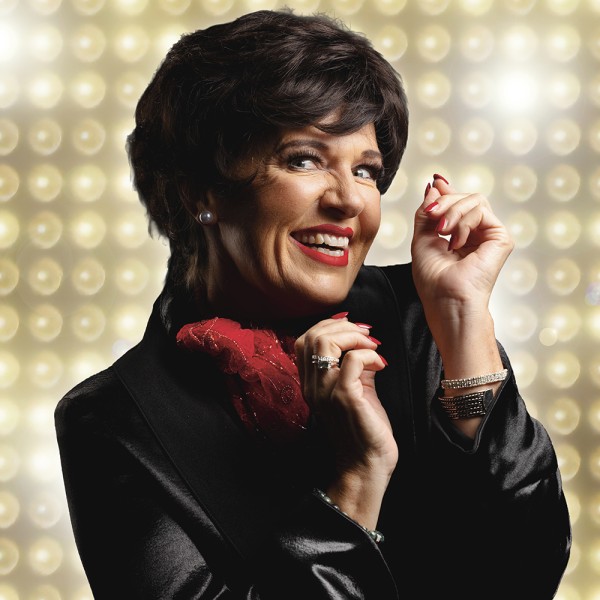
Judy Garland, “the greatest entertainer who ever lived – or probably will ever live” (Fred Astaire) made so many comebacks, “what more could you possibly want?” So quips a magnificent Ali Harper in Judy’s Encore, a night in concert with The Wizard of Oz star where the sequins are sparkling and the stakes are sky-high.

In August 1964, the stage and screen superstar was booed off the stage at Festival Hall Melbourne. Judy’s Encore imagines her redemption a few years later, before her death by barbiturate overdose in 1969. She returns to the venue to try to restore her reputation in this meta solo show where the audience is positioned as the sceptical Melbournites she is trying to win over.   

Culminating in a breathtaking Somewhere Over the Rainbow, Harper performs 18 songs accompanied by Francis Meria (piano) and Blair Latham (horns). With music direction and arrangement from Tom Rainey, Meria and Latham play Judy’s loving but long-suffering band, who try desperately to keep her on track and out of the booze bottle. The concert takes place on a striking, shiny stage (set design by Ian Harman) that puts on the ritz, especially when paired with Roz Willmott-Dalton’s costume design, which nods to the poppy dress Judy wore for her first Sydney appearance on the ill-fated tour.

Judy’s Encore sees our hero, already frayed, start to come undone. Comically downing half a bottle of whisky set atop a table in a sweet and silly moment of lightness from Latham, Harper’s Judy is sensitively portrayed. She is not the butt of the joke, nor is she the tragic heroine she so hated being called in her lifetime. She is a person, buoyed and torn down, devoured and spat out again, by other people.

The first-person format of the show does have its limitations: there’s only so much a public figure will ever divulge about themselves, so Harper can’t tell us lots about Judy’s life while playing Judy herself. The more you already know, the more Easter eggs you’ll enjoy. Like me, you’ll surely be inspired to go learn more about a woman who “gave so richly and so generously, that there was no currency in which to repay her” (James Mason, A Star Is Born).

Bug Songs Not Love Songs | Regional News

Bug Songs Not Love Songs

Written by: Phoebe Caldeiro, Lia Kelly, and Alayne Dick

Directed by: Alayne Dick

BATS Theatre, 25th Aug 2026

Reviewed by: Tanya Piejus

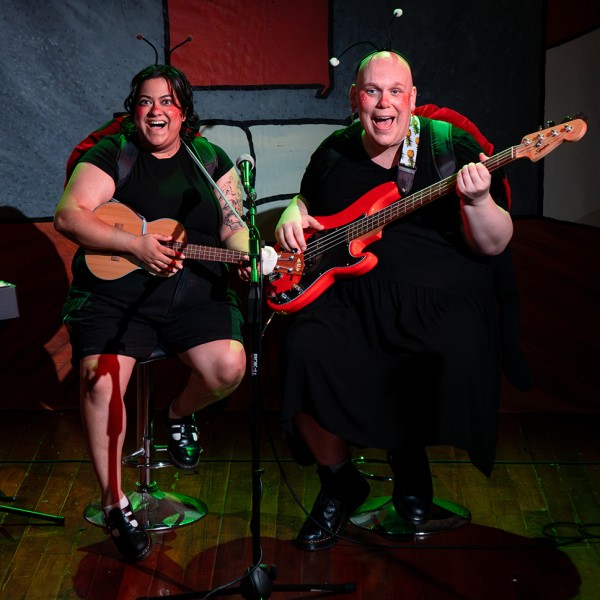
Welcome to Living Room Wall and the final concert by Bauble and Skump before the fumigators come to rid Rachel and Tim’s house of insects, these adorable ladybugs included. It’s a tragic premise for a delightfully entertaining show about bug life and human strife.

The music playing in the background (sound and lighting tech Jack McGee a.k.a. Moth) as we arrive and don pairs of antennae is appropriate – They Might Be Giants’ Doctor Worm and Owl City’s Fireflies are on the playlist.

Lia Kelly (Bauble) and Phoebe Caldeiro (Skump) are engaging and utterly charming performers, quickly bringing the audience into their world of insectoid musical magic. Their Flight of the Conchords-esque wit and lyricism (aided by co-writer and director Alayne Dick) is accompanied by adaptable and virtuosic playing skills as they flit between instruments and musical styles. Every song has us laughing out loud. It’s tough to pick a favourite but It’s Hard Being a Bug had me giggling insanely as Skump’s and, increasingly, Bauble’s obsession with lemons overtakes the existential dilemmas of arthropod life. Sadly, we don’t get to hear such bangers as Six Legs, Seven Things to Hold as the unfolding human conflict going on below – carefully scored on points by Skump – brings the fumigation ahead of schedule and we have to fast forward to crowd favourite Praying Mantis Wedding and a small-tear-inducing pair of songs about how the duo met and fell in love.

Kate Anderson’s set design particularly deserves mention as her backdrop evinces the top-down view of a suburban living room with simplicity and clarity. Her birthday card mini-set for It’s Your Special Day is inspired, has hilarious insect puns, and allows for funky head-bopping choreography from our performers.

From a clever homage to The Very Hungry Caterpillar, to the sub-plot of a failing human relationship, to the polished and clever anthems, Bug Songs Not Love Songs is entomological ecstasy from go to whoa.

Find Your Tribe | Regional News

Find Your Tribe

Presented by: Best on Tap

BATS Theatre, 19th Aug 2026

Reviewed by: Oliver Mander

The joy of improv theatre is that the unexpected can offer a great experience. It isn’t surprising that the experienced Best on Tap troupe deliver on that promise, but it is perhaps surprising that the story unfolding on stage reflected a drama built on well-realised characters and relationships, rather than mere comedic slapstick.

The performance is a gentle enquiry as to the nature of friendship and the different forms it takes. The audience is asked for only two prompts at the beginning of the show, and the story unfolds from there. The scaffolding might be minimal, but this was enough for this skilled troupe to create a coherent narrative.

The show’s title and theme Find Your Tribe lends itself well to an emotional journey and a reflective tone. I felt the performance began somewhat tentatively, but it didn’t take long for each of the five actors to develop distinct characters and relationships.

Wiremu Tuhiwai seemed to revel in creating outlandish cues for his fellow actors to follow (I couldn’t help feeling they were used to it). It resulted in drama punctuated with enough humour to provide contrast to its more reflective moments. Kate Whitaker added strongly to this emotional dynamic; we were taken from reflection to humour to sadness, and everywhere in between.

Improv theatre is inherently collaborative, and the performances and cues provided by Mary Little, Geoff Simmons, and Barry Miskimmin were all integral in adding further emotional depth to the show. By the end, the audience was fully invested in all the characters on stage.

Matt Hutton’s improvised live soundscape added further emotional context, responding deftly to the action on stage. My favourite sound moment was the beeping of hospital equipment somehow wrung from his Yamaha keyboard.

Quick-wittedness is a hallmark of improv theatre, and there was plenty of that on display from Best on Tap. Find your way to this show or their next for something beautifully unexpected.

El ser querido (The Beloved) | Regional News

El ser querido (The Beloved)

(M12)

135 minutes

(4 out of 5)

Reviewed by: Isabella Smith

I love books about writing and movies about cinema; they cut open the belly of the art form and expose its spleen and inner machinations. El ser querido (The Beloved) from Spanish director Rodrigo Sorogoyen does exactly this: a film set on a film set in 1930s Spanish-ruled Western Sahara, that is in fact being shot in Fuerteventura – another imperial outpost. This level of alienation plays out in other ways throughout, highlighting the power of cinema to deceive.

Javier Bardem plays Esteban Martínez, a controversial Spanish film director and celebrated Oscar and Cannes Palme d’Or winner who invites his estranged daughter Emilia Vera (Victoria Luengo) – whom he hasn’t seen for 13 years – to lunch and offers her a leading role in his upcoming film. The lunch is tense, setting the scene for what is to follow. Emilia accepts the role, but not without serious consideration of the trauma caused by her father’s drunken and often violent behaviour when she was a young girl – which Esteban flatly contests as fictions conjured up by her mother to pit her against him.

El ser querido might’ve been one of the best examples I’ve seen of actors having to act as though they aren’t acting. We see Emilia trying to keep it together when the camera is rolling. We witness Esteban’s controlling, anger-fuelled, and toxic manner on set, which is chillingly offset with sporadic bouts of charm that help maintain his mythic status among the crew.

While exploring a dysfunctional father-daughter relationship, it also lays bare the harsh and unglamorous realities of a film set, the power imbalances built into the industry, and the filmic devices that propel a story: narrative, scene composition, cinematography, sound. Scenes mirror or are pitted against each other (e.g. a tyrannical film director makes a film critiquing the Spanish Empire, built on the foundations of patriarchy). Fictive layers put reality on shaky grounds. The film switches between black and white, analogue, and colour, shifting mood and making the audience think about what function each camera serves. The sound at times is removed to strip a scene bare and home in on gesture and set. The same scene is performed over and over again. The sun scorches. The wind burns. The director always has the final say.

There were moments when the film lacked energy and I was hoping it would wrap up quickly. Whether this too was intentional, I wouldn’t be surprised.