

The Marriage of Figaro
Presented by: New Zealand Opera
St James Theatre, 17th Jun 2026
Reviewed by: Ruth Corkill
St James Theatre feels bright and cheerful tonight, already shrugging off Wellington’s crisp winter chill as we prepare for a summer romp in an 18th‑century country estate. Mozart’s The Marriage of Figaro is an opera that never loses its ability to delight, packed with theatrical momentum and comic invention, yet finding moments to blossom into extraordinary beauty.
Conducted by James Judd, New Zealand Opera’s production celebrates the work’s subversive qualities, shifting attention even further away from aristocratic dominance and towards the servants and women who drive the action. Director Lindy Hume has achieved this in simple and highly effective ways. The ensemble of servants open the production, busy with tasks and bustling around the stage for the whole of the overture, and remain visible onstage throughout as they eavesdrop and gossip.
This evokes a household thinking and acting together, an effect supported by the set design (Tracy Grant Lord). Modular transparent panels, echoing palace walling, are reconfigured swiftly to suggest new spaces. They are used particularly well to allow concealed eavesdroppers to remain visible to the audience from all angles. However, the stark white surfaces set against a dark backdrop fail to evoke the sun-drenched summer day in which the action unfolds.
The principal cast work with notable generosity. Their responsiveness to one another gives the performance a sense of spontaneity and flow. Julien Van Mellaerts is wonderfully comic and expressive as the Count, capturing both the character’s arrogance and his underlying fragility with deft precision.
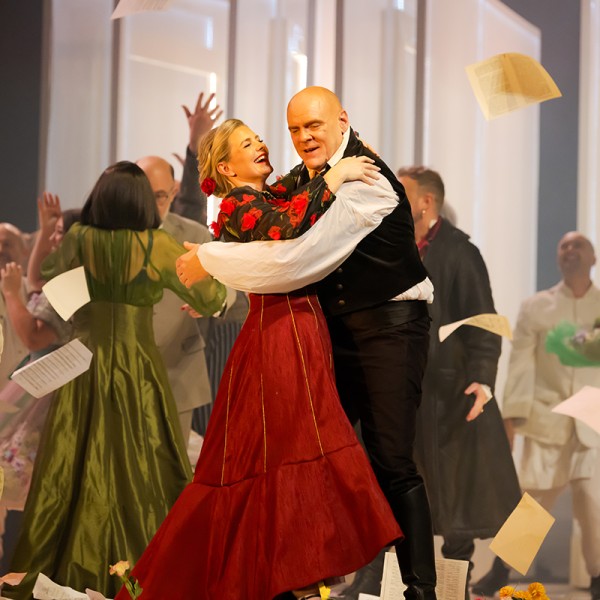
Felicity Tomkins is a standout as the Countess, her voice both powerful and gorgeously controlled. Every line is delivered with poise and emotional clarity, filling the space without ever losing intimacy. She’s also a comic powerhouse, especially in the scenes with Cecilia Zhang’s Cherubino, where she establishes an authentic, quietly charged connection that is both sensual and barely restrained. During the wedding scene she is entrancing as she dances a defiant pasodoble with Mellaerts.
Throughout, there is a palpable sense of shared momentum as the cast bring this intricate social world to life, ensuring the opera continues to feel vivid, generous, and completely entertaining.