

Resonance
Presented by: New Zealand Symphony Orchestra
Michael Fowler Centre, 9th April 2026
Reviewed by: Ruth Corkill
Under the direction of André de Ridder, the New Zealand Symphony Orchestra delivers a remarkably focused and cohesive performance that highlights the depth of talent within its own ranks.
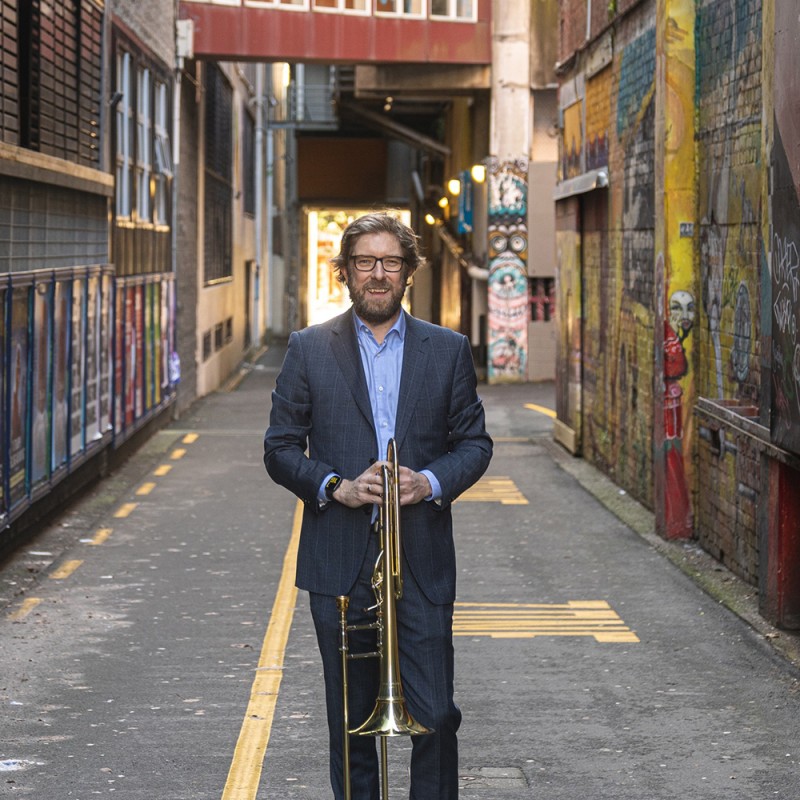
At the centre of the programme is Bryce Dessner’s Trombone Concerto, performed under unusual circumstances. The orchestra learned only two weeks prior to the concert that the originally scheduled international soloist Jörgen van Rijen, who was planning to premiere a work written for him, was injured and unable to play. In response, the programme pivoted rapidly to Dessner’s concerto, with NZSO section principal trombone David Bremner stepping forward as soloist.
Bremner plays superbly, drawing an impressive range of colours from his instrument: percussive and incisive one moment, molten and lyrical the next, crystal-clear lines interspersed with gravelly and jazzy voiced phrases. Especially striking are passages in which the solo line fragments and reappears across the brass section. Here, Bremner’s close working relationship with his colleagues is evident. The ability of the other musicians to match his tone and colour so precisely creates uncanny effects, as though the soloist were accompanying himself. The sound seems to braid and divide without losing coherence. It is both technically impressive and musically absorbing.
Dessner’s concerto is an intelligent pairing with the Shostakovich that follows. It is an unabashedly contemporary and direct work, but like the Shostakovich it utilises dissonance and rhythmic tension in service of beauty and emotional insights.
The long opening movement of Shostakovich’s Eighth Symphony unfolds with a grim and unsettling inevitability, its jagged motifs and mounting climaxes tightly controlled. De Ridder resists any temptation to over-dramatise, trusting the music’s cumulative power. Particularly impressive is the relentless drive of the ostinato in the third movement, which maintains its force with unbearably intense mechanical insistence.
The slow fourth movement is laden with grief, almost soothed, almost hopeful by turns. The NZSO captures this ambiguity beautifully, closing with a wistful and heartrending release.
View more reviews:
« Click here