

SoundCathedral
From composer and artistic director Michael Norris
Wellington Cathedral of St Paul, 1st Mar 2026
Reviewed by: Ruth Corkill
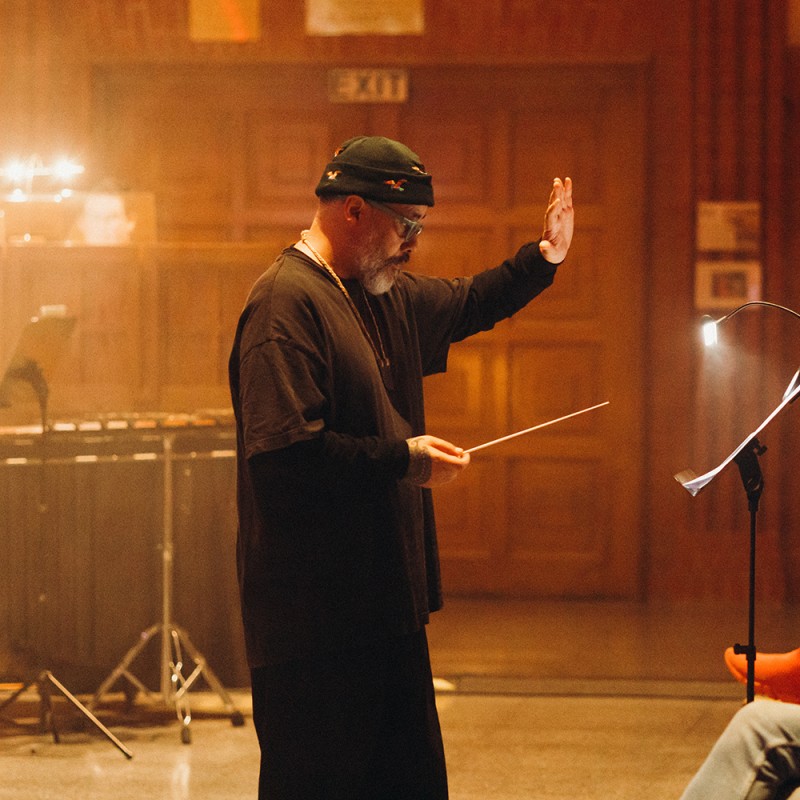
Tonight, the lofty pastel interior of Wellington Cathedral is transformed by a roiling haze of dry ice and shifting colour. SoundCathedral marks the 40th anniversary of The Tudor Consort with an immersive performance installation of remarkable scale. It brings together 56 musicians: The Tudor Consort directed by Michael Stewart, the taonga pūoro collective Rangatuone Ensemble conducted by Riki Pirihi, and Stroma alongside organist Max Toth and bellringers Dylan Thomas and Jamie Ben.
SoundCathedral reimagines Orlande de Lassus’ Prophetiae Sibyllarum, a cycle of 16th‑century motets known for their curious harmonic tensions and eccentric chromatics, features that make them feel experimental and cutting edge even to modern ears.
Promotional materials encouraged audiences to wander the cathedral and experience the soundscapes from multiple vantage points. But when we arrive the nave is tightly filled with seating, and moving would require disturbing rows of people. Musicians occupy the aisles, but it is unclear whether the audience may enter their space. With no mention of movement in the welcome address, all the audience I can see remain seated.
Following a karakia and karanga, the choir enters through the central aisle, layering fragments from Lassus’ opening motet, material that blossoms in a cathedral. Subsequent movements stretch and reframe the originals, drawing out new colours.
The most compelling moments occur when voices and instruments venture into the unfamiliar: quiet throat‑singing from a walking soloist, the whirr of porotiti and pūrerehua, breathy winds billowing around the ceiling, a saxophonist clicking keys behind us.
Often, the deconstructed choral passages drift into meditative inertia. I suspect being able to move and find variations of resonance and distortion in the space would have kept these sections vivid. The range of taonga pūoro utilised is wonderful but I didn’t feel that the composition meaningfully integrated these instruments into the overall architecture of the work.
In the finale, the cathedral bells sound as if from another century, astonishingly distant and ethereal. The hefty, almost menacing organ is wondrous, but we are given barely whiffs of it before returning to ennui. I feel that, tantalisingly, a sublime experience has just escaped us.
View more reviews:
« Click here