

Reviews - Regional News | Connecting Wellington

Reviews

Marty Supreme | Regional News

Marty Supreme

(R13)

149 minutes

Reviewed by: Alessia Belsito-Riera

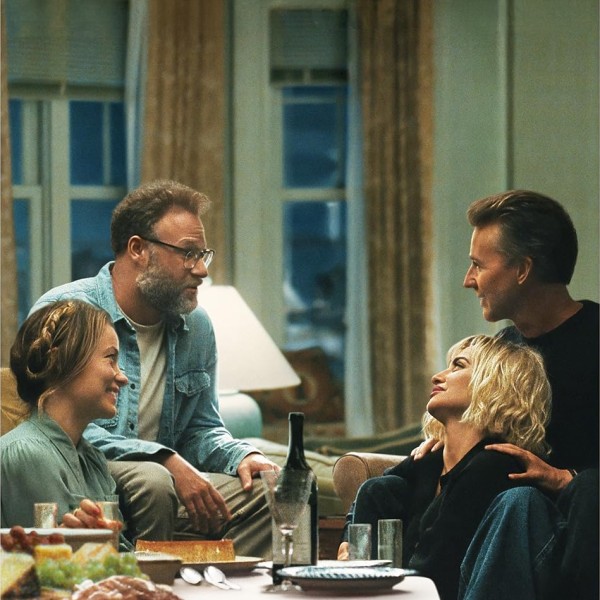
If you want to be stressed for two hours and 29 minutes then step right up for Marty Supreme, director Josh Safdie’s new film starring Timothée Chalamet that feels like watching the final moments of a heated sports match the whole time.

An American sports dramedy, Marty Supreme smashes onto the screen in a rapid, topspin shot that lands viewers right into the thick of it. Marty Mauser (Chalamet) is on the up and up, or so he says. He’s America’s current ping pong star, or at least he will be when he wins the British table tennis open in a few days’ time. Wily, scrappy, angry, delusional, cocky, arrogant, and with a dream that no one respects but he doggedly believes in, Marty goes to Hell and back again in the pursuit of greatness – never mind the chaos he leaves in his wake to get there.

With camera movements that travel at warp speed and music sequences that change faster than a ping pong ball swaps courts, Marty Supreme is designed to keep you on the edge of your seat and gasping for breath. Cinematographer Darius Khondji employs a handheld style and tilted angles to keep viewers unsettled while the distinct grain and rich filter – paired with a meticulously crafted period aesthetic by designer Jack Fisk – unmistakably roots the story in the 1950s. Meanwhile, editors Ronald Bronstein and Safdie keep the tension high with the quickest cuts in the west. Composer Daniel Lopatin (aka Oneohtrix Point Never) crafts a score that captures both the feeling of the time and the seesawing story with a soundtrack comprising original music and 50s hits. Sound is constant; with never a moment of silence and continuously changing music, viewers have no time to catch their breath. Always building in momentum, the score captures Marty’s mental unravelling as imminent chaos closes in and his life becomes increasingly frenetic.

As someone who isn’t the biggest Chalamet fan, I must give him credit where it is due. With mile-a-minute dialogue and a complex, high-strung character, he makes every action seem intentional yet unpredictable. Gwyneth Paltrow and Odessa A’zion also deserve praise in their supporting roles. As for Bronstein and Safdie’s script – game, set, match.

Vulture | Regional News

Vulture

Written by: Phoebe Greenwood

Europa Editions

Reviewed by: Denver Grenell

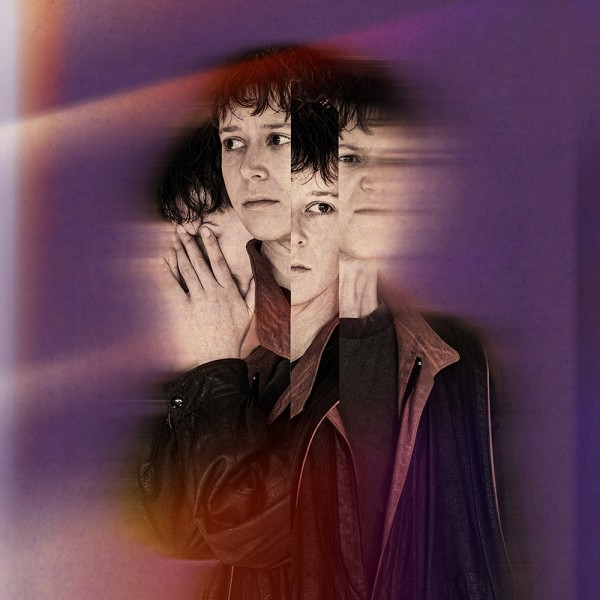
Setting a novel amid the Israeli-Palestinian conflict is a bold and risky endeavour, even more so if it’s your debut. Making the book a black comedy is even riskier. Is the reader willing or able to laugh at situations set amid a very real conflict that has claimed hundreds of thousands of lives?

In Phoebe Greenwood’s Vulture, journalist Sara Byrne is assigned to cover the 2012 conflict in Gaza. She stays at The Beach, a hotel that hosts all the international media, and has local minders who introduce her to key figures on the ground. She is still reeling from the end of an affair with a married man back in the UK and the recent death of her father, a respected scholar, and throws herself into her work.

Sara’s drive borders on self-obsession, more concerned with ‘getting the story’ than with the potential consequences of her methods. She blunders through war-torn Gaza, causing tension with local Palestinians, her minders, the fellow media contingent, and the newspaper she is writing for. She is a refreshingly flawed character and should appeal to fans of Fleabag who prefer their characters a bit messy.

While the book doesn’t shy away from the horrors of the war and the lives lost, the flashbacks to Sara’s chaotic pre-war life in London can’t help but seem trivial by comparison, even if they provide vital insight into Sara’s state of mind.

Greenwood worked as a correspondent in the Middle East, so she’s technically qualified to write about the region and the conflict. As such, Vulture offers insight (and a critique) into the media’s involvement, just not enough to balance the comedy. While the comedic elements lend the book the makings of a satirical wartime tale like Catch-22, they aren’t woven into a satisfying whole. There’s no moratorium on writing about this conflict, and although Greenwood should be commended for not playing it safe here, the book doesn’t quite reach the high standard set by other classics in the satirical wartime sub-genre.

Good Things Come and Go | Regional News

Good Things Come and Go

Written by: Josie Shapiro

Allen & Unwin

Reviewed by: Jo Lucre

Good Things Come and Go is a heartfelt novel about just that. The good things that happen, and what happens when they go.

For Penny and Adam (known as Riggs), the good thing was their daughter Rose. She would also be the one to go. After Rose dies, and the enormity of her absence lingers, the promise of a solo art exhibition of her work sees Penny return to Auckland after years in LA. There she and Riggs reunite with Jamie, their childhood friend, now temporarily living in his uncle’s bach, he too trying to conquer his own demons.

Their years apart hang starkly between them as they awkwardly navigate the debris left over from a shared past long gone, and secrets long held. Their stories inextricably intertwine with the heaviness of what is the here and now. Author Josie Shapiro propels you headlong into each character seamlessly in a three-way narrative, each one jaded by the aftermath of grief, unfulfilled dreams, and faded friendships.

Shapiro artfully captures the presence of Rose, especially the heaviness of her loss, without being overly reminiscent or flooding the story with memories of her. Instead, grief sits at the edge of their stories, Penny, Riggs, and Jamie.

Penny, the artist with her big dreams. Broken, a mother without a child. Riggs, the perpetual big kid, former pro-skater, addict, fiancé of Penny. Also broken and now childless. Jamie, once a skater too, lost. Broken in other ways. In love with Penny.

Somewhere between the three of them, past wrongs will be exposed, love will be questioned, grief will be explored. With redemption and redefined relationships, each will learn how to carry on together, and apart, when good things come and go.

Black Butterfly – a memoir | Regional News

Black Butterfly – a memoir

Written by: Tony Hopkins

Baggage Books

Reviewed by: Margaret Austin    

This book – a first by poet, performer, and storyteller Tony Hopkins – is a firsthand account of the life experienced by an African American man, born in Washington DC, and for the last 35 years resident in Wellington, New Zealand. The book’s cover photos demonstrate the breadth and variety of the cities Hopkins has lived in – readers may recognise them!

And the book itself? It’s chock-a-block with anecdotes, encounters, and observations – some rueful, some startling, and some salutary. Washington DC was the starting point: when Hopkins turned 13, his father told him he was now a man of the house, then added: “The first time you go to jail, I’ll get you out, but after that you’re on your own.”

If Washington DC was the chrysalis, our butterfly has now emerged. The sixties with its race riots had also arrived, and the murder of Martin Luther King Jr in 1968 sparked Hopkins’ initial realisation of identity with his “soul brothers”. Self-described as an angry black man, he headed off to California to join the Black Panthers.

Of all chapters in Black Butterfly, the one titled Streets is the most graphic. Our writer is now living in San Francisco, where there are brushes with police, stints in jail, sexual encounters, and, most engagingly, life with two street hustlers, principally one called Sophisticated Player. Their initiation of Hopkins into street life with all its temptations, dangers, and violence form a powerful picture of Hopkins’ life and times.

Further experiences and reflections on several years in Europe and then, finally, Aotearoa follow. They are enhanced by Hopkins’ tone, and here is where the importance of this work chiefly lies – it’s consistently candid and without rancour.

Six poems accompany the text. The first and last deal with identity – effectively bookending this short but compelling story. “My identity is about who and what I identify with. / I’m grandson to a Cherokee / Although I’m no longer young, I am still gifted and black.” Bravo!

Giving Birth to My Father | Regional News

Giving Birth to My Father

Written by: Tusiata Avia

Te Herenga Waka University Press

Reviewed by: Margaret Austin

This lengthy collection represents a deeply felt grief enriched by celebration. Tusiata Avia’s father died 10 years ago, and the author confesses that she has kept the work hidden away for the last eight. That’s a clue to the nature of its content: how personally revealing her poems are both of herself and her family.

This is how it was supposed to go consists of an imagined account of Avia’s father’s funeral and the preparations for it. There is a moving reference to what he has been dressed in, namely his Christchurch Garrison Band uniform, and with his hair Brylcreemed as in his youth.

We get the eponymous My father gives birth that begins with a startlingly graphic metaphor: “I think about you in labour that night / birthing yourself out of this world / your pains coming faster and faster”. But there is no epidural for this, notes the writer, and the rest of the poem achingly records the last hours of a man deeply loved and revered by his daughter.

Tender images alternate with practical ones. In Dressing my father we get detailed descriptions of preparations for burial including mention of the injection necessary to mitigate the effects of Samoan sunshine. Most telling of the writer’s conflict about the revelations she’s making is in Dad causes an earthquake when, having experienced an actual earthquake back in New Zealand 3619 kilometres away from Samoa, she asks of her father “I wonder if you’ve had enough of me telling the family secrets  / excavating your bones in public like this – ”

In one of the concluding poems, we get “First anniversary: We go to Dad’s house” where longing for a loved one is expressed thus: “I sit by your grave and the death sickness comes / I’m unsure whether it’s you who are dead, maybe it’s me.”

You are truly alive Tusiata – grieving and celebrating your father and offering us readers the chance to do both with you.

The Glass Menagerie | Regional News

The Glass Menagerie

Written by: Tennessee Williams

Directed by: Colin McColl

Running at Circa Theatre till 22nd Feb 2026

Reviewed by: Tanya Piejus

First up in Circa Theatre’s 50th anniversary programme, this production of Tennessee Williams’ autobiographical memory play is a brave contemporary adaptation. It retains the feel of 1930s St. Louis and revels in Williams’ lush language, while pushing the themes into a current context and drawing the most from the play’s dark humour.

Amanda Wingfield (Hera Dunleavy) is a faded southern belle who chose the wrong one of her many ‘Gentleman Callers’ to marry. He abandoned her and their children and is never seen but often mentioned as his actions have thrust the family into penury, despite Amanda’s desire for her children to have the same comforts she once enjoyed. The story is told through the eyes of her son Tom (Simon Leary) who struggles with a dead-end job to feed his family while scribbling poetry, escaping into movies and booze, and dreaming of adventure. Her other child, Laura (Ashley Harnett), is withdrawn and fragile. In this interpretation, she is likely on the autism spectrum with anxiety and self-enforced social isolation arising from mental and emotional challenges rather than the purely physical one scripted. The arranged Gentleman Caller is Tom’s workmate (Jackson Burling) who Amanda hopes will woo her daughter.

The cast is excellent, all enjoying the beautiful writing and Williams’ careful character creation while giving their personas fresh life. Newcomer Harnett is especially engaging. She has far fewer lines than the other actors and her ability to express the complexities of Laura’s character through action and expression is a joy to watch. An unscripted and joyous moment in the second half that cleverly covers Amanda’s tricky costume change is a sublime moment of directorial creativity (Colin McColl) and acting brilliance.

Tony Rabbit’s stark white set reinvents the cramped Wingfield apartment and works well with his subtle lighting design. John Gibson’s sound design weaves in Annea Lockwood’s stunning music drawn from natural infra and ultrasound to underscore the emotional weight of the play.

Don’t miss this sensitive reworking of a gorgeous classic.

Rental Family | Regional News

Rental Family

(M)

110 minutes

(4 out of 5)

Reviewed by: Alessia Belsito-Riera

If you were to hire an actor to play someone in your life, who would you ask them to play? A friend you fell out with? A grandparent you never got to meet? Someone you can’t say what you want to? What moment would you want to recreate or make real if you had the chance?

Rental Family plays with this concept by diving headfirst into the world of Japanese professional stand-in services. A service utterly foreign in our Western world, the industry has been around since the 1990s in Japan. As the 2025 dramedy explains, it’s an enterprise that sells emotions. In a culture where there are strict codes, their services provide alternatives.

“We play roles in clients’ lives. Parents, siblings, boyfriends, girlfriends, best friends,” Rental Family business owner Shinji Tada (Takehiro Hira) says. “And help them connect to what’s missing.”

In director Hikari’s film, Phillip Vanderploeg (Brendan Fraser) lands himself a job quite by accident as the “token white guy” at Tada’s business. The struggling actor who has only booked small roles since his claim to fame as a superhero fighting gingivitis in a toothpaste commercial will now play very real roles in people’s lives. A husband at a wedding, a friend to a famous ageing actor (played exceptionally by Akira Emoto), and a father to young Mia (Shannon Gorman). What Phillip doesn’t realise is that as he forms genuine bonds with these people, the lines between performance and reality will begin to blur.

Fraser delivers an exceptionally sparkling performance, filling each scene with tender yet concentrated emotion. Each movement is intentional yet utterly natural. Mari Yamamoto too is magnetic as Phillip’s coworker Aiko and Gorman offers sensitivity and intent beyond her years.

With postcard-worthy cinematography from Takuro Ishizaka and production design by Norihiro Isoda and Masako Takayama that beautifully balances the sterility of public spaces and the rich personality of private ones, Rental Family is exquisitely crafted. Where it shines most, however, is in Hikari and Stephen Blahut’s screenplay, which offers such thoughtfully woven dialogue that it feels like you’re watching a poem unfold in real time that quietly whittles away at the moral complexities of the service to reveal the beauty of human connection.

Julia Eichardt: A Life of Grit and Grace | Regional News

Julia Eichardt: A Life of Grit and Grace

Written by: Lauren Roche

Flying Books Publishing

Reviewed by: Kerry Lee

For everything that Julia Eichardt: A Life of Grit and Grace lacks in over-the-top action, it makes up for with one of the most fascinating books I have read lately.

From living an impoverished life helping her mother raise a struggling family in Ireland in the latter half of the 19th century, to the goldfields of Australia, and finally arriving in New Zealand in 1863 during the gold rush era, Julia Eichardt was a fascinating person with an amazing story. While most of Queenstown’s history is hogged by men, she was one of many women who helped make it what it is today. After working as a waitress and bartender, Julia went on to own and run her own hotel: Eichardt’s Private Hotel, which still stands today on Lake Wakatipu. In this historical novel, we read her journey from the very beginning and see the obstacles she faced as a woman in quite literally a man’s world.

I have always been fascinated by the past and the people who shaped it. Normally we only hear about politicians, or the wealthy who donated land and have a park or a street corner named after them. Very rarely do we hear about the lesser-known folks who collectively kept the busy towns and cities buzzing away, and when we do, we don’t tend to get an in-depth look into their lives like the one author Lauren Roche has provided here.

While this may not seem like a surprise to many, my favourite character in the entire book is Julia herself. Her determination was just so awe-inspiring that I had to pump my fist in the air every time she triumphed and overcame an obstacle. Against all the odds, she managed to achieve her dreams and build the grand hotel that she always wanted to.

She really was someone I began admiring and looking up to, and I think reading about her life could inspire others as well. That’s the power of books based on real people: they can help those who cannot see a way forward with their own problems.

Surplus Women | Regional News

Surplus Women

Written by: Michelle Duff

Te Herenga Waka University Press

Reviewed by: Jo Lucre

Surplus Women – its title had me intrigued from the start. New Zealand author and award-winning journalist Michelle Duff delivers a collection of short stories that speak to what it means to have and be part of a ‘surplus of women’ in today’s society.

Despite being a work of fiction, each story brings to life women, each vulnerable and imperfect, with complexities we can all recognise.

Easy: the word carries multiple meanings, but said about a woman, it’s never a good thing. It’s the title of the book’s opening story and brings to life the vulnerability and awakening of a young woman growing up in the 90s. In a way it sets a striking tone of what’s to come. The starkness and exploitation in her story is a familiar nuance that can easily exist through the lives of women, irrespective of race, age, and standing. The nostalgia around youth, growing up, and the sometimes-misguided trust afforded to tightly held friendships is inviting at first, but quickly becomes uncomfortable.

I particularly enjoyed the short story Spook about an older woman navigating the inevitabilities of invisibility and irrelevance in a society that reveres youth. But, like a superpower, that invisibility enables her to become a spy after becoming obsessed with a man she thinks is up to no good. It’s preposterous in places yet funny, with a touch of the absurd.

Surplus Women – yes, it intrigued me. Some of the stories are out there, some uncomfortable and unforgiving. But they all bring to the fore the stories of women often deemed unnecessary, unworthy, or without value: think older women, single mums, and sex workers. Without preaching, Duff illuminates a woman’s ability to exist, reset, endure, doing it all wholeheartedly, messily, and unflinchingly despite heartbreak, distress, trauma, and unique lived experiences. Surplus Women holds space for all the women deemed unnecessary as they rile against the expectations that assail them, sometimes successfully, sometimes not.

Summer Nights | Regional News

Summer Nights

Presented by: New Zealand Symphony Orchestra

Conducted by: Gemma New

Michael Fowler Centre, 28th Nov 2025

Reviewed by: Tamsin Evans

Joyce DiDonato is a mezzo-soprano from Kansas with a sublime voice applauded in concert halls and operatic stages across the world, and she is a rockstar – there’s no doubt about it. 

With her incredible voice and stunning musicianship, she knows exactly how to work to raise the emotion, and then raise it again, exercising her power, technique, control, and perfectly placed gestures and body language. DiDonato has found the true sweet spot where her voice sounds deeply luxurious and effortless.

Of the six songs in Berlioz’s Les Nuits d’été, the first is about young love and innocence, moving through loss, grief, and longing to close with a sense of renewal in the sixth and final song. The third, Sur les lagunes: Lamento, was exquisite. Set in a minor key, DiDonato lifted it from melancholy to a superb and powerful expression of grief and sorrow. Her cry in the final lines, “How bitter is my fate! Ah! Without love to sail on the sea!” was heart-wrenching.

DiDonato commanded the stage with her presence but without ego, went on to dazzle us with her talent, and, after three encores and warm words of praise for New Zealand, utterly charmed a nearly full house in the Michael Fowler Centre.

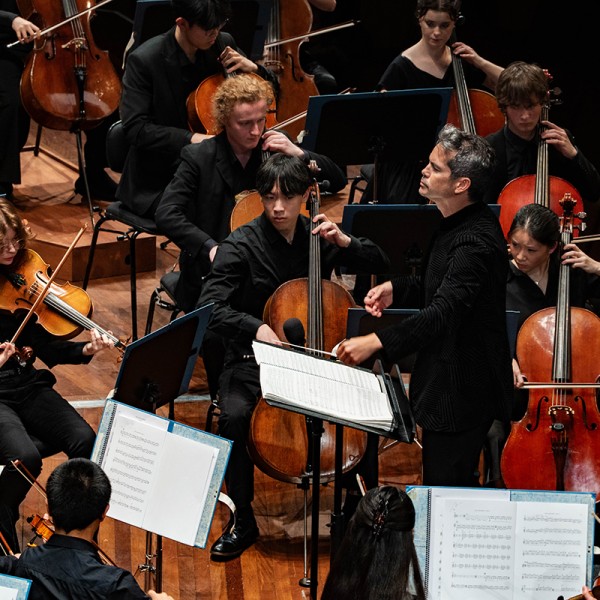
The second half was as monumental as the first. Bruckner’s Seventh Symphony is his finest and possibly the gold standard of romantic orchestral music. Opening strongly, it felt as though all the emotion and energy the NZSO had been holding back in support of the first half had come rushing through. Gemma New harnessed this and brought it into wonderful balance. New made superb connections between her players and the score. We were sure we were hearing a performance by the whole, and certainly one greater than the sum of its parts.

Superior Donuts | Regional News

Superior Donuts

Written by: Tracy Letts

Directed by: James Kiesel

Gryphon Theatre, 26th Nov 2025

Reviewed by: Stanford Reynolds

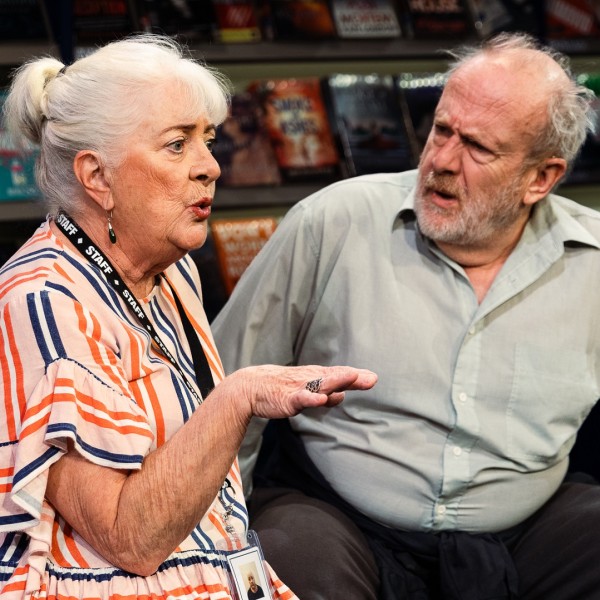
Superior Donuts arrives at the Gryphon Theatre with warmth, wit, and a surprising emotional punch. Tracy Letts’ script centres on the unlikely friendship between Arthur (Allan Burne), the weary owner of a rundown Chicago donut shop, and Franco (McKay Findlay), the young, energetic employee who storms into Arthur’s stagnant world with ideas, ambition, and a stubborn refusal to let the shop, or Arthur, stay stuck in the past. Their evolving connection is punctuated by Arthur’s quiet monologues, in which he slowly, hesitantly reveals the regrets and wounds that still haunt him.

The production design cleverly supports this dynamic. The donut shop set (design by Lucy Sinogeikas) is pulled forward on the Gryphon stage, creating an inviting, almost nostalgic intimacy while leaving enough space to glimpse the Chicago street beyond through the shop window. It feels lived-in, warm, and grounded. The small bell that chimes whenever someone enters or exits proves an unexpectedly charming detail, subtly reinforcing the rhythm of daily life in the shop.

There’s an easy humour throughout, particularly in the miscommunications between characters from different backgrounds. The play’s cultural collisions are handled with lightness, allowing the comedy to emerge naturally.

The cast inhabit their roles with infectious delight. Findlay’s Franco is all authenticity and vibrancy, an immediately compelling presence who lights up the stage and makes it impossible not to root for him. Opposite him, Arthur’s tentative, awkward courtship with local policewoman Randy (Sarah Dickson Johansen) provides some of the production’s sweetest moments, with the actors’ clumsy, halting exchanges creating tenderness.

At times, accents and some mumbled delivery cause key lines to blur, and occasionally actors seem to play moments inward rather than responding fully to each other. I am certain that throughout the season, the connection will grow and help the emotional beats land with greater impact.

The climax of the plot is an excellently executed fight scene. Sharply choreographed (fight direction by Janet Noble) and enhanced by bold, clipped lighting blackouts (lighting design by Emma Bell), the tension and believability of the blows is the best I have seen on stage.

This Stagecraft Theatre production captures the heart of Superior Donuts with warmth and humour, offering a charming, hopeful, bittersweet night at the theatre.

Gloria! | Regional News

Gloria!

(M)

106 minutes

(5 out of 5)

Reviewed by: Alessia Belsito-Riera

Where the voices of many women were silenced throughout history, Gloria! sings their stories from the rooftops. Screening as part of the 10th Italian Film Festival, the subtitled film begins in 1800 with the rhythms of everyday life in Venice’s Sant Ignazio College, a religious institution for girls overseen by stern priest Perlina (Paolo Rossi). Mute Teresa (Galatéa Bellugi) is at the centre of it all, a powerless servant girl trapped in a hostile environment who yearns to be the conductor of her own world. Longing to be a part of the all-women orphanage orchestra, she arranges the sounds that accompany her daily duties into drumlines and choruses. When Perlina becomes distracted by preparations for the arrival of the newly enthroned Pope, Teresa and a quartet of students begin secretly gathering each night to take turns on the piano they find hidden in the cellar, their clandestine sessions revealing hidden truths, giving birth to new compositions, and setting the girls on a new path towards autonomy.

Celebrating the lives of the many Italian women written out of the margins of music history, Gloria! speaks to anyone who has felt restrained, underestimated, and silenced. Teresa and her newfound companions Lucia (Carlotta Gamba), Bettina (Veronica Lucchesi), Marietta (Maria Vittoria Dallasta), and Prudenza (Sara Mafodda) fizz with a chemistry rivalling even the most practised quintet. Each a powerful presence in her own right, together they capture the magic of girlhood in a way that is both tender and tenacious.

Cinematographer Gianluca Palma and production designers Susanna Abenavoli and Luca Servino juxtapose shadows with highlights, giving the midnight corners more brilliance and comfort than the stark, gleaming halls of the daylight-flooded college. Director Margherita Vicario and Anita Rivaroli’s intentionally anachronistic script is sharp and scintillating, the story humming along adagio, accelerando into a crescendo that resounds with relief, vindication, and freedom.

It would be hard not to smile by the time Gloria! reaches its final note. The music that flows forth from Margherita Vicario’s directorial debut is not the dirge of a long-suppressed song but a joyous, revolutionary riot that dares viewers to shout along in solidarity.

Not Christmas, But Guy Fawkes | Regional News

Not Christmas, But Guy Fawkes

Written by: Bruce Mason

Directed by: Shane Bosher

Circa Theatre, 22nd Nov 2025

Reviewed by: Tanya Piejus

Not Christmas, But Guy Fawkes is the other half of Circa’s tribute to the solo work of Bruce Mason running in an alternating season called Every Kind of Weather. Having been blown away by The End of the Golden Weather earlier in the week, I was intrigued to see this lesser-known piece that also features some biographical content gleaned from an interview with Mason and the foreword to a publication.

Having enjoyed the gorgeous production design (Jane Hakaraia and Sean Lynch) of The End of the Golden Weather, I was pleased to see the same set, sympathetic sound design (Paul McLaney), and lush lighting employed in this work. Subtle change came with a different and more deluxe chair, pages of script strewn round the edge of the acting area, and performer Stephen Lovatt’s outfit. He’d swapped a linen shirt, cotton trousers, and bare feet for a 1950s combo of button-up polo shirt, patterned slacks, argyle socks, and brown leather shoes to recreate the delightful character of Mason himself, who bookended the show.

Lovatt’s performance and Shane Bosher’s direction were even more engaging in this piece, the Mason-scripted part of which mostly involves an 11-year-old’s relationship with a school bully, the ugly and intimidating Fergus ‘Ginger’ Finucane. Lovatt’s character-flipping skills are brilliant here with small changes in facial expression, voice, and posture being all that’s needed in the intimate venue of Circa Two to tell us who is speaking. His characterisation of Mason is equally expert, bringing to expressive life someone who knew he was an artist from the age of eight and described himself as “temperamentally, an overreacher”. Bosher’s delicate direction is especially effective in the final section of the piece as Lovatt simply sits in the chair directly facing the audience and is utterly engrossing.

I didn’t think it would be possible to top the first half of Every Kind of Weather. However, I was one of the many audience members on my feet at the end of this one. Just wow.

The Artist Repents | Regional News

The Artist Repents

Presented by: Orchestra Wellington

Michael Fowler Centre, 22nd Nov 2026

Reviewed by: Ruth Corkill

Victoria Kelly’s Requiem opens the evening with music that feels suspended between worlds; ethereal, melancholic, and at times sublime. Each movement shares a similar contour, yet this sameness becomes a strength, feeding into the meditative atmosphere of a ritual or service. The text, drawn from five iconic Aotearoa poets, evokes vast internal and external landscapes, and moments where the language emerges clearly are deeply affecting.

Alexander Lewis ventures beyond his usual range, producing passages with a strange, sob-like fragility and, at other times, haunting strength. These moments are compelling, even if occasional raspy or overly quiet phrases suggest the challenge of the part. When the material sits comfortably, his expressiveness shines. Barbara Paterson has complete control of her soprano lines, and this precision, which feels like it could at any moment overbrim with grief, gives the work an avant-garde edge. The orchestra and chorus seem to flow out of her, extensions of her performance. The Tudor Consort excels in this spacious score; Kelly’s writing leaves air around the notes, allowing this renowned a cappella ensemble to resonate fully.

This concert closes Orchestra Wellington’s ambitious season-long tribute to Shostakovich. Pairing Requiem with Shostakovich’s Symphony No. 5 is a stroke of programming genius. This is the most familiar Shostakovich we’ve heard this season, but Kelly’s work casts it in a new light. The requiem’s ‘in memoriam’ quality primes us to hear the symphony as a tribute; to Shostakovich, and to endurance and survival. Our orchestra has spent a year immersed in Shostakovich’s works, and this pays off tonight: their playing is assured, and they navigate the tonal and emotional dexterity of the work brilliantly.

The iconic final movement is transfixing; a groundswell of brass and percussion driving toward tainted, devastating triumph. It is music wound tight, almost too fast, before slowing into a hymn-like glow. This symphony never loses its potency for me, and tonight it crowns an extraordinary season devoted to a composer whose voice still speaks urgently across time.

Robin Hood – The Pantomime | Regional News

Robin Hood – The Pantomime

Written by: Simon Leary and Gavin Rutherford

Directed by: Simon Leary

Running at Circa Theatre till 11th Jan 2026

Reviewed by: Madelaine Empson

Robin Hood – The Pantomime opens its curtains (of the waterfall) with Lorde’s Royals, a song that summarises this madcap folk tale. In the torn-up town of Wellywood, Robin Hood (Kathleen Burns) and his Merry Men, Lil’ John (a beautifully bumbling Aimée Sullivan) and Friar Tuck (Bronwyn Turei, Ngāti Porou), are forced to squat in squalor while the Sheriff (Jackson Burling) lords it up from on high. Maid Marian (Natasha McAllister) detests the Sheriff’s latest tax scheme, while her handmaiden, Courtenay Place (Jthan Morgan, Ngāi Tāmanuhiri, Rongowhakaata, Magiagi, Sapāpali’i, Lotofaga), is recently bereft and dismayed by her new status as a poor (pronounced 'purr') lonely widow woman. And so, she sets her sights on He Who Must Not Be Named, the Sheriff, in the midst of his e̶v̶i̶l plans.

Spanning hits from the likes of Kelly Clarkson (Turei’s lead in Since U Been Gone is jaw-dropping) and Taylor Swift (Burns’ chorus of Look What You Made Me Do is my show highlight), Shania Twain (such a tender You’re Still The One from McAllister and Burns) and Meghan Trainor (Morgan does look good in that Versace dress) (costumes by Sheila Horton), music is a key component of Robin Hood – The Pantomime. Music director Michael Nicholas Williams’ stage-side presence is sorely missed, particularly his tinkering on the keys. While more instrumental music would help drive the momentum in the first half, his arrangements and magic medleys feature his signature flair and work in well with Oliver Devlin’s effects-laden sound design. Every beat is perfectly accentuated by McAllister and Morgan’s hip, ‘camp’ choreography, which hits the bullseye every time.

The cast’s consistent and charismatic audience interaction ties the show together in a bow (and arrow). Morgan is a standout here, making two friends to bring to her sausage sizzle. Wildly special mention to an exceptional Burling, who feeds on boos like Raz feeds on mustard.

When I think of the Kiwi summer, I think of Circa Theatre’s beloved annual pantomime. Robin Hood – The Pantomime is as gloriously silly as the silly season it celebrates and signifies. A fun, fanfare-filled, festive treat for all.   

Symphonic Dances | Regional News

Symphonic Dances

Presented by: New Zealand Symphony Orchestra

Conducted by: Gemma New

Michael Fowler Centre, 20th Nov 2025

Reviewed by: Tamsin Evans 

Tabea Squire’s description of her Conversation of the Light-ship and the Tide as “an unmoving ship in the ever-moving sea” gives us a different view on the dance theme. The power and danger of the deep-water open sea are heard in the opening grumbling of timpani and brass. Further complex textures and tones convey the relationship between the light-ship’s industrial structure and the endlessly changing and constantly moving sea.

The opening bars of Alexander Glazunov’s Saxophone Concerto in E-flat Major sound like something sombre and very definitely Russian. But, after the strings had set that scene, the incredibly talented Jess Gillam led us through all sorts of wonderful dances. Gillam embraced her saxophone inside and out through her impressive breath control, amazing dexterity, and deep, deep musicianship. She sometimes produced sound as if her instrument was woodwind instead of brass, with none of the rasping harshness we might associate with the saxophone. She breezed flawlessly through the fast passages, played with emotion and drama without being cheesy, and carried us to a swooping, glorious finish.

Darius Milhaud’s Scaramouche is three movements with something different for the saxophone. The first, Vif, was full of rhythm and running, each note clear and distinct. The second movement, Modéré, was almost soothing, with lovely exchanges between players and soloist. Brazileira’s rhythms got sharper as it progressed, finishing with pizzicato strings and a saxophone samba.

The title work, Rachmaninov’s Symphonic Dances, closed the programme. The orchestra always sounds crisp when Gemma New is conducting. The first movement opened with an obviously Russian tone in the strings but switched neatly into the delicacy of glockenspiel, other percussion, and woodwind. The second movement was a slightly uncomfortable, expressive clash of brass and solo violin. The last movement has a part for the alto saxophone, played, of course, by the incomparable Gillam.

The End of the Golden Weather | Regional News

The End of the Golden Weather

Written by: Bruce Mason

Directed by: Shane Bosher

Circa Theatre, 19th Nov 2025

Reviewed by: Tanya Piejus

Circa Theatre is celebrating the work of New Zealand icon Bruce Mason with Every Kind of Weather: an alternating season of his well-known and loved The End of the Golden Weather and the less-known Not Christmas, But Guy Fawkes. Both are performed as one-man shows by the incomparable Stephen Lovatt under the tender direction of Shane Bosher. COVID-19 put the kibosh on its original run in 2021, so it’s a special pleasure to be able to see it now.

Written to be performed solo, which Mason did himself almost a thousand times, The End of the Golden Weather is a deeply lyrical and quintessentially Kiwi story of a 12-year-old boy discovering how harsh the world can be. A classic tale of innocence enjoyed and lost.

Lovatt is an energetic, chameleonic, and highly engrossing performer to watch. From go to whoa, he immerses us in the characters and colours of small-town, Depression-era New Zealand. His many characterisations are finely on point and his portrayal of the mentally unwell Firpo is vivid but nuanced, walking carefully on the side of compassion rather than ridicule. Bosher’s respectful direction doesn’t get in the way of Lovatt’s performance and lets it breathe with singular clarity. The section devoted to Christmas Day is particularly entertaining, allowing Lovatt’s performance skills to glow.

The production design by Jane Hakaraia and Sean Lynch is simple but gorgeous with a crumpled sheet of brown paper tumbling down the back wall of Circa Two onto a square of warm brown floorboards. Other than that, one wooden chair is all that’s needed to set the scene. The changing of time and place is accentuated by beautiful lighting and delicate and evocative sound design (Paul McLaney) that brings the beach setting to gentle life in the imagination, alongside Mason’s melodic words.

A subtly modern and handsome rendering of Mason’s work, this version of The End of the Golden Weather is 85 minutes of pure theatrical joy.

Amélie The Musical | Regional News

Amélie The Musical

Written by: Craig Lucas, Daniel Messé, and Nathan Tysen

Directed by: Nick Lerew and Maya Handa Naff

The Hannah, 15th Nov 2025

Reviewed by: Tanya Piejus

Amélie The Musical is based on the award-winning and critically acclaimed 2001 French film Amélie by Jean-Pierre Jeunet and Guillaume Laurant. Its delightful whimsy made it one of the most internationally successful French-language films of all time.

The story centres on the titular character, an introverted waitress in Paris who finds meaning by making life better for strangers and friends while denying herself the same joy. However, she finally takes a leap of faith when she discovers an attraction to a young man on a quest of his own.

While the musical is inevitably more grounded in the reality of theatre, unlike the flights of digital fancy that were possible in the film, it makes a good stab at recreating the quirkiness of the original. Act two is the better half for standout songs, but The Girl with the Glass and Goodbye, Amélie are clear audience favourites in act one.

This WITCH Music Theatre production is staged with a beautiful and cleverly designed two-storey set (production design by Ben Tucker-Emerson) with atmospheric projections (Rebekah de Roo) that the cast flow around with practised ease. The second-half reveal of the sex shop is an unexpected delight and the Photomaton booth a wonder of utility.

Rachel McSweeney is a sweet and highly watchable Amélie and the cast form an excellent ensemble, each creating delightful characters of their own as well as contributing to a cohesive, vocally dynamic, and well-balanced whole. Special mention must go to William Duignan, whose versatility as Fluffy the fish and Elton John is astounding, and Jared Pallesen as the adorable Lucien with an enviable vocal range and passion for figs.

Imaginatively directed by Nick Lerew and Maya Handa Naff, accompanied by a small but mighty band led by music director Hayden Taylor, lit creatively by Alex ‘Fish’ Fisher, carefully dressed by Polly Crone and Dorothe Olsen, and unfussily choregraphed by Leigh Evans, this is another undoubted success from WITCH Music Theatre.

Out the Gate | Regional News

Out the Gate

Written by: Helen Pearse-Otene

Directed by: Jim Moriarty

Tea Gardens, Massey University, 12th Nov 2025

Reviewed by: Stanford Reynolds

Out the Gate is a powerful theatrical exploration of the cycles of violence and incarceration in Aotearoa, expressed in a performance that flows through scenes, song, and dance fluidly and authentically. Audience members are guided to the performance space by ushers, then to their seats by the cast themselves. This immediately sets the tone for Out the Gate, where care and aroha are palpable from the first moments, signalling that this is a work grounded in connection and collective experience.

Performed in the round, the piece unfolds as a true ensemble effort. The “promise” of what all tamariki deserve – love, a warm home, and good food – is expressed by the cast overlapping and interweaving their delivery of the script, establishing a rhythm of shared storytelling that continues throughout. Costumes (designed by Cara Louise Waretini) are simple but effective, each performer wearing a green accent which unifies them and allows them to seamlessly move between roles and scenes. Physicality extends the story beyond words as the cast move and react to what is happening on stage, an excellent utilisation of physical theatre at its most grounded: expressive and emotionally direct without indulgence.

Lighting design (Janis Chong Yan Cheng) and sound design (Reon Bell) are standout elements, creating a vivid sense of place. A flood of gentle daylight tones and a soundscape blending soft instrumentals and birdsong give way to sharply focused beams of light and precise sound cues, such as the beep of a pedestrian crossing, supporting but never distracting from the performance. Live guitar music by Rameka Tamaki underscores the play, the volume and emotional cadence always perfectly underpinning the story. The cast’s beautiful harmonies during transitional waiata are passionate, authentic, and expertly support the narrative arc of the show.

While some character moments, particularly those of the children, veer toward the overly sweet, these choices later reveal their purpose: a contrast between innocence and the unspoken weight of inherited trauma. The ending focuses on celebrating a teacher figure, which feels slightly misplaced as it diverts from the otherwise cohesive exploration of cycles of violence. However, it makes sense as a narrative purpose for the characters to gather and share their stories. The work’s core message is clearly expressed: violence begets violence, and healing begins in collective recognition.

Out the Gate is a transformative and deeply human work. Its invitation to kōrero and share kai afterward extends the experience from theatre into community. For audiences both familiar and unfamiliar with stories of intergenerational struggle, it offers something vital: hope, compassion, and a reminder of theatre’s power to heal.

Cowboy Junkies | Regional News

Cowboy Junkies

The Opera House, 6th Nov 2025

Reviewed by: Graeme King

Billed as a 40-year celebration, this concert proved that this alternative country, folk, blues, and rock band formed in 1985 is still exciting to see live, while also regularly releasing vital new material.

Their first point of difference is lead singer Margo Timmins, whose lone voice alternates between ethereal lightness and rock-edged, and whose engagement with the mostly adoring audience made tonight’s concert extra special. Secondly, Cowboy Junkies contains three siblings including Michael Timmins (guitar), Peter Timmins (drums), and Alan Anton (bass). Jeff Bird, guest musician and multi-instrumentalist, has recorded and performed with the band since 1987!

On the small table to Margo’s side was a vase of red roses, which apparently eases her stage fright – which surprised me considering that she is very much the focal point and conduit to the audience. I lost count of the cups of tea brought to her throughout the two-hour-plus concert!

The first track Misguided Angel from the 1988 hit album The Trinity Session featured Bird’s plaintive harp and mandolin playing and set the tone for what was to follow. Prior to the poignant, powerful What I Lost, Margo described her sad journey with her ageing father’s dementia, which she thought might also strike a chord with many in the audience.

Anton’s silky bass, Peter’s powerful drumming, and Bird’s blistering electric harp all featured on the rocky A Common Disaster. The bluesy, meandering Forgive Me, featuring loud electric harp that at times drowned out the vocals, finished the set.

After a 20-minute interval, The Things We Do To Each Other opened the second half, followed by their grungy version of Lou Reed’s Sweet Jane, one of their most popular songs – ironic considering they’ve released 16 studio albums of mainly original music!

For the three-track acoustic set, the bassist and drummer then left the stage. Margo said that “as a Canadian band it is their duty to play a Neil Young song” to much audience laughter, before playing Powderfinger.

The full band were back for the bluesy Shining Moon, with their interpretation of the Elvis classic Blue Moon finishing the set. Encores, Waylon Jennings’ Dreaming My Dreams With You and Patsy Cline’s Walkin’ After Midnight, finished the night to ecstatic applause.

Legendary status intact.