

Reviews - Regional News | Connecting Wellington

Reviews

Waiora Te Ūkaipo – The Homeland | Regional News

Waiora Te Ūkaipo – The Homeland

Written by: Hone Kouka

Directed by: Hone Kouka

The Opera House, 1st Mar 2026

Reviewed by: Tanya Piejus

This Aotearoa New Zealand Festival of the Arts sees the return of a powerful chronicle of the spiritual and cultural trauma of leaving home. Hone Kouka was commissioned to write Waiora Te Ūkaipo – The Homeland for the 1996 festival and its revival now is as deeply personal, emotionally affecting, and relevant as it was then. It’s become a landmark piece of Aotearoa New Zealand theatre exploring the impact of colonisation, urban drift, and the tension between past and future that feels prescient in the current political climate of this country.

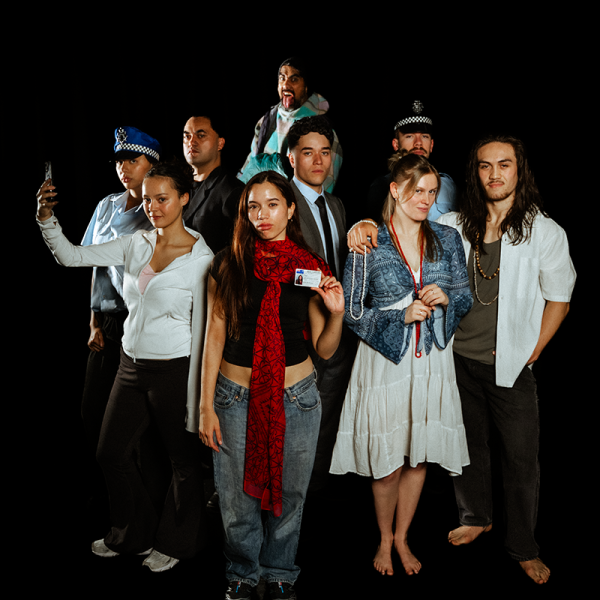
Set in the summer of 1965, the narrative concerns Hone (Regan Taylor) who has relocated his family from the East Cape to the South Island in search of a better life for them through his job at a sawmill. His wife Sue (Erina Daniels) holds everything together while older daughter Amiria (Rongopai Tickell) creates havoc and Boyboy (Te Mihi Potae) tries his best to please. As they gather near a beach for a birthday hāngi for their withdrawn youngest daughter Rongo (Tioreore Ngatai-Melbourne) with two Pākehā guests (Ben Ashby and Mycah Keall), secrets, heartbreak, and cultural tensions bubble to the surface and burst in ways that will ripple through their lives forever. Watching, responding to, and echoing the emotional ebb and flow of the day’s events are four tīpuna (Anatonio Te Maioha, Awerangi Thompson, Huia Rawiri, and Mathieu Boynton-Rata).

Working on Mark McEntyre’s cleverly sculptured set under Natasha James’ brilliantly responsive lighting design, this cast is electric. Their family dynamics are clearly communicated through sharp characterisations and their rendering of Kouka’s crackling dialogue. They particularly shine during the muscular waiata and haka (composer Hone Hurihanganui) that weave through the story to punctuate the emotional climaxes. Ngatai-Melbourne’s singing voice is sublime, and her thread of the story stitches the whole together until it profoundly squeezes the heart of its audience.

As Kouka stated before writing the play: “Everyone is from somewhere else.” Waiora Te Ūkaipo – The Homeland is for all who have ever felt dispossessed.

SoundCathedral | Regional News

SoundCathedral

From composer and artistic director Michael Norris

Wellington Cathedral of St Paul, 1st Mar 2026

Reviewed by: Ruth Corkill

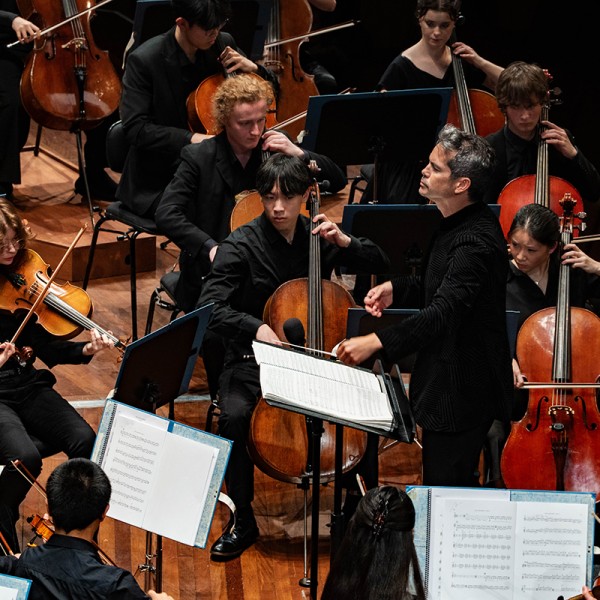
Tonight, the lofty pastel interior of Wellington Cathedral is transformed by a roiling haze of dry ice and shifting colour. SoundCathedral marks the 40th anniversary of The Tudor Consort with an immersive performance installation of remarkable scale. It brings together 56 musicians: The Tudor Consort directed by Michael Stewart, the taonga pūoro collective Rangatuone Ensemble conducted by Riki Pirihi, and Stroma alongside organist Max Toth and bellringers Dylan Thomas and Jamie Ben.

SoundCathedral reimagines Orlande de Lassus’ Prophetiae Sibyllarum, a cycle of 16th‑century motets known for their curious harmonic tensions and eccentric chromatics, features that make them feel experimental and cutting edge even to modern ears.

Promotional materials encouraged audiences to wander the cathedral and experience the soundscapes from multiple vantage points. But when we arrive the nave is tightly filled with seating, and moving would require disturbing rows of people. Musicians occupy the aisles, but it is unclear whether the audience may enter their space. With no mention of movement in the welcome address, all the audience I can see remain seated.

Following a karakia and karanga, the choir enters through the central aisle, layering fragments from Lassus’ opening motet, material that blossoms in a cathedral. Subsequent movements stretch and reframe the originals, drawing out new colours.

The most compelling moments occur when voices and instruments venture into the unfamiliar: quiet throat‑singing from a walking soloist, the whirr of porotiti and pūrerehua, breathy winds billowing around the ceiling, a saxophonist clicking keys behind us.

Often, the deconstructed choral passages drift into meditative inertia. I suspect being able to move and find variations of resonance and distortion in the space would have kept these sections vivid. The range of taonga pūoro utilised is wonderful but I didn’t feel that the composition meaningfully integrated these instruments into the overall architecture of the work.

In the finale, the cathedral bells sound as if from another century, astonishingly distant and ethereal. The hefty, almost menacing organ is wondrous, but we are given barely whiffs of it before returning to ennui. I feel that, tantalisingly, a sublime experience has just escaped us.

Magical Madness | Regional News

Magical Madness

Presented by: Saksham Sharma

Hannah Playhouse, 28th Feb 2026

Reviewed by: Zac Fitzgibbon

Saksham’s Magical Madness is exactly what the title suggests: a 60-minute magic show that is indeed madness. A master of illusion, Saksham Sharma presents us with a multitude of tricks, some of which could confound even the most avid magic enthusiast. From classic sleights of hand with cards to predicting the future through drawings, this show has something that I am sure will pique the interest of all viewers.

Our magician in question is incredibly charismatic and charming, hooking us in from the moment he walks on stage until the moment he leaves. It is satisfying to see how many people he involves to participate in his tricks, including myself. Equally, it is refreshing to see all ages enjoying the show. There is loud cheering and clapping throughout, no doubt a reflection of the joy the audience feels.

Saksham also reminds us that even though machines are rising up around us, they cannot take wonder away from us; we can still choose the joy that magic brings. This is what epitomises the show: pure joy. Magical Madness is engaging and entertaining the entire time, making us want more. At the same time, it is not your ordinary magic show. There are no rabbits coming out of hats, nor are there people sawn in half. Instead, Saksham uses technology to his advantage, utilising even our own cell phones to perform his tricks. The use of lighting and projection (show design by Saksham and producer Taruna) heightens the tension and excitement, which builds and builds right up till the explosive grand finale.

I am in awe of the final act and how it ties the entire show together, from the disappearing key and note to the drawings of the elephant. This New Zealand Fringe Festival show offers a fantastic night out that you won’t want to end. Ensure you get tickets to Saksham’s Magical Madness before it disappears from The Hannah.

Werewolf | Regional News

Werewolf

Presented by: Binge Culture

Circa Theatre, 26th Feb 2026

Reviewed by: Tanya Piejus

Three wardens (Joel Baxendale, Stella Reid, and Hannah Kelly) are in charge of 230 strangers with only half a day’s training and a bag of onions. The lycanthropy outbreak has begun. You have been summoned to the local shelter, along with other members of your community to wait for the all-clear. The containment period is one week and the nights are pitch black. As the threat outside takes shape, the atmosphere inside begins to turn.

Inspired by the classic game of deception, Werewolf is a gripping blend of thriller and comedy that pulls you into an interactive world of suspicion, survival, and nervous laughter as part of the Aotearoa New Zealand Festival of the Arts. Your pandemic information booklet contains a piece of information or behaviour that you can include in the overall narrative if you wish (the tinfoil hats in the back row are a brilliant touch). The organic action stems from game elements and a semi-improvised script, which heroes the audience within a broader plot surrounding the relationships between the three wardens.

The assured cast keep the story moving, deftly responding to the audience’s interjections and reactions, and providing distinct characters to variously love or hate. Eight audience members are called on to fulfil specific roles, with Daniel the timekeeper and his whiteboard becoming a favourite.

A deceptively simple set (Lucas Neal) of supposedly werewolf-proof silver curtains, a plastic tunnel entrance, and some convincingly military-looking equipment trunks is all that’s needed to turn Circa One into Safehouse 656. Neal’s lighting design makes excellent use of comforting orange for the safety of daylight, total blackout for the dread of night, and violent strobing pulses for the resolution.

The star of the technical show is Oliver Devlin’s surround sound design that fills the black nights with gunfire, screams, creepy voices, and a pounding heartbeat that makes the very fabric of the theatre vibrate.

Thrillingly funny and creepily immersive, Werewolf is a tantalising tease to your senses and guaranteed to send shivers down your spine.

A Complete Idiot’s Guide to Great Britain | Regional News

A Complete Idiot’s Guide to Great Britain

Created by: Sully O’Sullivan

Cavern Club, 26th Feb 2026

Reviewed by: Oliver Mander

I’ll admit at the outset of this review that I have a distinctly positive bias towards useless facts – especially when interlaced with delicious comedy. On that basis, I’m always likely to look favourably on a performance like this one.

It helps that New Zealand comedian O’Sullivan is immensely funny, driven by a punchy and energetic style. He has created a fast-paced script, supported by slides that accentuate the delivery and set the audience up for laughs from the start. Without giving too much away, we’re entertained by the English nickname for people from Hartlepool, the national animals of England, Scotland, and Wales, and O’Sullivan’s take on the most quintessentially British landmarks.

Of course, it’s difficult to do a show containing facts without at least one person in the audience knowing the answer to the questions he raises. O’Sullivan’s use of the audience to augment his performance is masterful. He doesn’t let our involvement in the narrative overpower, instead balancing and blending it into his carefully crafted storyline, barely missing a beat as information comes thick and fast from the audience that is then incorporated into the comedy.

The show itself is clearly premised on the widely known ability of Great Britain’s populace to reflect on their own culture and laugh at themselves. There are more than a few British expats in O’Sullivan’s audience. On this basis, there is indeed some risk in the material; it is unlikely that A Complete Idiot’s Guide to Putin’s Russia would land with the same effectiveness. It’s a reflection on his considered writing that the comedy never crosses the line from humour to insult, nor does it rely on negative personality tropes.

Interactive, intimate, and informative, O’Sullivan’s New Zealand Fringe Festival performance of A Complete Idiot’s Guide to Britain offers an entertaining journey across Great Britain with a different perspective.


Mythosoma | Regional News

Mythosoma

Presented by: Body Island – Motu Tinana

Directed by: Kelly Nash

Tāwhiri Warehouse, 25th Feb 2026

Reviewed by: Zac Fitzgibbon

Imperfect, reverent, and poignant, Mythosoma invites us to feel, to reach into those wounded parts of us and be open. This theatre and dance piece is beyond interpretation, not because it is too high brow, but because each audience member will have their own extremely personal reaction. I have no doubt that this is its uniting factor; that trauma affects us all differently.

This piece does not try to be perfect, but rather to illustrate the visceral feelings that occur after heavy-hitting moments that words fail to describe. Humour is used tactfully and tastefully, planted in the right moments to preserve emotional momentum. Under Kelly Nash’s direction, the production settles but also stirs in unexpected ways. 

I am in awe of how Nancy Wijohn, Jada Narkle, Georgie Goater, and Caleb Heke move; the way they twist, turn, and navigate the memories their bodies hold. Every movement enthralls. We are called to lean in as observers, not to interpret what is placed before us. Likewise, Moana Ete’s narration and vocals provide a sense of grounding, of realisation and revelations. All five of these performers work as one, yet they tell their own stories. 

With production management and design collaboration from Rob Larsen, we are presented with a scenographic delight. Each lighting state draws us closer to the performers as well as our own feelings. The soundscapes are raw. The combination of lighting and sound results in an evocative experience for our eyes and ears. 

I was moved to tears by this piece. Be warned that it may take you on a powerful and possibly painful emotional journey, but the feelings that linger after and the healing you might undergo will make it entirely worth it. Mythosoma brings to life how we feel in our bodies during and after moments of impact, a task that Body Island – Motu Tinana achieves with flying colours where very few have been able to. Kia toa, Mythosoma.

The Works | Regional News

The Works

Presented by: Briefs Factory

Tāwhiri Warehouse, 24th Feb 2026

Reviewed by: Tanya Piejus

What a sparkly, sassy, spectacular way to open the 2026 Aotearoa New Zealand Festival of the Arts! Since 2008, Australia-based Briefs Factory have redefined cabaret with their own brand of queer subversion. With The Works, they thrust open their archives with a dazzling, daring, and delicious celebration of flesh, flash, and flourish.

For a gold coin, you can buy raffle tickets at the start of the show with the promise of a fabulous prize to be won. As suspected, that prize turns out to contain more than a little cheek – and I don’t mean the ones on your face. If naked tush makes you blush, this show ain’t for you! If it makes you whoop and holler for the beauty and sensuality of the human form, then this show definitely is for you. From feathery stripping drag numbers to burlesque trapeze over a bathtub, this is a glorious and gasp-inducing display of circus, comedy, crooning, and choreography. Sit in the front couple of rows and you’re literally immersed.

Kitty Bang Bang lights up the room with her whiskey-fuelled fire-eating routine; her flaming nipples need to be seen to be believed. The Evil Hate Monkey jumps through fiery hoops, bounces en pointe in a sparkly yellow tutu, and does obscene things with bananas that give eye-popping credibility to the full-frontal male nudity warning in the pre-show email. NASTIA’s hand balancing, Captain Kidd and Benjamin Butterfly’s aerial antics, and Serenity’s heel-wearing tumbling astound as much as Hollywood Star’s vocals and progressively revealed body inspire. And, Fez Faanana, exactly where do all those red flowers come from?

Joining these top-notch performers from Australia, London, and New York are local ballroom troupe, House of Marama. Their powerful gothic routine is a stunning introduction to this US Black and Latin-inspired Rainbow Pacific subculture for those unfamiliar with the local scene.

All the above is accompanied by a thumping dance soundtrack, intricate costumes, and bold haze-enhanced lighting.

Don your best briefs and get on down to the factory for the full works!

The Night Ali Died | Regional News

The Night Ali Died

Written by: Christopher Sainton-Clark

Directed by: Rosanna Mallinson

Gryphon Theatre, 21st Feb 2026

Reviewed by: Oliver Mander

The Night Ali Died is a gripping story beautifully told. Pre-show, we see a single central chair, with two distinct piles of clothing in each upstage corner. This simple staging creates opportunity for the sole actor, Christopher Sainton-Clark, to shine.

And shine he does.

Each character in this criminal drama recounts the events before and after the death of mild-mannered chemist Alistair (‘Ali’). As they unpick the events of that fateful night, each offers their own back story and perspective. From drug lords to detectives, motivations gradually come into focus.

For Alistair in particular, this is a simple and honest account that invites reflection on who matters in our lives – and the role we might play in theirs. Chances are, our actions or character make each of us a hero to someone. In this story, Ali’s actions define him as a hero to the daughter he will never know. Yet the invitation to reflect never feels like lecturing; it remains, first and foremost, a compelling story.

Sainton-Clark uses mime to accentuate key elements; from the recoil of a gun to the grip of a knife, we are left in no doubt as to what has occurred. His multiple characters are sharply differentiated through mannerisms, movement, and speech.

The technical precision of this production is almost cinematographic in nature. It’s as if we’re watching carefully constructed scenes from a movie, but performed live in one slick, classy ‘take’. Lighting cues, including the use of brief blackouts, heighten the drama, while sound and music reinforce the mood (collaborative design by Sainton-Clark, director Rosanna Mallinson, and technical lead Daisy den Engelse). A minor quibble is the placement of sidestage curtains allowing an open view of backstage. I say minor because once the performance gets underway, I never take my eyes off the action on stage.

Wellingtonians have experienced something special with this limited two-night run of The Night Ali Died. There’s still hope for audiences in Christchurch, Oamaru, Nelson, and Dunedin over the next few weeks.

Decadunce | Regional News

Decadunce

Created by: Marshall Lorenzo

BATS Theatre, 20th Feb 2026

Reviewed by: Oliver Mander

Decadunce is a frenetic, energetic, multi-layered romp that offers a merciless skewering of consumerism and excess.

Briscoes, Harvey Norman, and Uber are featured, with the focus of the satire less about the companies themselves and more about their target customer demographics. Lorenzo’s persona as a Harvey Norman salesman notes that all of their couches look like they were designed in 2001, while Uber’s younger generation customers have no money to their name, but still prefer the service to using their legs. And as for the Briscoes lady… I will never hear “You’ll never buy better” in quite the same way ever again.

As consumers, regardless of age, stage, or demographic, we are all roundly and hilariously lampooned.

Lorenzo offers a masterclass in audience engagement, with direct eye contact and energy that is irresistible. His stage performance is well supported by a striking set that offers superb functionality through its simplicity, and a soundtrack of energetic beats that reflect his own performance while keeping the buzz alive amongst the audience.

It is the clever integration of all those technical and creative elements that create the underlying energy for this show. Of course, we might expect that of every performing arts show, but it’s the sheer variety of those elements that make Decadunce something special. Lorenzo uses movement and dance, singing, voice, and caricature, beautifully integrated with sound, light, and stage. His talent is there for all to see, and the satire is generally well focused and targeted.

There are a couple of moments in the script that feel unnecessary. Satirising individual politicians is one thing, but making a personal slur against one within the show detracts from the wider satirical nature of the script. It’s clear that Lorenzo has the talent to create the satire without resorting to insult; maintaining the satire would have offered far more scope for humour.

Regardless of my personal status as an unabashed capitalist, this was a great night out. Energetic, biting, and seriously funny, it left me wanting to see more.