

Reviews - Regional News | Connecting Wellington

Reviews

Blithe Spirit | Regional News

Blithe Spirit

Written by: Noël Coward

Directed by: Colin McColl

Circa Theatre, 19th Mar 2025

Reviewed by: Ruth Corkill

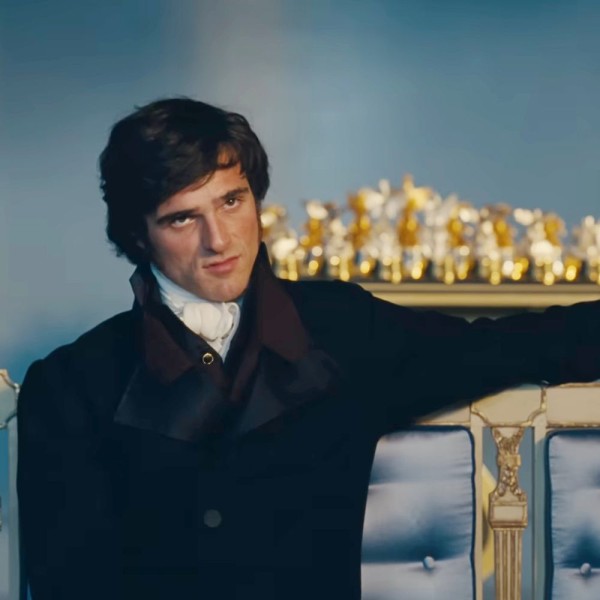
Colin McColl, after 18 years with Auckland Theatre Company, has returned to Wellington to direct Noël Coward’s Blithe Spirit. The farce centres on a séance gone wrong at the home of Charles Condomine (Phil Peleton), a sceptical novelist who has invited the famed medium Madame Arcati (Ginette McDonald) into his home in order to gather material for his next book. But Madame Arcarti’s otherworldly powers prove all too real, and Charles and his new husband Rudi (Simon Leary) find themselves sharing their home with the ghost of Charles’ dead wife Elvira (Laura Hill).

This production makes an effort to modernise the 1941 play, with some choices hitting the mark. The gender swapping and re-queering of the story are effective approaches. The script has been cleverly, lightly tweaked to make both Charles and his dead wife Elvira bisexual. The changes align with the risqué and socially insightful voice of Coward and help a modern audience to feel his radical edge.

On the other hand, a confusing combination of garments and set pieces makes it unclear which period we are in, and the set (John Parker) doesn’t feel luxurious enough for a modern household with the fulltime domestic staff who feature in the action. While these may have been conscious decisions, the incongruity became a distraction for us. Some of the costumes (Nic Smillie) are very fun, but Rudi’s costumes each feel like they belong to a different person, rather than reinforcing characterisation.

We are treated to a standout performance from Hera Dunleavy, who is double cast as Edith and Mrs Bradman. I failed to realise these two characters were being played by the same actor until we read the programme at interval, a testimony to her transformative physicality. As Mrs Bradman she is hysterical, with a subtle understanding of the inner life and absurdities of the character. Together with Peter Hambleton as her husband she portrays a long-married couple, with perfectly timed deliveries that make the most of Coward’s astutely observed one-liners.

Timeless Beauty: Handel & Telemann | Regional News

Timeless Beauty: Handel & Telemann

Presented by: New Zealand Symphony Orchestra

Directed by: Vesa-Matti Leppänen

Michael Fowler Centre, 7th Mar 2025

Reviewed by: Ruth Corkill

Timeless Beauty is a foray into Baroque, presenting the works of the period’s luminaries George Frideric Handel and Georg Philipp Telemann alongside their lesser-known forerunner Matthew Locke. Featuring a reduced orchestra of 26 musicians, the evening opens with the Overture and Sinfonia from Handel’s Occasional Oratorio. The NZSO deliver the technical mastery and precision that befits Handel, and as usual make it sound easy.

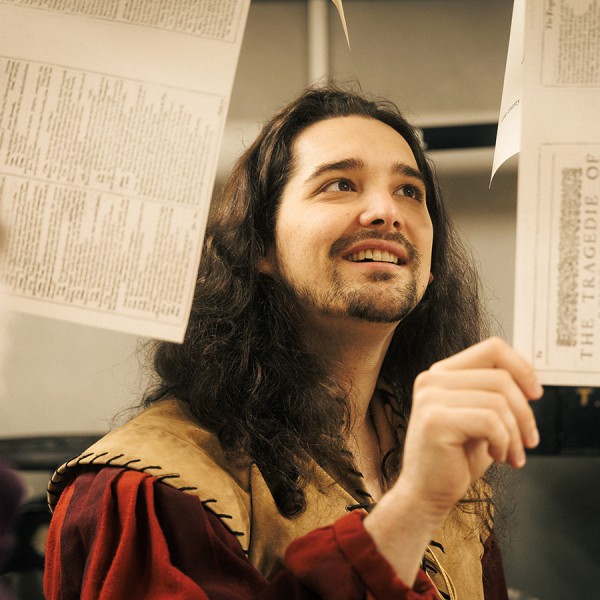
We then move further back in time. Locke’s The Tempest Suite accompanied a revival production only 60 years after Shakespeare’s The Tempest premiered. Before delving into the storm, Vesa-Matti Leppänen (director and violin) places the work in its historic context, describing innovations in string instruments during this period. It is a lovely touch when he draws attention to the profound age of one of the violins on stage, which was made around 1690, just over a decade after Locke’s death. The little instrument is held aloft, prompting the audience to break into delighted murmurs.

The inclusion of the Locke in the programme is an inspired choice, adding interest and giving us fresh perspective on the otherwise overly familiar Handel and Telemann. The Tempest Suite is new to most of us, including Leppänen, who confesses to never having played Locke’s work before. We feel included in the orchestra’s exploration, which melds sounds from what we categorise as the early Modern period with emerging Baroque modes. The Tempest Suite is evocative, dramatic, and pacey. The orchestra seems less assured in this music than with the more familiar works, but this feels like fellowship with Locke, who was innovating with new, unfamiliar instruments and compositional possibilities.

When we move back into the familiar territory of Telemann, it is with recalibrated ears. His Concerto for 3 Trumpets and Timpani in D Major sounds edgy. A warm, almost sultry oboe leads us through the piece, most prominently in the middle section. All principals shine in this performance, and by the concluding Vivace we are fully enraptured.

The Night Has A Thousand Eyes | Regional News

The Night Has A Thousand Eyes

Presented by: Borderline Arts Ensemble

Te Auaha, 6th Mar 2025

Reviewed by: Ruth Corkill

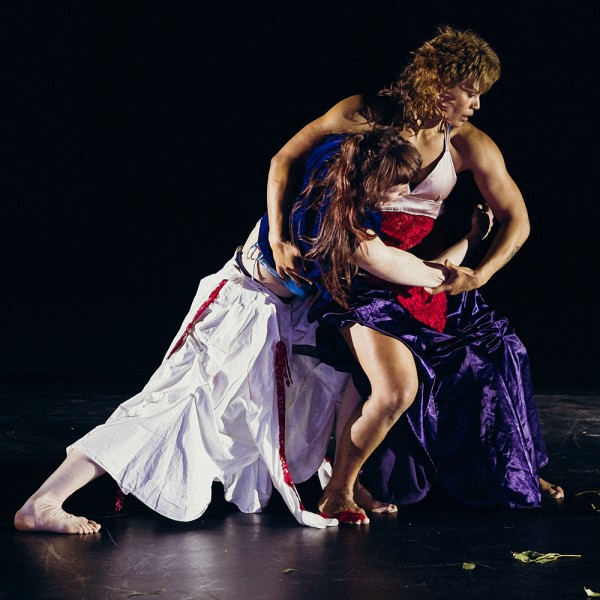
Borderline Arts Ensemble, the multi-disciplinary group co-directed by Lucy Marinkovich and Lucien Johnson, are known for their virtuoso dance productions. They return with a meditation on nocturnal themes that pairs the serene piano compositions of Johnson with the movement work of dancers Marinkovich and Michael Parmenter.

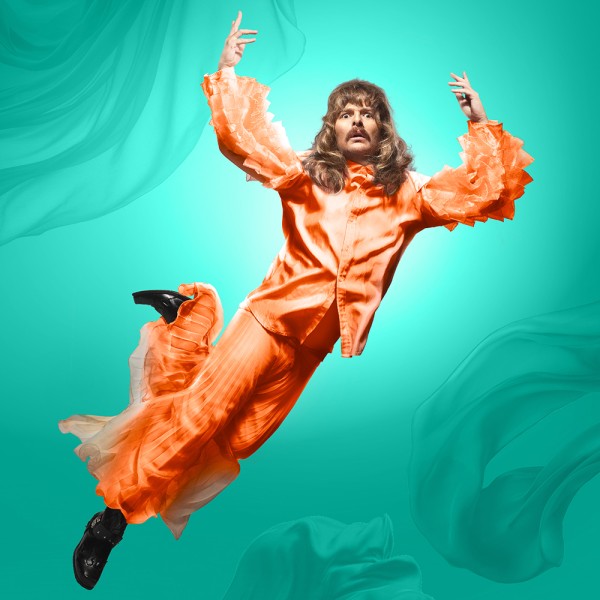
Martyn Roberts’ lighting design is a crucial element of the production. The show is set against the black void of a profoundly dark stage, and lighting is used to construct positive spaces within that. Gauzy fabrics suspended from the ceiling become enormous vessels filled with illuminated smoke or water. Puppetry brings us birds and moons floating in black, empty air, while mirrors and shadow-work play with our depth perception.

 As our dances explore these spaces, movement seems to be a secondary concern to imagery. There is minimal connection between the two dancers, or between the dancers and the audience. It feels more like visiting a series of art installations or watching a film than participating in a live performance. That said, this feeling of abstraction is part of the strange beauty of The Night Has A Thousand Eyes.

Indeed, much of the show explores imagery from early film. Parmenter dons an overcoat and watches the moon under streetlights before commencing a contemplative, slow tap dance worthy of the most stoic of film noir leading men. In a vignette reminiscent of Loïe Fuller’s serpentine dance from the 1890s (which became a staple of black and white cinema), Marinkovich appears in a billowing tent of silk that hangs floor-length from her throat and whirls the fabric around into forms that evoke peonies, sea creatures, and birds. This early cinema aesthetic is supported by the minimalist and cool-toned lighting favoured by Roberts.

A quietly masterful show, The Night Has A Thousand Eyes is a balm and curiosity. Many from the audience linger in the foyer afterwards, marvelling softly, before moving off into the dark.

House of Ick | Regional News

House of Ick

Written by: Nina Hogg and Megan Connolly

Directed by: Mo Munn

BATS Theatre, 4th Mar 2025

Reviewed by: Stanford Reynolds

Wellington comedy duo Ginge and Minge (Nina Hogg and Megan Connolly) present their new show, House of Ick, the craziest whirlwind of outrageous, crass, and cringey sketch comedy that I have ever seen. This is my first time seeing Ginge and Minge and I’m not entirely sure what to expect, although I don’t think anything could have really prepared me for this. Hogg and Connolly interact with the audience as we enter, asking us if we have seen “Mike”. An infectious, charged anticipation fills the room, and as the lights go down and the show begins, there is raucous applause – clearly there are lots of fans in the audience tonight.

Hogg and Connolly perform with no boundaries or inhibitions, making a mess of various fluids on the stage and themselves. Sketches are frantic and even stupid at times, and often the second-hand embarrassment makes me unsure if I want to laugh or wince. The characters they play are inspired, engrossing, and irresistible, including Monster Energy drink-obsessed preteens Kyle and Kayden, Mike the inappropriately forward comedian from Facebook Marketplace, and a pair of talkative “horse jizz” saleswomen.

While it might simply sound like shock-value humour, the show is in fact expertly put together and performed by a phenomenal duo who make it look effortless. There is a cohesiveness to the sketches, where nothing is taken seriously, and our expectations are constantly subverted. In an effort to break away from “gross or overtly personal humour”, we are subjected to a dramatic reading of W. H. Auden’s Funeral Blues, accompanied by a transfixing, deliberately tasteless tap routine. The contrast here sums up the show for me – uncomfortable, unpredictable, and utterly hilarious comedy.

By the end of House of Ick, I am a converted Ginge and Minge fan. I want to see more of this type of theatre in Wellington – original ideas that can be produced without a massive budget, more stimulating than anything playing at the cinema. In fact, I want a visceral hour like this every week.

Welcome to the House of Ick. Sit in the front row.

HAUSDOWN | Regional News

HAUSDOWN

Written by: Katie Hill and Ruby Carter

Directed by: Katie Hill

Hannah Playhouse, 4th Mar 2025

Reviewed by: Ruth Corkill

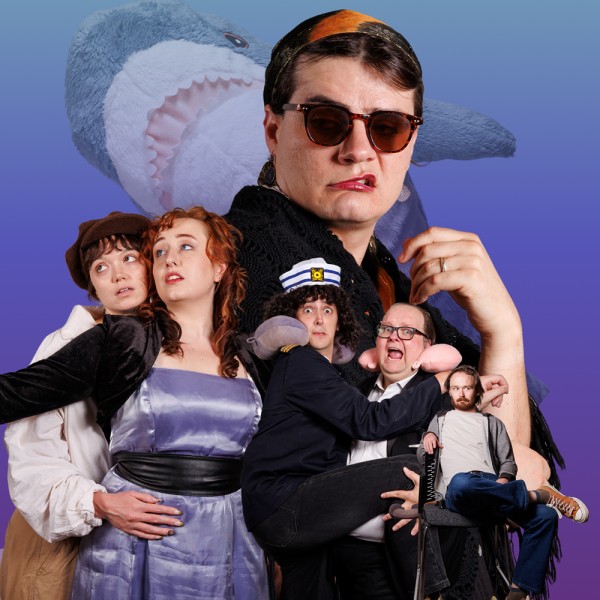
HAUSDOWN is a farcical romp through regency tropes that manages to be both deftly crafted and delightfully silly. Our ensemble call on skit comedy, clowning, dance, and melodrama to tell the raucous story of seven queer aristocrats and their servant during a visit to the country seat of the Hausdown family.

The actors work wonderfully together to deliver expressive, committed performances. Energy and pace are maintained throughout, and the cast are strongly connected to each other and the audience. Much of the comedy hinges on precise tone and timing when delivering one-liners, which they pull off again and again. Even more impressive is the ensemble work and movement – the opening slow-motion tableau and the dance scene that switches repeatedly between a reserved country dance and sexually charged clubbing are hysterical.

All this tomfoolery is grounded by brilliant technical elements. Ruby Carter’s costume design does bounteous work establishing the fluid historicity and gender play that are at the core of this project. Carter’s skill as a seamstress and knowledge of the period is abundantly apparent. This reviewer was especially gratified by the arrival of gorgeous bonnets and hats when our characters headed outdoors to take in the country air. The costumes also support character work, communicating status and gender expression. Carter has developed a distinctive style for each character, and each costume was suited to the physicality of its actor.

The rest of the production team also deserves praise. The set design by Sam Hearps is simple but refined. The minimalism suits the contemporary theatrical conventions of this show, but the proportions, colours, and textures are period appropriate and executed beautifully. Likewise with sound (Joshua Lees) and lighting (Teddy O’Neill), which are both effective, clever, and in service of the on-stage action rather than being intrusive.

All elements of Inconceivable Productions' HAUSDOWN cohere to form an exceptionally well crafted and joyful production. We eagerly anticipate an invitation to their next soirée.

ROADKILL: The Uber-Cool Musical | Regional News

ROADKILL: The Uber-Cool Musical

Created by: Tom Knowles

Hannah Playhouse (sort of), 4th Mar 2025

Reviewed by: Madelaine Empson

Terry Taylor has been an Uber driver for years and sure has a story or two to tell about life on the road. Luckily for us, he’s prepared to share as he ushers our audience of eight into his party van, parked outside Hannah Playhouse and fully kitted out with lights, cameras, and more action than we bargained for.

In the world premiere of Tom Knowles’ one-man show ROADKILL: The Uber-Cool Musical, Terry (Knowles) talks and sings us through his childhood dreams and major milestones, including marrying Mary (Knowles) and meeting her father (Knowles) during a serendipitous ride that changes the racecourse of his life forever.

A velvet-voiced Knowles, decked out with an earpiece mic in uber-driver-meets-tour-guide garb, revs up with a medley of popular vehicular-themed bangers (Shut Up and Drive, Highway to Hell, Ridin’, et al). Interspersing direct address and audience banter, he sings along to pre-recorded, full-throttle backing tracks (performed by Knowles and his band of Jed Parsons and Josh Logan) with a 30-strong choir (Knowles x30) behind him. The soundtrack largely comprises rockin’ originals (all by, you guessed it) accompanied by hilariously kitsch and melodramatic music videos (starring the one and only Knowles). What a mammoth effort from this one-man van!

The fitout inside said van is impressive and spans ceiling-mounted screens, speakers, and even a reverse camera that generates real-time footage so that the front-seat passenger can watch the back-seat action unfold. A fellow passenger is handed a remote to control the LED party lights and told she could well be up for a Fringe award for best lighting design (I’m voting for you, Olivia). With audience interaction a highlight of the musical, more of us are recruited for various tasks, from holding fans to pressing space bars and even singing “I do”. Did I mention the carpool karaoke? We all have a ball thanks to Knowles’ natural, easy grace that puts us at ease. A showman through and through.

I’d love to see the story more fleshed out, particularly around the shock twist (I suspect another three songs here would work a charm). But take that with a grain of wheat: ultimately, this is an innovative, funny, and highly original production. Buckle up for a rally of a riot!

Three Feet Under | Regional News

Three Feet Under

Written by: Helen Vivienne Fletcher

Directed by: Crystal Pulkowski

Te Auaha, 27th Feb 2025

Reviewed by: Stanford Reynolds

Have you ever wondered what you would do if you had killed somebody? Who would you call? What about if your best friend needed your help burying a body? Three Feet Under turns this idea into a hilarious story, as best friends Jax (played by Ivana Palezevic) and Libby (Helen Vivienne Fletcher) find themselves needing to bury the body of Sammy – Jax’s ex and Libby’s cousin. After digging a hole in a planter box in their garden, they wildly swing between arguing, panicking, and planning what they need to do next, testing their friendship in the chaos.

With green turf and a white picket fence (set design by Jo Marsh and Caleb Havill), Te Auaha’s Tapere Iti has been transformed into Jax and Libby’s back garden. The set is effective and believable, particularly as the characters react to noises and lights coming from neighbours' houses and constantly remind each other to keep their voices down to not draw attention. There are some great moments of physical humour, like when they drag a bloodstained, wrapped-up body across the stage, struggle to dump it into the hole they have dug, and position themselves in front of the planter box to stop anybody from seeing in.

The emotional variation throughout the play is navigated deftly by Palezevic and Fletcher, whose characters sway between a detached hyperfixation on hiding the evidence and full-blown panic, taking turns freaking out, then forcing a calm and sensible response to placate the other. At times, some of the lines feel a little too anticipated, making the responses muted, and I find myself wanting to see more impassioned and impulsive reactions. However, the plot is woven into their conversation well: the script is hilarious, relatable, and structured in a way that compellingly doles out the story.

This is the perfect show to take your bestie to if you’ve ever wondered how you would support each other in a crisis.

Guy Gunn: Beast Basher | Regional News

Guy Gunn: Beast Basher

Written by: Mitchell Botting

Created in collaboration with David Bowers-Mason

Directed by: Mitchell Botting

Gryphon Theatre, 24th Feb 2024

Reviewed by: Stanford Reynolds

Guy Gunn (played by Kevin Orlando) is the host of an online beast-hunting series where he tracks down and kills mythological creatures, monsters, and cryptids. When he discovers that the beasts he is hunting have a meeting planned, he infiltrates it with schemes to reveal and destroy them. However, he soon learns of the struggles of the monsters, and sees their true humanity.

The opening sequence of the play is manic and wild. Presented as an introduction to the web series, Gunn and his assistant (Sean Dugdale-Martin) give a frenzied exposition to the story, intensified by rock music, haze, flashing lights, slick projection, and vivid voiceover. Guy Gunn and his assistant have impeccable, hilarious chemistry – the highlight of the show. They are sensationally over-the-top, with hammed-up facial expressions, gratuitous physical comedy, and exaggerated southern accents that seem to be a zany parody of Alex Jones.

Lighting design by Madyson King adds dynamism to the production, which is already bursting with energy. Projection and sound (both by director Mitchell Botting) are used extensively, bringing the audience in as viewers of Guy Gunn’s show and fantastically punctuating the humour without becoming overwhelming or overdone.

The pace lets up as the plot progresses, but the humour remains high, with jokes that are witty and delightfully crass in equal measure. At times it is hard to catch the fast-paced dialogue and abrupt voiceover lines, which saps energy by making the characters’ emotions or motivations unclear. However, the audience is kept laughing and engaged by the hilarity of the script and the commitment of the actors to their antics.

Guy Gunn: Beast Basher is a delightful show with actors who have unwavering dedication to the silliness of the plot and their characters. It also delivers an earnest message about being open-minded and not fearing what we do not understand. The play has been put together by a clearly brilliant ensemble who have buckets of fun squeezing every moment for all the golden comedy they can get.

Edit the Sad Parts | Regional News

Edit the Sad Parts

Written by: Jack McGee

Directed by: Lia Kelly

Circa Theatre, 22nd Feb 2025

Reviewed by: Zac Fitzgibbon

Edit the Sad Parts is Jack McGee’s romantic drama about Debi (Aimée Sullivan), who is writing a short story about a break-up, eventually collaborating with her boyfriend Keith (Jamie Cain). Through Debi’s fictional characters Theresa (Emma Katene, Ngāti Kahungunu) and Montgomery (Dryw McArthur), the couple discovers a lot about their relationship, with some truths harder to chew on than a crayfish’s claw.

This performance offers up heartfelt and hilarious moments in equal measure. One second, your feelings are hit deep and hard, and the next, you’re bursting into laughter. McGee’s script is incredibly witty and depicts romance so well. All four actors bring these characters to life and add a realism that sometimes hits a bit too close to home – in the best way. Not only that, but the cast’s vocals are great, especially in Katene and Cain’s hilarious singing number.

While there are many unexpected moments that make the audience laugh, the most impactful are the quiet, revealing ones between the characters. Just when you think this is an ordinary play reading, something unhinged happens. Edit the Sad Parts expertly balances reality and fiction. 

I appreciate that there is no specific setting, as the plot is so universal it could happen to anyone in a relationship. However, it might have been helpful to place the story somewhere specific to ground it. I also love the technical elements towards the end, such as the use of Andrew McGee’s software and the total chaos of the final scene. However, it feels like there’s more of the story left to tell: the ending seems unresolved, as if something is missing.

All in all, Edit the Sad Parts strikes a harmonious chord on your heartstrings. Conceptually, it’s something special and has a lot of potential. I look forward to future renditions of this great play.